
Filter
3156
Text search:
early
disease
detection
Featured
374
810
Language
3030
83
64
58
36
26
19
18
5
5
4
3
3
3
3
3
3
3
3
3
3
2
2
2
2
1
1
1
1
1
1
1
1
1
1
1
1
1
1
1
1
1
1
1
1
1
1
1
1
1
1
Document type
1503
573
552
178
174
75
39
31
9
6
5
4
4
1
1
Countries
218
167
97
75
72
68
66
62
58
58
52
48
48
41
37
35
35
32
31
31
30
30
29
28
28
24
24
23
23
22
20
20
18
18
16
15
14
13
13
12
12
12
12
11
11
11
9
9
9
8
8
7
6
6
6
6
6
6
6
5
5
5
5
5
4
4
4
4
4
3
3
3
3
3
3
3
3
2
2
2
2
2
2
2
2
2
2
2
2
2
2
2
2
2
2
2
2
1
1
1
1
1
1
1
1
1
1
1
1
1
1
1
1
1
1
1
1
1
1
1
1
1
1
1
1
1
1
1
1
Authors & Publishers
588
173
99
88
83
50
46
30
28
26
23
20
20
19
19
18
18
17
16
16
14
14
14
14
13
12
12
11
11
11
10
10
9
9
9
9
9
9
9
9
9
9
9
9
8
8
8
8
8
8
8
8
7
7
7
7
7
7
7
7
7
7
7
7
7
7
6
6
6
6
6
6
6
6
6
6
6
6
5
5
5
5
5
5
5
5
5
5
5
4
4
4
4
4
4
4
4
4
4
4
4
4
4
4
4
4
4
4
4
4
4
4
4
4
4
4
4
4
4
4
4
4
4
4
4
4
4
3
3
3
3
3
3
3
3
3
3
3
3
3
3
3
3
3
3
3
3
3
3
3
3
3
3
3
3
3
3
3
3
3
3
3
3
3
3
3
3
3
3
3
3
3
3
3
3
3
3
3
3
3
3
3
3
2
2
2
2
2
2
2
2
2
2
2
2
2
2
2
2
2
2
2
2
2
2
2
2
2
2
2
2
2
2
2
2
2
2
2
2
2
2
2
2
2
2
2
2
2
2
2
2
2
2
2
2
2
2
2
2
2
2
2
2
2
2
2
2
2
2
2
2
2
2
2
2
2
2
2
2
2
2
2
2
2
2
2
2
2
2
2
2
2
2
2
2
2
2
2
2
2
2
2
2
2
2
2
2
2
2
2
2
2
2
2
2
2
2
2
2
2
2
2
2
2
2
2
2
2
2
2
2
2
2
2
2
2
2
1
1
1
1
1
1
1
1
1
1
1
1
1
1
1
1
1
1
1
1
1
1
1
1
1
1
1
1
1
1
1
1
1
1
1
1
1
1
1
1
1
1
1
1
1
1
1
1
1
1
1
1
1
1
1
1
1
1
1
1
1
1
1
1
1
1
1
1
1
1
1
1
1
1
1
1
1
1
1
1
1
1
1
1
1
1
1
1
1
1
1
1
1
1
1
1
1
1
1
1
1
1
1
1
1
1
1
1
1
1
1
1
1
1
1
1
1
1
1
1
1
1
1
1
1
1
1
1
1
1
1
1
1
1
1
1
1
1
1
1
1
1
1
1
1
1
1
1
1
1
1
1
1
1
1
1
1
1
1
1
1
1
1
1
1
1
1
1
1
1
1
1
1
1
1
1
1
1
1
1
1
1
1
1
1
1
1
1
1
1
1
1
1
1
1
1
1
1
1
1
1
1
1
1
1
1
1
1
1
1
1
1
1
1
1
1
1
1
1
1
1
1
1
1
1
1
1
1
1
1
1
1
1
1
1
1
1
1
1
1
1
1
1
1
1
1
1
1
1
1
1
1
1
1
1
1
1
1
1
1
1
1
1
1
1
1
1
1
1
1
1
1
1
1
1
1
1
1
1
1
1
1
1
1
1
1
1
1
1
1
1
1
1
1
1
1
1
1
1
1
1
1
1
1
1
1
1
1
1
1
1
1
1
1
1
1
1
1
1
1
1
1
1
1
1
1
1
1
1
1
1
1
1
1
1
1
1
1
1
1
1
1
1
1
1
1
1
1
1
1
1
1
1
1
1
1
1
1
1
1
1
1
1
1
1
1
1
1
1
1
1
1
1
1
1
1
1
1
1
1
1
1
1
1
1
1
1
1
1
1
1
1
1
1
1
1
1
1
1
1
1
1
1
1
1
1
1
1
1
1
1
1
1
1
1
1
1
1
1
1
1
1
1
1
1
1
1
1
1
1
1
1
1
1
1
1
1
1
1
1
1
1
1
1
1
1
1
1
1
1
1
1
1
1
1
1
1
1
1
1
1
1
1
1
1
1
1
1
1
1
1
1
1
1
1
1
1
1
1
1
1
1
1
1
1
1
1
1
1
1
1
1
1
1
1
1
1
1
1
1
1
1
1
1
1
1
1
1
1
1
1
1
1
1
1
1
1
1
1
1
1
1
1
1
1
1
1
1
1
1
1
1
1
1
1
1
1
1
1
1
1
1
1
1
1
1
1
1
1
1
1
1
1
1
1
1
1
1
1
1
1
1
1
1
1
1
1
1
1
1
1
1
1
1
1
1
1
1
1
1
1
1
1
1
1
1
1
1
1
1
1
1
1
1
1
1
1
1
1
1
1
1
1
1
1
1
1
1
1
1
1
1
1
1
1
1
1
1
1
1
1
1
1
1
1
1
1
1
1
1
1
1
1
1
1
1
1
1
1
1
1
1
1
1
1
1
1
1
1
1
1
1
1
1
1
1
1
1
1
1
1
1
1
1
1
1
1
1
1
1
1
1
1
1
1
1
1
1
1
1
1
1
1
1
1
1
1
1
1
1
1
1
1
1
1
1
1
1
1
1
1
1
1
1
1
1
1
1
1
1
1
1
1
1
1
1
1
1
1
1
1
1
1
1
1
1
1
1
1
1
1
1
1
1
1
1
1
1
1
1
1
1
1
1
1
1
1
1
1
1
1
1
1
1
1
1
1
1
1
1
1
1
1
1
1
1
1
1
1
1
1
1
1
1
1
1
1
1
1
1
1
1
1
1
1
1
1
1
1
1
1
1
1
1
1
1
1
1
1
1
1
1
1
1
1
1
1
1
1
1
1
1
1
1
1
1
1
1
1
1
1
1
1
1
1
1
1
1
1
1
1
1
1
1
1
1
1
1
1
1
1
1
1
1
1
1
1
1
1
1
1
1
1
1
1
1
1
1
1
1
1
1
1
1
1
1
1
1
1
1
1
1
1
1
1
1
1
1
1
1
1
1
1
1
1
1
1
1
1
1
1
1
1
1
1
1
1
1
1
1
1
1
1
1
1
1
1
1
1
1
1
1
1
1
1
1
1
1
1
1
1
1
1
1
1
1
1
1
1
1
1
1
1
1
1
1
1
1
1
1
1
1
1
1
1
1
1
1
1
1
1
1
1
1
1
1
1
1
1
1
1
1
1
1
1
1
1
1
1
1
1
1
1
1
1
1
1
1
1
1
1
1
1
1
1
1
1
1
1
1
1
1
1
1
1
1
1
1
1
1
1
1
1
1
1
1
1
1
1
1
1
1
1
1
1
1
1
1
1
1
1
1
1
1
1
1
1
1
1
1
1
1
1
1
1
1
1
1
1
1
1
1
1
1
1
1
1
1
1
1
1
1
1
1
1
1
1
1
1
1
1
1
1
1
1
1
1
1
1
1
1
1
1
1
1
1
1
1
1
1
1
1
1
1
1
1
1
1
1
1
1
1
1
1
1
1
1
1
1
1
1
1
1
1
1
1
1
1
1
1
1
1
1
1
1
1
1
1
1
1
1
1
1
1
1
1
1
1
1
1
1
1
1
1
1
1
1
1
1
1
1
1
1
1
1
1
1
1
1
1
1
1
1
1
1
1
1
1
1
1
1
1
1
1
1
1
1
1
1
1
1
1
1
1
1
1
1
1
1
1
1
1
1
1
1
1
1
1
1
1
1
1
1
1
1
1
1
1
1
1
1
1
1
1
1
1
1
1
1
1
1
1
1
1
1
1
1
1
1
1
1
1
1
1
1
1
1
1
1
1
1
1
1
1
1
1
1
1
1
1
1
1
1
1
1
1
1
1
1
1
1
1
1
1
1
1
1
1
1
1
1
1
1
1
1
1
1
1
1
1
1
1
1
1
1
1
1
1
1
1
1
1
1
1
1
1
1
1
1
1
1
1
1
1
1
1
1
1
1
1
1
1
1
1
1
1
1
1
1
1
1
1
1
1
1
1
1
1
1
1
1
1
1
1
1
1
1
1
1
1
1
1
1
1
1
1
1
1
1
1
1
1
1
1
1
1
1
1
1
1
1
1
1
1
1
1
1
1
1
1
1
1
1
1
1
1
1
1
1
1
1
1
1
1
1
1
1
1
1
1
1
1
1
1
1
1
1
1
1
1
1
1
1
1
1
1
1
1
1
1
1
1
1
1
1
1
1
1
1
1
1
1
1
1
1
1
1
1
1
1
1
1
1
1
1
1
1
1
1
1
1
1
1
1
1
1
1
1
1
1
1
1
1
1
1
1
1
1
1
1
1
1
1
1
1
1
1
1
1
1
1
1
1
1
1
1
1
1
1
1
1
1
1
1
1
1
1
1
1
1
1
1
1
1
1
1
1
1
1
1
1
1
1
1
1
1
1
1
1
1
1
1
1
1
1
1
1
1
1
1
1
1
1
1
1
1
1
1
1
1
1
1
1
1
1
1
1
1
1
1
1
1
1
1
1
1
1
1
1
1
1
1
1
1
1
1
1
1
1
1
1
1
1
1
1
1
1
1
1
1
1
1
1
1
1
1
1
1
1
1
1
1
1
1
1
1
1
1
1
1
1
1
1
1
1
1
1
1
1
1
1
1
1
1
1
1
1
1
1
1
1
1
1
1
1
1
1
1
1
1
1
1
1
1
1
1
1
1
1
1
1
1
1
1
1
1
1
1
1
1
1
1
1
1
1
1
1
1
1
1
1
1
1
1
1
1
1
1
1
1
1
1
1
1
1
1
1
1
1
1
1
1
1
1
1
1
1
1
1
1
1
1
1
1
1
1
1
1
1
1
1
1
1
1
1
1
1
1
1
1
1
1
1
1
1
1
1
1
1
1
1
1
1
1
1
1
1
1
1
1
1
1
1
1
1
1
1
1
1
1
1
1
1
1
1
1
1
1
1
1
1
1
1
1
1
1
1
1
1
1
1
1
1
1
1
1
1
1
1
1
1
1
1
1
1
1
1
1
1
1
1
1
1
1
1
1
1
1
1
1
1
1
1
1
1
1
1
1
1
1
1
1
1
1
1
1
1
1
1
1
1
1
1
1
1
1
1
1
1
1
1
1
1
1
1
1
1
1
1
1
1
1
1
1
1
1
1
1
1
1
1
1
1
1
1
1
1
1
1
1
1
1
1
1
1
1
1
1
1
1
1
1
1
1
1
1
1
1
1
1
1
1
1
1
1
1
1
1
1
1
1
1
1
1
1
1
1
1
1
1
1
1
1
1
1
1
1
1
1
1
1
1
1
1
1
1
1
1
1
1
1
1
1
1
1
1
1
1
1
1
1
1
1
1
1
1
1
1
1
1
1
1
1
1
1
1
1
1
1
1
1
1
1
1
1
1
1
1
1
1
1
1
1
1
1
1
1
1
1
1
1
1
1
1
1
1
1
1
1
1
1
1
1
1
1
1
1
1
1
1
1
1
1
1
1
1
1
1
1
1
1
1
1
1
1
1
1
1
1
1
1
1
1
1
1
1
1
1
1
1
1
1
1
1
1
1
1
1
1
1
1
1
1
1
1
1
1
1
1
1
1
1
1
1
1
1
1
1
1
1
1
1
1
1
1
1
1
1
1
Publication Years
1145
1739
257
14
1
Category
1169
336
202
129
124
53
39
1
Toolboxes
328
325
184
161
129
121
97
93
87
77
68
68
60
54
52
51
48
40
33
29
29
24
22
20
2
2
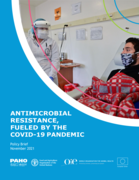
Policy Brief November 2021 Available in English, Spanish and Portuguese
The COVID-19 pandemic has fueled the ongoing antimicrobial resistance (AMR) global crisis due to the increase in the use of antibiotics to treat COVID-19 patients, disruptions to infection prevention and control practices in o
...
verwhelmed health systems, and diversion of human and financial resources away from monitoring and responding to AMR threats. Moreover, AMR is likely to have caused more COVID-19 deaths, as secondary bacterial infections can worsen the outcome of severe and critical COVID-19 illness. Therefore, it is more urgent than ever to prioritize efforts towards AMR containment and support countries to improve the detection, characterization and rapid response to emerging AMR.
more
Surveillance, case investigation and contact tracing for monkeypox: interim guidance 24 June 2022
recommended
The overall goal of surveillance, case investigation and contact tracing in this context is to stop human-to-human transmission to control the outbreak. The key objectives of surveillance and case investigation are to rapidly identify cases and clusters in order to provide optimal clinical care; to
...
isolate cases to prevent further transmission; to identify, manage and follow up contacts to recognize early signs of infection; to protect frontline health workers; to identify risk groups; and to tailor effective control and prevention measures.
more
Interim rapid response guidance, 10 June 2022.
It includes considerations for certain populations such as patients with mild disease with considerations for community care, patients with moderate to severe
...
disease, sexually active persons, pregnant or breastfeeding women, children and young persons. The guidance also addresses considerations for clinical management such as the use of therapeutics, nutritional support, mental health services, and post-infection follow-up.
The document provides guidance for clinicians, health facility managers, health workers and infection prevention and control practitioners including but not limited to those working in primary care clinics, sexual health clinics, emergency departments, infectious diseases clinics, genitourinary clinics, dermatology clinics, maternity services, paediatrics, obstetrics and gynaecology and acute care facilities that provide care for patients with suspected or confirmed monkeypox
more
Nat Commun 9, 5370 (2018). https://doi.org/10.1038/s41467-018-07804-8. Mycobacterium ulcerans is the causative agent of Buruli ulcer, a neglected tropical skin disease that is most commonly found in children from West and Central Africa. Despite the
...
severity of the infection, therapeutic options are limited to antibiotics with severe side effects. Here, we show that M. ulcerans is susceptible to the anti-tubercular drug Q203 and related compounds targeting the respiratory cytochrome bc1:aa3. While the cytochrome bc1:aa3 is the primary terminal oxidase in Mycobacterium tuberculosis, the presence of an alternate bd-type terminal oxidase limits the bactericidal and sterilizing potency of Q203 against this bacterium. M. ulcerans strains found in Buruli ulcer patients from Africa and Australia lost all alternate terminal electron acceptors and rely exclusively on the cytochrome bc1:aa3 to respire. As a result, Q203 is bactericidal at low dose against M. ulcerans replicating in vitro and in mice, making the drug a promising candidate for Buruli ulcer treatment.
more
Many countries have made significant progress in the implementation of World Health Organization recommended preventive chemotherapy strategy, to eliminate lymphatic filariasis (LF). However, pertinent challenges such as the existence of areas of residual infections in
...
disease endemic districts pose potential threats to the achievements made. Thus, this study was undertaken to assess the importance of these areas in implementation units (districts) where microfilaria (MF) positive individuals could not be found during the mid-term assessment after three rounds of mass drug administration.
more
Onchocerciasis used to be an important public health problem in Africa, with over 37 million people infected and millions suffering from debilitating skin disease, terrible itching, impaired vision and
blindness. But the epidemiological situation h
...
as improved dramatically over the last two decades. Community directed treatment with ivermectin has effectively brought the disease under control in most endemic areas where onchocerciasis is no longer a public health risk.
more
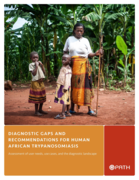
This analysis focused on the chronic form of HAT caused by T. b. gambiense, as it contributes to the majority of disease burden. Information from the literature review,
product development landscape, and stakeholder interviews was compiled to:
-
...
Identify use cases and understand current diagnostic practices and tools associated with each use case.
- Analyze progress toward robust diagnostics for HAT across different biomarkers.
- Develop recommendations for steps to improve the availability, access, and adoption of HAT diagnostic tools.
more
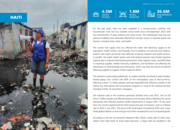
Haiti's Health Emergency Appeal 2023
recommended
For the past years, Haiti has been engulfed in a socioeconomic, political, and humanitarian crisis that has reached critical levels since mid-September 2022 with the intensification of gang violence and social unrest. The widespread insecurity and
political instability have drastically affected the
...
country’s access to essential goods and services, including food, water, and health. The current fuel supply crisis has affected the water and electricity supply to the population, health centers, and hospitals. Due to problems of insecurity and violence, patients and health personnel have difficulty accessing hospitals and health services.
In parallel, the public health system and international partners face limited response capacity due to reduced international personnel in Haiti, logistics issues, and difficulties in importing supplies. Indeed insecurity, roadblocks, and lockdowns are affecting the importation of internationally procured goods, which may slow the arrival of essential lifesaving supplies to support cholera response efforts. This scenario is particularly problematic, as cholera recently resurfaced in early October.
Armed gangs now control over 60% of the metropolitan area of Port-au-Prince, affecting at least 1.5 million people, and have expanded their influence outside of the capital city, interrupting vital humanitarian programs in most of the national territory,
including COVID-19 vaccination campaigns.
more
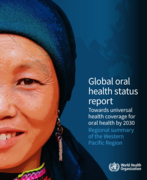
This regional summary draws on the WHO Global oral health status report (2), published in 2022, which provides a comprehensive overview of the global oral disease burden, the global health importance of oral health and the impact of oral diseases ov
...
er the life course.
The summary focuses on the oral health status in the Western Pacific Region and is split into four sections: (a) oral diseases are global and regional health problems; (b) the burden of the main oral diseases; (c) key challenges and opportunities towards oral health for all in the Western Pacific Region; and (d) road map towards UHC for oral health 2030. This regional summary is based on the 27 Member States in the Region.
more
To assess national-level responses to NCDs, WHO has implemented NCD country capacity surveys periodically since 2001. This report is the latest in that series. Since the first survey round, the NCD Country Capacity Survey (NCD CCS) has been conducted a further seven times, most recently in 2021. In
...
the survey, completed by the NCD focal point within each country’s ministry of health or similar agency, countries are asked to report on the following topics relating to NCDs: (i) public health infrastructure, partnerships and multisectoral collaboration; (ii) policies, strategies and action plans; (iii) health information systems and surveillance; (iv) health system capacity for detection, treatment and care; and, added for 2021, (v) the impact of the COVID-19 pandemic on NCD-related resources and activities. The questionnaire is web-based and requires supporting documentation wherever possible. In the 2021 round, data were collected from May onwards, with the last survey responses arriving in September. Validation was carried out by WHO regional offices and WHO headquarters. Country responses to previous rounds of the survey were incorporated into the analysis to assess progress since 2010. Although all 194 Member States responded to the survey, data comparisons were restricted to the 160 countries that had responded to all rounds of the survey since 2010.
more

The development of this draft Proposed programme budget 2022–2023 comes at a unique moment for WHO. The world is in the grip of the coronavirus disease (COVID-19) pandemic and faces health, social and economic consequences on an unprecedented scal
...
e. Although it is not known when the COVID-19 pandemic will end, recent encouraging vaccine results, in addition to the examples of countries that have achieved good results through public health measures, hold out the prospect of better days ahead. The full impact of the pandemic cannot yet be determined. But whatever its implications, the Secretariat will rise to the challenge and is ready to adapt so that it is fully equipped to support Member States for any eventuality in the future – to make sure that the world will never again have to face this kind of crisis.
more
There is growing understanding and high-level endorsement of the importance of strong collaborative multisectoral approaches to address a broad range of social, economic and governance issues for the prevention and control of noncommunicable disease
...
(NCDs) and mental health conditions. In 2019, World Health Organization (WHO) Member States requested the WHO Director-General to provide an analysis across countries of successful approaches for the prevention and control of NCDs that used multisectoral action. This WebAnnex to the Global mapping report on multisectoral actions to strengthen the prevention and control of noncommunicable diseases and mental health conditions details experiences from around the world.
more

There is growing understanding and high-level endorsement of the importance of strong collaborative multisectoral approaches to address a broad range of social, economic and governance issues for the prevention and control of noncommunicable disease
...
(NCDs) and mental health conditions. In 2019, World Health Organization (WHO) Member States requested the WHO Director-General to provide an analysis across countries of successful approaches for the prevention and control of NCDs that used multisectoral action.This report describes the experiences of different countries, areas and territories in implementing multisectoral actions to tackle NCDs and is the first step to address their request for an analysis of such efforts
more

This brief update on tuberculosis (TB) in the African region covers the state of TB in the WHO African region, strategic priorities and targets and the impact of COVID-19 on essential services. This is followed by key figures for the region, the role of WHO in country support and, recognizing the im
...
portance of diagnosis and drug susceptibility testing, a focus onstrengthening laboratory networks and the regional laboratory and diagnostic objectives. A brief update of the state of the science and how this is funded across the African region is provided, before closing with challenges and opportunities,strategic directions and a brief discussion of funding concerns. Discussions around the drivers of the disease, and issues of the poverty, inequality and stigma that continue to plague those living with TB are fully recognized, but are outside the scope of this report.
more

Building on the 2021 Interim guidance, this second version and update, incorporates the lessons and feedback from the hepatitis pilots that successfully demonstrated the feasibility of measuring hepatitis B and C impact targets to demonstrate elimination, whilst highlighting challenges caused by hig
...
h disease burden in some countries, as well as delays in reaching mortality targets due to the long natural history of disease progression to liver cirrhosis and hepatocellular carcinoma.
The path to elimination provides a framework with 3 levels of achievements for which WHO certification is available. Each stepwise progression from bronze to silver to gold tiers will promote an iterative expansion of prevention, diagnosis and treatment services for viral hepatitis services and strengthen measurement systems to support attainment of the 2030 elimination goals.
This updated version also includes changes, clarifications and new guidance on alternative measurement approaches for country validation of elimination. Through the validation process, WHO and partners continue to provide country support for strengthening health system capacity and patient-centred services that respect and protect the human rights of people living with viral hepatitis and ensures meaningful engagement of communities in the national, regional and global viral hepatitis response.
more
South Sudan continues to struggle with a severe health crisis affecting 8.9 million people, primarily in flood- and conflict-affected regions with population movements (displacement and returns), and disease outbreaks. The nation's health system, he
...
avily reliant on international aid, faces staffing and resource shortages. Vulnerable groups, including women, children, the elderly, and those with disabilities, have limited healthcare access and face heightened risks of mortality and illness.
The life expectancy at birth (55 years) is among the lowest globally, as mortality rates remain among the highest with neonatal, infant, under-five mortality rates estimated at 39.63, 63.76 and 98.69 deaths per 1000 live births respectively, and a maternal mortality ratio of 1,223 deaths per 100,000 live births. Although some disease specific mortality rates such as TB and AIDS-related mortality have declined, mortality due to malaria and non-communicable diseases have increased over the past five years.
The main causes of morbidity remain communicable diseases; malaria, is the top cause of morbidity (64%) and mortality (45%) among outpatients, followed by pneumonia and diarrhea.20 Several Counties report malaria cases above the threshold perennially especially during the rainy seasons, affecting mainly children under five years. The last malaria indicator survey (2017) estimated malaria prevalence of 32%, 34% and 18% among children under-five, protection of civilian’s sites, and internally displaced persons, respectively.
more
This publication aims to provide updated guidance on the specific use of yellow fever laboratory assays in the context of surveillance to be used across the Global Yellow Fever Laboratory Network for disease surveillance. In the recent years, new co
...
mmercial assays became available and are now recommended for use by WHO and this publication will support national program on the use of compound laboratory assays as per the most recent recommended testing algorithms. This piece is aligned with the elimination effort set in the comprehensive global strategy to eliminate yellow fever epidemics (EYE) strategy 2017-2026 and where its advisory laboratory technical working group actively contributed to its development. The target audiences are policy-makers and health workers.
more
The ICMR type 1 diabetes guidelines come at a time when the SARS-CoV-2 pandemic
has disproportionately affected people with diabetes population, exposing them to a
high risk for severe illness and mortality. Globally, diabetes was responsible for over fourmillion deaths in the year 2019. It was th
...
e leading cause of end-stage kidney disease, adult-onset blindness and cardiovascular diseases. Further, there was a considerable heterogeneity in the prevalence of complications and deaths associated with diabetes across the countries.
more

About one fourth of the world’s population is estimated to have been infected with the tuberculosis (TB) bacilli, and about 5–10% of those infected develop TB disease in their lifetime. The risk for TB
...
disease after infection depends on several factors, the most important being the person’s immunological status. TB preventive treatment (TPT) given to people at highest risk of progressing from TB infection to disease remains a critical element to achieve the global targets of the End TB Strategy, as reiterated by the second UN High Level Meeting on TB in 2023. Delivering TPT effectively and safely necessitates a programmatic approach to implement a comprehensive package of interventions along a cascade of care: identifying individuals at highest risk, screening for TB and ruling out TB disease, testing for TB infection, and choosing the preventive treatment option that is best suited to an individual, managing adverse events, supporting medication adherence and monitoring programmatic performance.
more

About one fourth of the world’s population is estimated to have been infected with the tuberculosis (TB) bacilli, and about 5–10% of those infected develop TB disease in their lifetime. The risk for TB
...
disease after infection depends on several factors, the most important being the person’s immunological status. TB preventive treatment (TPT) given to people at highest risk of progressing from TB infection to disease remains a critical element to achieve the global targets of the End TB Strategy, as reiterated by the second UN High Level Meeting on TB in 2023. Delivering TPT effectively and safely necessitates a programmatic approach to implement a comprehensive package of interventions along a cascade of care: identifying individuals at highest risk, screening for TB and ruling out TB disease, testing for TB infection, and choosing the preventive treatment option that is best suited to an individual, managing adverse events, supporting medication adherence and monitoring programmatic performance
more
