
Filter
7612
Filtered Results: 7612
Text search:
health
program
Featured
Recommendations
476
New Publications
2080
Language
Document type
No document type
4441
Studies & Reports
1235
Guidelines
837
Manuals
418
Strategic & Response Plan
277
Training Material
144
Fact sheets
119
Situation Updates
60
Resource Platforms
30
Infographics
17
Online Courses
16
Brochures
8
Videos
6
App
3
Dashboards/Maps
1
Countries / Regions
India
294
Global
282
Kenya
246
Latin America and the Carribbean
236
Ethiopia
208
Nepal
190
Indonesia
169
Uganda
163
Nigeria
150
Rwanda
132
Malawi
132
Tanzania
129
Liberia
128
Bangladesh
119
Brazil
119
Zambia
118
Sierra Leone
115
South Africa
105
Myanmar / Burma
101
Senegal
99
Philippines
88
Africa
87
Ghana
85
Mozambique
83
Paraguay
76
Venezuela
67
Colombia
64
Namibia
64
Cambodia
63
Zimbabwe
62
Ukraine
60
Congo, Democratic Republic of
60
Lesotho
59
Syria
58
Western and Central Europe
58
Haiti
54
Argentina
47
Burkina Faso
46
Benin
42
Asia
40
Eastern Europe
39
Peru
37
West and Central Africa
36
Cameroon
34
South–East Asia Region
34
South Sudan
34
Guinea
33
Chile
28
East and Southern Africa
26
Russia
26
Pakistan
24
Bolivia
23
Afghanistan
22
Middle East and North Africa
21
Botswana
21
Eswatini/ Swaziland
21
Thailand
20
Ecuador
20
Lebanon
19
Madagascar
18
USA
17
Jordan
16
Germany
16
Mali
16
Angola
15
Sudan
14
Yemen
14
Central African Republic
14
North America
13
Tajikistan
12
Albania
12
Vietnam
11
Togo
10
China
10
Sri Lanka
10
Mexico
9
El Salvador
9
Western Pacific Region
9
Côte d’Ivoire / Ivory Coast
9
Somalia
9
Spain
8
Papua New Guinea
8
Georgia
8
Laos
7
Burundi
7
Guinea-Bissau
7
Eastern Europe and Central Asia
6
Moldova
6
Romania
6
Honduras
6
Iraq
6
North Macedonia
5
Timor Leste/ East Timor
5
Iran
5
Canada
5
Southern Africa
5
Egypt
5
Poland
5
Chad
5
Bhutan
5
Guatemala
5
Turkey
4
Kazakhstan
4
Kyrgyzstan
4
Niger
4
Hungary
4
Portugal
4
Nicaragua
4
Palestine
4
Libya
4
Gambia
3
Fiji
3
Armenia
3
Saudi Arabia
3
Uruguay
3
Jamaica
3
Guyana
3
Greece
3
Singapore
2
Estonia
2
Malaysia
2
Dominican Republic
2
Turkmenistan
2
Bosnia and Herzegovina
2
Slovakia
2
North Korea
1
Switzerland
1
Australia
1
Congo-Brazzaville
1
Uzbekistan
1
Morocco
1
Mongolia
1
Qatar
1
Bulgaria
1
Croatia
1
Lithuania
1
Japan
1
France
1
Maldives
1
Tunisia
1
United Kingdom
1
Norway
1
Morocco
1
Belarus
1
Israel
1
Latvia
1
Belize
1
Costa Rica
1
Panama
1
Authors & Publishers
Publication Years
Category
Countries
3543
Clinical Guidelines
394
Key Resources
370
Public Health
360
Women & Child Health
331
Capacity Building
168
Pharmacy & Technologies
65
Toolboxes
Mental Health
587
HIV
542
COVID-19
528
TB
422
Disability
249
Planetary Health
249
NTDs
225
Caregiver
223
AMR
185
Conflict
134
NCDs
130
Ebola & Marburg
124
Rapid Response
107
Pharmacy
101
Global Health Education
100
Malaria
93
Natural Hazards
86
Health Financing Toolbox
81
Refugee
76
2.0 Rapid Response
69
Cholera
44
Polio
37
Zika
36
Social Ethics
32
Specific Hazards
31
Typhoon
3
South Sudan
1
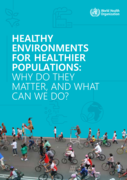
Known avoidable environmental risks to health cause at least 12.6 million deaths every year, and account for about one quarter of the global burden of disease (2016 data) (1). Air pollution alone causes about 7 million
deaths a year, placing it among the top global risks to health (2). Global envir...

No education system is effective unless it promotes the health and well-being of its students, staff and community. These strong links have never been more visible and compelling than in the context of the COVID-19 pandemic. Towards making every school a health-promoting school: Let’s start with a...
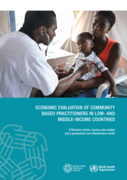
Community-based strategies play a significant role in many health systems in low- and middle-income countries, especially in light of critical shortages in the health workforce. The term community health worker has been used to refer to volunteers and salaried, professional or lay health workers wit...

Working towards better COVID-19 outcomes in the WHO European Region.From the first COVID-19 cases in Europe reported on
24 January 2020, the pandemic reached 1 million cases
within 3 months, 10 million cases within 8 months, and
100 million cases in Europe alone within 2 years. Over
the course o...
This report provides a review and analysis of the research landscape for three diseases – Chagas disease, human African trypanosomiasis and leishmaniasis – that disproportionately afflict poor and remote populations with limited access to health services. It represents the work of the disease re...
These guidelines were developed as part of Kenya's fast-track plan to end AIDS among adolescents and young people. Based on research into adolescent and young key populations in Kenya and elsewhere, they outline a package of HIV prevention services, and emphasize the need to combine biobehavioural i...
The marathon to eradicate polio is on its final lap: the world is more than 99% of the way to success. After millennia of living with poliovirus and suffering the paralysis it causes, today nearly all the world’s people live in polio-free countries; two of the three strains of wild poliovirus (WPV...
This guidance document is designed to ensure that the process of iteratively managing the health risks of climate change is integrated into the overall National Adaptation Planning (NAP) process, including through assessing risks; identifying, prioritizing, and implementing adaptation options; and m...
The purpose of cancer screening tests is to detect pre-cancer or early-stage cancer in asymptomatic individuals so that timely diagnosis and early treatment can be offered, where this treatment can lead to better outcomes for some people.
The aim of a cancer screening programme is either to reduc...
The health and socioeconomic crisis triggered by the COVID-19 pandemic has hit the countries of Latin America hard and laid bare the profound inequities about which numerous international, regional and national reports have sounded warnings in recent decades. In this context, the historical politica...
Round 3: Key informant findings from 129 countries, territories and areas - Quarter 4 2021
Countries reported disruptions in all health-care settings. In more than half of countries surveyed, many people are still unable to access care at the primary care and community care levels. Significant dis...

This booklet presents key messages for action, summarized from a set of
chapters on different environmental health issues.

These guidelines promote the delivery of people-centred health services for STIs by providing evidence-based recommendations related to decentralization, integration, task sharing and digital health. These recommendations complement existing WHO guidelines for STI testing, treatment and management, ...

Despite being a preventable and curable infectious disease, tuberculosis (TB) has continued to elude global controll efforts. In 2023, 8.2 milion people with TB were diagnosed and notified to the WHO, the hightest number ever reported since WHO began tracking.
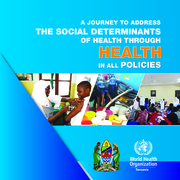
Health in All Policies (HiAP) promotes health and equity. It is based on the recognition that our greatest health challenges for example, non-communicable diseases, health inequities and inequalities, climate change, and spiraling health care costs are highly complex and often linked through the soc...

WHO consolidated guidelines on tuberculosis: Module 6: tuberculosis and comorbidities, 2nd ed
recommended
Addressing TB comorbidities and risk factors is central to the World Health Organization (WHO) End TB Strategy. These guidelines consolidate the latest WHO recommendations on TB and key comorbidities. The guidelines are a living document and will include dedicated sections for each key TB comorbidit...

In an era of constrained resources and tightening budgets, strategic prioritization in tuberculosis (TB) programming is more critical than ever. Countries must make informed decisions to allocate limited resources effectively - maximizing impact, preventing avoidable deaths, and sustaining progress ...
