
Filter
3013
Text search:
Health
Cluster,
WHO
Featured
Recommendations
270
New Publications
906
Language
Document type
No document type
1633
Studies & Reports
522
Guidelines
366
Manuals
167
Strategic & Response Plan
142
Situation Updates
74
Fact sheets
54
Training Material
32
Resource Platforms
11
Infographics
9
Brochures
1
Dashboards/Maps
1
Online Courses
1
Countries / Regions
Global
128
India
84
Nepal
84
Kenya
77
Syria
76
Myanmar / Burma
70
Nigeria
66
Sierra Leone
64
Bangladesh
61
Ethiopia
58
Malawi
58
Uganda
51
Liberia
49
Congo, Democratic Republic of
48
South Sudan
46
Ukraine
46
South Africa
45
Yemen
45
Africa
43
Mozambique
40
Ghana
38
Zambia
36
Tanzania
35
Rwanda
34
Zimbabwe
31
Philippines
30
Western and Central Europe
27
Haiti
25
Brazil
24
Latin America and the Carribbean
23
Senegal
22
Indonesia
22
West and Central Africa
21
Burkina Faso
18
East and Southern Africa
18
Somalia
17
Namibia
17
South–East Asia Region
17
Russia
17
Pakistan
16
Afghanistan
16
Lesotho
16
Sudan
15
Central African Republic
15
Madagascar
15
Guinea
14
Mali
14
Cambodia
14
Cameroon
13
Venezuela
13
Jordan
11
Middle East and North Africa
11
Eastern Europe
11
Lebanon
10
Eswatini/ Swaziland
10
Colombia
10
Palestine
10
Germany
9
Vietnam
9
Niger
8
Iraq
7
Thailand
7
Moldova
7
Peru
6
Burundi
6
Botswana
6
Laos
6
China
5
Sri Lanka
5
Asia
5
Turkey
4
Papua New Guinea
4
Angola
4
Western Pacific Region
4
Eastern Europe and Central Asia
4
Paraguay
4
Albania
4
Portugal
4
Guinea-Bissau
3
Côte d’Ivoire / Ivory Coast
3
Togo
3
Argentina
3
Hungary
3
Libya
3
Iran
3
Kyrgyzstan
3
Morocco
2
USA
2
Chad
2
Gambia
2
Malaysia
2
Singapore
2
Vanuatu
2
Serbia
2
Croatia
2
Mexico
2
Chile
2
Poland
2
Italy
2
Armenia
2
Romania
2
Georgia
2
North America
2
France
2
United Kingdom
2
Spain
2
Azerbaijan
2
Saudi Arabia
1
Mauritania
1
Benin
1
North Macedonia
1
Ecuador
1
Bolivia
1
Greece
1
Guatemala
1
Other region
1
Fiji
1
Bhutan
1
Southern Africa
1
Timor Leste/ East Timor
1
Tajikistan
1
Qatar
1
Bulgaria
1
Slovakia
1
Gabon
1
Turkmenistan
1
Jamaica
1
Japan
1
Denmark
1
Mauritius
1
Tunisia
1
Norway
1
Belarus
1
Bosnia and Herzegovina
1
Authors & Publishers
Publication Years
Category
Countries
1261
Key Resources
263
Women & Child Health
197
Clinical Guidelines
160
Public Health
152
Capacity Building
33
Pharmacy & Technologies
16
Toolboxes
COVID-19
333
Conflict
199
HIV
174
Mental Health
166
Disability
110
Ebola & Marburg
108
Natural Hazards
84
TB
79
Rapid Response
78
Planetary Health
66
NTDs
64
AMR
55
Refugee
45
Caregiver
45
2.0 Rapid Response
45
NCDs
41
Cholera
37
Global Health Education
36
Malaria
33
Zika
25
Polio
21
Pharmacy
19
Health Financing Toolbox
18
Specific Hazards
17
Typhoon
6
Social Ethics
2
South Sudan
1
Prepared by the Independent Panel for Pandemic Preparedness and Response for the WHO Executive Board, January 2021
“The world was not as prepared as it should have been, and it must do better,” concludes a
...

World malaria report 2024
recommended
New data from the WHO reveal that an estimated 2.2 billion cases of malaria and 12.7 million deaths have been averted since 2000, but the disease remains a serious global health threat, particularly
...

Report of a virtual meeting 21–23 June 2022

Implementation reference guide. This Malaria Surveillance Assessment Toolkit implementation reference guide is a comprehensive reference document, as well as a step by-step guide. It aligns and adapts available tools into a single set of standardized tools, which can be used to conduct malaria surve
...

2nd edition. The purpose of this document is to present updated standardized protocols that P. falciparum-endemic countries can use to determine the prevalence of parasites with pfhrp2/3 gene deletions causing negative HRP2 RDT results among symptomatic falciparum patients. The findings should be us
...

This global guidance was developed to support malaria-free countries and those that are close to malaria elimination to prevent re-establishment. The document outlines key concepts and principles for preventing re-establishment and provides guidance on strategies, interventions, planning and managem
...
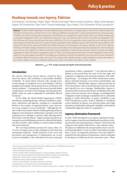
The World Health Organization recently redefined leprosy elimination as a phased process, with the first milestone being the
interruption of transmission, achieved when no new child cases (defined as younger than 15 years) are reported for five con
...

Despite being a preventable and curable infectious disease, tuberculosis (TB) has continued to elude global controll efforts. In 2023, 8.2 milion people with TB were diagnosed and notified to the WHO, the hightest number ever reported since
...

Breastfeeding is a cornerstone of healthy infant nutrition, development and survival. It is critical for countries* to improve breastfeeding rates in order to achieve global targets for newborn and child health and survival, as well as economic grow
...

This guidance synthesizes current evidence on dengue laboratory testing and diagnostics and provides practical recommendations for laboratories, clinicians, public health officials, and programme managers involved in dengue diagnosis, surveillance,
...
The WHO handbook “Epidemiological Data Analysis for the Early Warning Alert and Response Network (EWARN) in Humanitarian Emergencies” explains how to collect, analyse, interpret, and share health
...
This manual summarizes key issues related to the safety of NTD medicines and their administration, with a focus on essential medicines used in mass drug administration (MDA), also called preventive chemotherapy. It can be used as a standalone reference manual, but is intended to be used in conjuncti
...

This document provides technical guidance on concepts, definitions, indicators, criteria, milestones and tools to assist leprosy programmes in their journey towards the goals of interruption of transmission and elimination of leprosy disease and through the post-elimination period. Importantly, it p
...
Since 1996, trachoma has been targeted for elimination as a public health problem worldwide. The active trachoma criterion for national elimination as a public health problem is a TF1–9 < 5%, sustained for at least two years in the absence of antibiotic mass drug administration (MDA), in each formerly endemic EU. Using A, F and E,
...

This document provides guidance on how to implement contact screening and chemoprophylaxis with single-dose rifampicin. The contents are logically ordered: counselling and obtaining consent, identification and listing of index case, listing of contacts, tracing of contacts, screening of contacts, ad
...
Meeting of the Neglected Tropical Diseases Strategic and Technical Advisory
Group’s Monitoring and Evaluation Subgroup on Disease-specific Indicators
Schistosomiasis is an acute and chronic parasitic disease caused by blood flukes (trematode
worms) of the genus Schistosoma. At least 249 million people required preventive treatment in
2012. Preventive treatment, which should be repeated over a number of years, will reduce and
prevent morbidity.
...

Despite the significant role of vector control in national leishmaniasis control programmes, the programmatic community perceives vector control as the weakest component of leishmaniasis control strategies in terms of resources, scientific evidence of the usefulness of interventions and capacity for
...

An interregional meeting on leishmaniasis among neighbouring endemic
countries in the Eastern Mediterranean, African and European regions was organized by the World Health Organization (WHO) Region
...
