
Filter
2630
Text search:
psychosocial
interventions
Featured
297
615
Language
2328
265
54
44
38
20
17
9
6
4
3
3
2
2
2
2
2
2
2
2
2
1
1
1
1
1
1
1
1
1
1
1
1
1
1
1
1
1
Document type
1428
401
305
170
148
63
49
46
11
4
3
2
Countries
116
80
75
71
62
55
52
52
50
50
43
42
40
38
38
35
32
30
28
27
27
27
26
24
24
23
23
23
22
19
19
18
18
17
16
14
13
13
13
13
12
12
10
10
10
10
10
9
9
8
8
8
7
7
7
7
6
6
6
6
5
5
5
5
5
5
5
5
4
4
4
3
3
3
3
3
3
2
2
2
2
2
2
2
2
2
2
2
2
2
2
1
1
1
1
1
1
1
1
1
1
1
1
1
1
1
1
1
1
1
1
1
1
1
1
1
1
1
1
1
Authors & Publishers
341
114
89
74
63
62
58
56
52
33
24
24
24
24
23
22
18
17
17
16
16
16
15
14
14
14
14
13
12
12
11
11
11
11
11
10
10
10
9
8
8
8
8
8
8
8
8
7
7
7
7
7
6
6
6
6
6
6
6
6
6
6
6
6
6
5
5
5
5
5
5
5
5
5
5
5
5
5
5
5
5
5
5
5
5
5
5
5
5
5
5
4
4
4
4
4
4
4
4
4
4
4
4
4
4
4
4
4
4
4
4
4
4
4
4
4
4
4
3
3
3
3
3
3
3
3
3
3
3
3
3
3
3
3
3
3
3
3
3
3
3
3
3
3
3
3
3
3
3
3
3
3
3
3
3
3
3
3
3
3
3
3
3
3
3
3
3
3
3
3
2
2
2
2
2
2
2
2
2
2
2
2
2
2
2
2
2
2
2
2
2
2
2
2
2
2
2
2
2
2
2
2
2
2
2
2
2
2
2
2
2
2
2
2
2
2
2
2
2
2
2
2
2
2
2
2
2
2
2
2
2
2
2
2
2
2
2
2
2
2
2
2
2
2
2
2
2
2
2
2
2
2
2
2
2
2
2
2
2
2
2
2
2
2
2
2
2
2
2
2
2
2
2
2
2
2
2
2
2
2
2
2
2
2
2
2
2
2
2
2
2
2
2
2
2
2
2
2
2
2
2
2
2
2
2
2
2
2
2
2
2
2
2
2
2
2
2
2
2
2
2
2
2
2
2
2
2
2
2
2
1
1
1
1
1
1
1
1
1
1
1
1
1
1
1
1
1
1
1
1
1
1
1
1
1
1
1
1
1
1
1
1
1
1
1
1
1
1
1
1
1
1
1
1
1
1
1
1
1
1
1
1
1
1
1
1
1
1
1
1
1
1
1
1
1
1
1
1
1
1
1
1
1
1
1
1
1
1
1
1
1
1
1
1
1
1
1
1
1
1
1
1
1
1
1
1
1
1
1
1
1
1
1
1
1
1
1
1
1
1
1
1
1
1
1
1
1
1
1
1
1
1
1
1
1
1
1
1
1
1
1
1
1
1
1
1
1
1
1
1
1
1
1
1
1
1
1
1
1
1
1
1
1
1
1
1
1
1
1
1
1
1
1
1
1
1
1
1
1
1
1
1
1
1
1
1
1
1
1
1
1
1
1
1
1
1
1
1
1
1
1
1
1
1
1
1
1
1
1
1
1
1
1
1
1
1
1
1
1
1
1
1
1
1
1
1
1
1
1
1
1
1
1
1
1
1
1
1
1
1
1
1
1
1
1
1
1
1
1
1
1
1
1
1
1
1
1
1
1
1
1
1
1
1
1
1
1
1
1
1
1
1
1
1
1
1
1
1
1
1
1
1
1
1
1
1
1
1
1
1
1
1
1
1
1
1
1
1
1
1
1
1
1
1
1
1
1
1
1
1
1
1
1
1
1
1
1
1
1
1
1
1
1
1
1
1
1
1
1
1
1
1
1
1
1
1
1
1
1
1
1
1
1
1
1
1
1
1
1
1
1
1
1
1
1
1
1
1
1
1
1
1
1
1
1
1
1
1
1
1
1
1
1
1
1
1
1
1
1
1
1
1
1
1
1
1
1
1
1
1
1
1
1
1
1
1
1
1
1
1
1
1
1
1
1
1
1
1
1
1
1
1
1
1
1
1
1
1
1
1
1
1
1
1
1
1
1
1
1
1
1
1
1
1
1
1
1
1
1
1
1
1
1
1
1
1
1
1
1
1
1
1
1
1
1
1
1
1
1
1
1
1
1
1
1
1
1
1
1
1
1
1
1
1
1
1
1
1
1
1
1
1
1
1
1
1
1
1
1
1
1
1
1
1
1
1
1
1
1
1
1
1
1
1
1
1
1
1
1
1
1
1
1
1
1
1
1
1
1
1
1
1
1
1
1
1
1
1
1
1
1
1
1
1
1
1
1
1
1
1
1
1
1
1
1
1
1
1
1
1
1
1
1
1
1
1
1
1
1
1
1
1
1
1
1
1
1
1
1
1
1
1
1
1
1
1
1
1
1
1
1
1
1
1
1
1
1
1
1
1
1
1
1
1
1
1
1
1
1
1
1
1
1
1
1
1
1
1
1
1
1
1
1
1
1
1
1
1
1
1
1
1
1
1
1
1
1
1
1
1
1
1
1
1
1
1
1
1
1
1
1
1
1
1
1
1
1
1
1
1
1
1
1
1
1
1
1
1
1
1
1
1
1
1
1
1
1
1
1
1
1
1
1
1
1
1
1
1
1
1
1
1
1
1
1
1
1
1
1
1
1
1
1
1
1
1
1
1
1
1
1
1
1
1
1
1
1
1
1
1
1
1
1
1
1
1
1
1
1
1
1
1
1
1
1
1
1
1
1
1
1
1
1
1
1
1
1
1
1
1
1
1
1
1
1
1
1
1
1
1
1
1
1
1
1
1
1
1
1
1
1
1
1
1
1
1
1
1
1
1
1
1
1
1
1
1
1
1
1
1
1
1
1
1
1
1
1
1
1
1
1
1
1
1
1
1
1
1
1
1
1
1
1
1
1
1
1
1
1
1
1
1
1
1
1
1
1
1
1
1
1
1
1
1
1
1
1
1
1
1
1
1
1
1
1
1
1
1
1
1
1
1
1
1
1
1
1
1
1
1
1
1
1
1
1
1
1
1
1
1
1
1
1
1
1
1
1
1
1
1
1
1
1
1
1
1
1
1
1
1
1
1
1
1
1
1
1
1
1
1
1
1
1
1
1
1
1
1
1
1
1
1
1
1
1
1
1
1
1
1
1
1
1
1
1
1
1
1
1
1
1
1
1
1
1
1
1
1
1
1
1
1
1
1
1
1
1
1
1
1
1
1
1
1
1
1
1
1
1
1
1
1
1
1
1
1
1
1
1
1
1
1
1
1
1
1
1
1
1
1
1
1
1
1
1
1
1
1
1
1
1
1
1
1
1
1
1
1
1
1
1
1
1
1
1
1
1
1
1
1
1
1
1
1
1
1
1
1
1
1
1
1
1
1
1
1
1
1
1
1
1
1
1
1
1
1
1
1
1
1
1
1
1
1
1
1
1
1
1
1
1
1
1
1
1
1
1
1
1
1
1
1
1
1
1
1
1
1
1
1
1
1
1
1
1
1
1
1
1
1
1
1
1
1
1
1
1
1
1
1
1
1
1
1
1
1
1
1
1
1
1
1
1
1
1
1
1
1
1
1
1
1
1
1
1
1
1
1
1
1
1
1
1
1
1
1
1
1
1
1
1
1
1
1
1
1
1
1
1
1
1
1
1
1
1
1
1
1
1
1
1
1
1
1
1
1
1
1
1
1
1
1
1
1
1
1
1
1
1
1
1
1
1
1
1
1
1
1
1
1
1
1
1
1
1
1
1
1
1
1
1
1
1
1
1
1
1
1
1
1
1
1
1
1
1
1
1
1
1
1
1
1
1
1
1
1
1
1
1
1
1
1
1
1
1
1
1
1
1
1
1
1
1
1
1
1
1
1
1
1
1
1
1
1
1
1
1
1
1
1
1
1
1
1
1
1
1
1
1
1
1
1
1
1
1
1
1
1
1
1
1
1
1
1
1
1
1
1
1
1
1
1
1
1
1
1
1
1
1
1
1
1
1
1
1
1
1
1
1
1
1
1
1
1
1
1
1
1
1
1
1
1
1
1
1
1
1
1
1
1
1
1
1
1
1
1
1
1
1
1
1
1
1
1
1
1
1
1
1
1
1
1
1
1
1
1
1
1
1
1
1
1
1
1
1
1
1
1
1
1
1
1
1
1
1
1
1
1
1
1
1
1
1
1
1
1
1
1
1
1
1
1
1
1
1
1
1
1
1
1
1
1
1
1
1
1
1
1
1
1
1
1
1
1
1
1
1
1
1
1
1
1
1
1
1
1
1
1
1
1
1
1
1
1
1
1
1
1
1
1
1
1
1
1
1
1
1
1
1
1
1
1
1
1
1
1
1
1
1
1
1
1
1
1
1
1
1
1
1
1
1
1
1
1
1
1
1
1
1
1
1
1
1
1
1
1
1
1
1
1
1
1
1
1
1
1
1
1
1
1
1
1
1
1
1
1
1
1
1
1
1
1
1
1
1
1
1
1
1
1
1
1
1
1
1
1
1
1
1
1
1
1
1
1
1
1
1
1
1
1
1
1
1
1
1
1
1
1
1
1
1
1
1
1
1
1
1
1
1
1
1
1
1
1
1
1
1
1
1
1
1
1
1
1
1
1
1
1
1
1
1
1
1
1
1
1
1
1
1
1
1
1
1
1
1
1
1
1
1
1
1
1
1
1
1
1
1
1
1
1
1
1
1
1
1
1
1
1
1
1
1
1
1
1
1
1
1
1
1
1
1
1
1
1
1
1
1
1
1
1
1
1
1
1
1
1
1
1
1
1
1
1
1
1
1
1
1
1
1
1
1
1
1
1
1
1
1
1
1
1
1
1
1
1
1
1
1
1
1
1
1
1
1
1
1
1
1
1
1
1
1
1
1
1
1
1
1
1
1
1
1
1
1
1
1
1
1
1
1
1
1
1
1
1
1
1
1
1
1
1
1
1
1
1
1
1
1
1
1
1
1
1
1
1
1
1
1
1
1
Publication Years
839
1582
206
2
1
Category
917
167
166
136
118
48
3
2
Toolboxes
619
256
145
143
120
105
81
75
75
63
43
42
28
26
25
25
15
11
10
5
4
4
4
3
3
2
1
The Socio-Economic Impact of People Living with HIV at the Household Level in Myanmar
Cercone, James; Pinder, Étoile; Pothuis, Michal et al.
The Republic of the Union of Myanmar, Ministry of Health and Sports; UNDP
(2016)
C1
The study collected data on the impact of HIV-related diseases on income, revenues, economic dependency, consumption, education, health, food security, stigma, discrimination, quality of life, and migration. The study also assessed people living with chronic diseases in order to compare the impact o
...
f living with HIV/AIDS with the impact of living with a chronic disease.
Stigma, discrimination, and socio-economic exclusion continue to affect the rights and socio-economic opportunities of people living with HIV in Myanmar. Households with a family member who has HIV, have lower incomes, fewer assets and lower home-ownership, compared to households that are not affected by HIV. They also have more household debt, and their families pay a higher rate of interest compared to families not affected by HIV. more
Stigma, discrimination, and socio-economic exclusion continue to affect the rights and socio-economic opportunities of people living with HIV in Myanmar. Households with a family member who has HIV, have lower incomes, fewer assets and lower home-ownership, compared to households that are not affected by HIV. They also have more household debt, and their families pay a higher rate of interest compared to families not affected by HIV. more
It highlights the numerous challenges to quality service provision, along with the organisation’s response to mental health needs, and recommendations for international and regional decision-makers including:
- Advocating and working towards mental health policies that support adequate funding f
...
or mental health care and government suppor
- Legislation to protect the rights of people with mental disorders and vulnerable communities
- Advocating for multi-year funding to support the sustainability of MHPSS programs
- Creating capacity building opportunities consistent with the IASC guidelines and supported with continuous supervision
more

Access to Services and Barriers faced by People with Disabilities: A Quantitative Survey
Nathan Grills, Lawrence Singh, Hira Pant, Jubin Varghese, GVS Murthy, Monsurul Hoq, Manjula Marella
Disability, CBR & Inclusive Development Journal (DCIDJ)
(2017)
CC
In low- and middle-income middle-income countries, reliable and disaggregated disability data on prevalence, participation and barriers are often unavailable. This study aimed to estimate disability prevalence, determine associated socio-demographic factors and compare access in the community betwee
...
n people with and without disability in Dehradun district of Uttarakhand, India, using the Rapid Assessment of Disability survey.
more
In the last five years, i.e. how old turned the Campaign “Indifesa” (Defenceless) in 2016, that was launched by Terre des Hommes in 2012, the world has become smaller. One can actually say that the derangements following the Arab Spring in 2011 reshuffled what is stable and what produces instabi
...
lity; between those, who live in a peaceful world, and those, who try to survive in areas affected by violence. All that significantly reduced the distance between those, who live there, along the Mediterranean cost, and those, who live here. Such deep disorder made even more acute, visible and tangible also for the so called developed world all the serious violations of the human rights suffered by little girls and girls: on the one hand the widespread political instability and violence made even more precarious the little girls and young women’s conditions on the Mediterranean southern coast, where they were already fragile; and on the other hand the migration flows further worsened them, matching at the same time the conditions of those young and very young migrants to those of the European girls of the same age.
more
The recruitment and use of children violates their rights and causes them physical, developmental, emotional, mental, and spiritual harm. The impact on their mental and physical well-being breaches the most fundamental human rights and represents a grave threat to durable peace and sustainable deve
...
lopment, as cycles of violence are perpetuated. The Paris Commitments adopted in Paris in February 2007 are an expression of strengthened international resolve to prevent the recruitment of children and highlight the actions governments can and should take to protect children affected by conflict. The Paris Principles are the operational guidelines related to sustainable reintegration of children formerly associated with armed forces and groups.
more

Network HPN Paper: The role of education in protecting children in conflict
Susan Nicolai and Carl Triplehorn
Humanitarian Practice Network (HPN); Overseas Development Institute (ODI)
(2003)
C1
Education in emergencies is a young area; the evidence of its impact is often anecdotal, and although its status as a humanitarian concern has gained legitimacy in recent years, it has yet to be accepted across the humanitarian community. Much more needs to be done to enhance our understanding of t
...
he links between education and child protection in emergency situations.
more
The CSMH compiled a list of assessment measures that are in the public domain (free of charge) and available online for clinicians. Below are the recommended measures can be used in school mental health programs to help assess symptoms of clinical disorders (e.g. depression, anxiety, ADHD) an in som
...
e cases are useful for tracking student progress and outcomes over time.
more
BMJ Glob Health 2019;4:e001272. doi:10.1136/bmjgh-2018-001272
Trust is an essential component of successful cooperative endeavours. The global health response to the 2014–2016 West Africa Ebola outbreak confronted historically tenuous regional relationships of trust. Challenging sociopolitical co
...
ntexts and initially inappropriate communication strategies impeded trustworthy relationships between communities and responders during the epidemic. Social scientists affiliated with the Ebola 100-Institut Pasteur project interviewed approximately 160 local, national and international responders holding a wide variety of roles during the epidemic
more

Diagnosis of dementia
World Health Organization
(2012)
C_WHO
Q6: Can dementia be diagnosed at first or second level care by non-specialist health care providers? What should be the assessment process for the diagnosis of dementia?
This brief draws out some recommendations for Ebola response actors in North Kivu. It includes lessons learned primarily from (i) historical outbreaks in Congo; (ii) outbreaks in Uganda in 2000-01 and 2012; (iii) the 2014-2016 West African epidemic; (iv) the outbreak in Equateur Province in DRC (May
...
- July 2018), and (v) the ongoing outbreak in North Kivu and Ituri Provinces in DRC (August 2018 - ongoing). The full report can be accessed here: https://opendocs.ids.ac.uk/opendocs/handle/123456789/14160.
more
Supervised dosing with a long acting opioid medication for the management of prescription opioid dependence (New 2015)
mhGAP; WHO
(2015)
C_WHO
SCOPING QUESTION: In the management of prescription opioid dependence, does supervised dosing with a long-acting opioid medication result in less opioid use and related harms than non-prescription, detoxification or usual care?
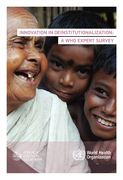
Based on the survey, five principles for deinstitutionalization were identified: community-based services must be in place; the health workforce must be committed to change; political support at the highest and broadest levels is crucial; timing is key; and additional financial resources are needed.
...
more
The World Health Organization (WHO) defines mental health as ‘a state of well-being in which the individual realizes his or her own abilities, can cope with the normal stresses of life, can work productively and fruitfully, and is able to make a contribution to his or her community’. Mental illn
...
ess refers to all of the diagnosable mental disorders, which are characterised by abnormalities in thinking, feelings or behaviours. Mental illness is closely related to vulnerability, both in its causes and in its effects. Globally, 14 per cent of the global burden of disease is attributed to mental illness – with 75 per cent of those affected being found in low-income countries – which includes a broad spectrum of diagnoses, from common mental illnesses such as anxiety and
substance abuse, to severe illnesses like psychosis.
more

Stigma toward mental illness in Latin America and the Caribbean: a systematic review
Franco Mascayano, Thamara Tapia, Sara Schilling, Rubén Alvarado, Eric Tapia, Walter Lips, Lawrence H. Yang
Revista Brasileira de Psiquiatria
(2016)
CC
Stigma toward individuals with mental disorders has been studied extensively. In the case of
Latin America and the Caribbean, the past decade has been marked by a significant increase in
information on stigma toward mental illness, but these findings have yet to be applied to mental health service
...
s in Latin America. The objective of this study was to conduct a systematic review of studies relating to stigma toward mental illness in Latin America and the Caribbean. The authors specifically considered differences in this region as compared with manifestations reported in Western European countries
more
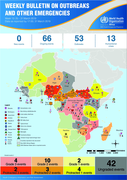
Response to the tropical cyclone in southern Africa
Ebola virus disease outbreak in the Democratic Republic of the Congo
Meningitis outbreak in Togo
Lassa fever outbreak in Liberia.
