
Filter
7127
Text search:
social
measures
Featured
Recommendations
613
New Publications
1791
Language
Document type
No document type
3764
Studies & Reports
1367
Guidelines
894
Manuals
397
Strategic & Response Plan
319
Fact sheets
174
Training Material
87
Situation Updates
73
Resource Platforms
23
Brochures
12
Infographics
11
Online Courses
5
App
1
Countries / Regions
Global
353
India
285
Kenya
209
Sierra Leone
157
Liberia
154
Western and Central Europe
152
Ethiopia
145
South Africa
141
Nepal
133
Myanmar / Burma
133
Uganda
128
Nigeria
118
Latin America and the Carribbean
116
Syria
113
Tanzania
113
Rwanda
99
Zambia
98
Africa
98
Bangladesh
97
Ghana
86
Malawi
81
Ukraine
79
Namibia
73
Congo, Democratic Republic of
72
Philippines
70
South Sudan
58
South–East Asia Region
55
Eastern Europe
54
Guinea
51
Cambodia
49
Indonesia
49
Brazil
48
Yemen
48
Mozambique
45
Zimbabwe
43
Lesotho
43
Asia
43
West and Central Africa
42
Middle East and North Africa
41
East and Southern Africa
40
Russia
40
Venezuela
38
Senegal
36
Germany
32
Eastern Europe and Central Asia
32
Afghanistan
30
Haiti
29
Pakistan
29
Colombia
27
Botswana
27
Jordan
24
Burkina Faso
23
Cameroon
23
Lebanon
22
Sudan
22
Central African Republic
22
Vietnam
21
Mali
20
Western Pacific Region
20
Somalia
19
Eswatini/ Swaziland
18
Thailand
17
Tajikistan
15
Iraq
14
China
14
Moldova
14
Laos
13
Madagascar
12
USA
11
Benin
11
Palestine
11
Albania
10
Iran
10
Angola
9
Chile
9
Georgia
9
Argentina
8
Peru
8
Burundi
8
Sri Lanka
8
Côte d’Ivoire / Ivory Coast
7
Niger
7
Togo
7
Greece
7
Mexico
7
Paraguay
7
Guinea-Bissau
6
Egypt
6
Papua New Guinea
6
Ecuador
6
El Salvador
6
Libya
6
Southern Africa
6
North America
6
Turkey
5
Malaysia
5
North Macedonia
5
Bolivia
5
Poland
5
Timor Leste/ East Timor
5
Kyrgyzstan
5
Kazakhstan
5
Turkmenistan
5
United Kingdom
5
Portugal
5
Spain
5
Saudi Arabia
4
Gambia
4
Hungary
4
Honduras
4
Armenia
4
Romania
4
Jamaica
4
Tunisia
4
Morocco
3
Chad
3
Singapore
3
Serbia
3
Croatia
3
Guatemala
3
Italy
3
Estonia
3
Uzbekistan
3
Japan
3
Mauritius
3
Bosnia and Herzegovina
3
Dominican Republic
2
Nicaragua
2
Other region
2
Fiji
2
Djibouti
2
Mongolia
2
Canada
2
Qatar
2
France
2
Azerbaijan
2
Belarus
2
Israel
2
Mauritania
1
Vanuatu
1
Switzerland
1
Solomon Islands
1
Bhutan
1
North Korea
1
Congo-Brazzaville
1
Bulgaria
1
Lithuania
1
Slovakia
1
Gabon
1
Maldives
1
Norway
1
South Korea
1
Algeria
1
Morocco
1
French Guyana
1
Belize
1
Costa Rica
1
Panama
1
Authors & Publishers
Publication Years
Category
Countries
2744
Key Resources
464
Public Health
359
Clinical Guidelines
318
Women & Child Health
313
Capacity Building
95
Pharmacy & Technologies
20
Annual Report MEDBOX
1
Toolboxes
COVID-19
953
Mental Health
572
HIV
437
Disability
339
Planetary Health
310
TB
266
Ebola & Marburg
249
Conflict
233
Refugee
181
Caregiver
168
NTDs
143
Global Health Education
141
Rapid Response
137
AMR
130
NCDs
115
Natural Hazards
110
Health Financing Toolbox
100
2.0 Rapid Response
80
Pharmacy
67
Malaria
64
Polio
43
Cholera
41
Zika
38
Specific Hazards
37
Social Ethics
29
Typhoon
5
South Sudan
2
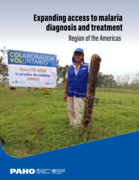
The overall objective of this approach is to accelerate efforts toward malaria elimination by increasing
access to early diagnosis and treatment. The specific objectives are to: Minimize the barriers that the population faces in accessing timely, quality diagnosis and treatment. Reduce the time bet
...

This publication provides an overview of evidence and guidance on the growing challenge of workplace heat stress in the context of climate change. It highlights the health and productivity risks faced by billions of workers, especially in manual labor sectors. The report details the physiological, s
...

The 2022 report reviews the global malaria diagnostics market and technological landscape to support Unitaid’s 2023–2027 strategy for quality malaria case management. The report highlights the stalled progress of malaria control efforts, the gaps in access to diagnostics and the public health im
...

The annual bulletin of the Mekong Malaria Elimination (MME) programme is a yearly report that reviews ongoing efforts to combat multidrug resistance and eliminate malaria in the 6 countries of the Greater Mekong subregion (GMS): Cambodia, China (Yunnan province), Lao People's Democratic Republic, My
...
This guidance synthesizes current evidence on dengue laboratory testing and diagnostics and provides practical recommendations for laboratories, clinicians, public health officials, and programme managers involved in dengue diagnosis, surveillance, and control, in the context of the global emergency
...

To guide the provision of quality palliative care services across the African region, the African Palliative Care Association (APCA) has developed a framework of core palliative care competencies that can be used by service providers, educators and other stakeholders to guide programmes development.
...

The African Palliative Care Association is pleased to publish the first edition of Palliative Care Standards for Africa. The development of these standards was achieved through wide consultation with service beneficiaries and providers, and they have been developed to suit different levels of
...

In the absence of a such a measure, and building on the success of developing the APCA African
Palliative Outcome Scale (POS) for adults, the African Palliative Care Association has developed the
APCA African Children’s POS. The tool has been validated across diseases, countries, settings and
...

IDMC's Global Report on Internal Displacement (GRID) is the authoritative source for data and analysis on the state of internal displacement for the previous year.

This report synthesizes the state of knowledge on the interlinkages between environmental degradation climate change conflict and mobility in the East and Horn of Africa, focusing on Burundi, Djibouti, Ethiopia, Kenya, Somalia, South Sudan, Tanzania, and Uganda.

This document outlines the plan for a continental cholera prevention and control with the implementation framework for the Cholera IMST, detailing its governance structure, strategic priorities, and operational modalities

Public health challenges over the past decade have highlighted the importance of approaching health through a holistic lens of human, animal, and environmental sectors, recognizing the need for a collaborative response against shared threats. Zoonotic diseases, transmitted between humans and animals
...

WHO guideline on HIV service delivery
recommended
Updated guidance on the integration of diabetes, hypertension and mental health services, and interventions to support adherence to antiretroviral therapy. The guideline offers practical implementation guidance for countries and key stakeholders as well as outlining key research gaps. As life expec
...

WHO, as the coordinating authority on international health, supports countries in protecting public health through evidence-based policies and actions. Considering the significant health burden and the multiple potential benefits of interventions, the WHO Air Quality, Energy and Health Unit aims to
...

Building on the WHO guidelines for disclosure to children up to age 12 in 2011, this implementation guidance provides evidence on existing interventions that support children and adolescents living with HIV in the process of disclosure. It includes interventions that focuses on safe disclosure, as w
...

Strengthening global health security to protect the world against future epidemics and pandemics requires well-tested and decentralized capacities for the local detection and rapid containment of outbreaks of infectious disease. For such capacities to translate into effective response actions, ind
...


The document provides a standardized protocol for evaluating the Early Warning Alert and Response Network (EWARN), a surveillance system used during humanitarian emergencies when regular national health surveillance may be disrupted. The purpose of EWARN is to detect outbreaks of communicable diseas
...

In an era of constrained resources and tightening budgets, strategic prioritization in tuberculosis (TB) programming is more critical than ever. Countries must make informed decisions to allocate limited resources effectively - maximizing impact, preventing avoidable deaths, and sustaining progress
...

Abrupt reductions in international HIV assistance in 2025 have deepened existing funding shortfalls. The OECD estimates that external health assistance is projected to drop by 30–40% in 2025 compared with 2023, causing immediate and even more severe disruption to health services in low- and middle
...
