
Filter
1669
Filtered Results: 1669
Text search:
Regional
Office
South-East
Asia,
World
Health
Organization
Featured
Recommendations
165
New Publications
432
Language
Document type
No document type
805
Studies & Reports
390
Guidelines
222
Manuals
100
Strategic & Response Plan
70
Training Material
24
Fact sheets
22
Situation Updates
16
Resource Platforms
11
Infographics
5
Brochures
2
Online Courses
2
Countries / Regions
Global
120
South–East Asia Region
72
India
65
Myanmar / Burma
63
Asia
46
Nepal
45
Bangladesh
31
Philippines
28
Western and Central Europe
28
Indonesia
22
Africa
21
Cambodia
20
Uganda
16
Ethiopia
16
Thailand
14
Western Pacific Region
14
Kenya
13
Syria
13
Tanzania
13
Middle East and North Africa
11
South Africa
11
Liberia
11
Eastern Europe
10
Pakistan
10
Zambia
9
Ukraine
8
Ghana
8
Afghanistan
8
Latin America and the Carribbean
8
Sri Lanka
8
Rwanda
7
Nigeria
7
Laos
7
Haiti
7
Yemen
7
China
6
Malawi
6
Mozambique
6
Congo, Democratic Republic of
6
West and Central Africa
6
Sierra Leone
5
Senegal
5
Eastern Europe and Central Asia
5
East and Southern Africa
5
Vietnam
5
Russia
5
Sudan
5
South Sudan
5
Timor Leste/ East Timor
4
Zimbabwe
4
Venezuela
4
Moldova
4
Somalia
4
North Macedonia
3
Turkey
3
Iran
3
Burkina Faso
3
Jordan
3
Georgia
3
Central African Republic
3
Mexico
2
Kazakhstan
2
Albania
2
Malaysia
2
Guinea
2
Belarus
2
Bosnia and Herzegovina
2
Lebanon
2
Papua New Guinea
2
Namibia
2
Eswatini/ Swaziland
2
Tajikistan
1
North Korea
1
Lesotho
1
Cameroon
1
Singapore
1
Kyrgyzstan
1
Peru
1
Morocco
1
Mongolia
1
Qatar
1
Armenia
1
USA
1
Croatia
1
Hungary
1
Saudi Arabia
1
Paraguay
1
Gabon
1
Turkmenistan
1
Japan
1
Belgium
1
Maldives
1
Tunisia
1
Argentina
1
Brazil
1
Djibouti
1
Egypt
1
Romania
1
Greece
1
Palestine
1
Poland
1
Mali
1
Bhutan
1
Botswana
1
Iraq
1
Ecuador
1
Madagascar
1
Authors & Publishers
Publication Years
Category
Countries
403
Clinical Guidelines
180
Public Health
125
Women & Child Health
120
Key Resources
120
Capacity Building
37
Pharmacy & Technologies
19
Toolboxes
HIV
172
Mental Health
130
COVID-19
111
Planetary Health
105
TB
83
NTDs
76
AMR
58
Global Health Education
54
Disability
52
Rapid Response
44
Caregiver
42
Refugee
39
NCDs
36
Natural Hazards
32
Health Financing Toolbox
32
Malaria
30
2.0 Rapid Response
28
Conflict
27
Zika
19
Pharmacy
18
Ebola & Marburg
12
Cholera
11
Polio
10
Specific Hazards
7
Typhoon
3
Social Ethics
1
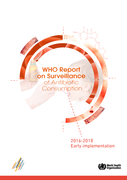
2016-2018 Early implementation,
This report presents 2015 data on the consumption of systemic antibiotics from 65 countries and areas, contributing to our understanding of how antibiotics are used in these countries. In addition, the report documents early efforts of the World Health Organization (...
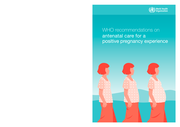
This document is intended for a wide audience including national and local policymakers, implementers and managers of national and local maternal and child health programmes, non-governmental and other organizations and professional societies involved in the planning and management of maternal and c...
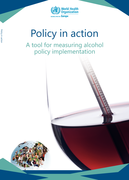
A tool for measuring alcohol policy implementation
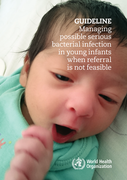
Managing possible serious bacterial infection in young infants when referral is not feasible
recommended
It provides guidance on care for use in resource-limited settings or in settings where families with sick young infants do not accept or cannot access referral care, but can be managed in outpatient settings by an appropriately trained health worker. The guideline seeks to provide programmatic guida...

The World Health Organization (WHO) and the global community of countries, partners, donors, technical experts, scientists and field implementation teams continue to work towards the ultimate goal of a world free of the burden of neglected tropical diseases (NTDs).
Fact Sheet Global Atlas of medical devices
Training Module on Malaria

Growing emergencies and displacements across the world demand increasingly complex interventions and responses. The World Health Organization (WHO) has developed Malaria control in emergencies: a field manual to provide technical guidance to help partners respond effectively to malaria in emergency ...
This publication describes the first WHO public-benefit Target Product Profiles (TPPs) for snakebite antivenoms. It focuses on antivenoms for treatment of snakebite envenoming in sub-Saharan Africa. Four TPPs are described in the document:
Broad spectrum Pan-African polyvalent antivenoms: products ...
Health Evidence Network synthesis report 53
Towards ending tuberculosis and multidrug-resistant tuberculosis.
A rapid review of evidence on the managing the risk of disease emergence in the wildlife trade - World Animal Health Organization (OIE)
The portable diagnostic imaging technology covered by this document will serve not only the pressing demands for tuberculosis screening and triage but also other diseases. Therefore, the requirements, accessories, hardware and software packages listed in the following specifications are described in...
2nd edition. Training module on malaria control

WHO Technical Report Series, No. 961, 2011, Annex 8 - These guidelines are intended to provide a description of ways in which pharmacists can improve access to health care, health promotion and the use of medicines on behalf of the patients they serve. The role of FIP is to provide leadership for na...

Measles outbreak guide
recommended
This guide also draws on the standard operating procedures (SOPs) to apply for measles outbreak response
support from the Measles & Rubella Initiative Outbreak Response Fund (17) and includes a section on
measles outbreak recovery so that contributing factors and potential root causes are identifi...
Background: The World Health Organization (WHO) published a clinical case definition of post COVID-19
condition, by a Delphi consensus, on 6 October 2021. That process concluded that a separate definition
may be applicable for children. It is important to understand the frequency, characteristics ...
