
Filter
2487
Text search:
standard
precautions
Featured
401
565
Language
Document type
1024
639
310
277
114
57
31
12
9
5
4
2
2
1
Countries
127
114
61
49
48
47
44
43
42
39
34
30
27
25
24
23
22
21
20
18
18
18
17
16
15
14
14
14
13
13
12
12
11
11
10
8
8
6
6
6
6
5
5
5
5
5
5
4
4
4
4
4
4
4
3
3
3
3
3
3
2
2
2
2
2
2
2
2
2
2
2
2
2
2
2
2
2
2
1
1
1
1
1
1
1
1
1
1
1
1
1
1
1
1
1
1
1
Authors & Publishers
Publication Years
Category
634
365
218
216
187
83
73
1
Toolboxes
266
185
128
124
117
111
95
90
88
72
70
59
56
47
42
40
38
29
29
23
23
22
21
15
1
1
This document updates the earlier version published in April 2020. In recent weeks, information on the potential use of chloroquine or hydroxychloroquine for the treatment of people with COVID-19 has been disseminated in academic journals and public media. Although there are now ongoing clinical tri
...
a systematic review and meta-analysis Derek K Chu et al. on behalf of the COVID-19 Systematic Urgent Review Group Effort (SURGE) study authors.
Published: The Lancet June 01, 2020 DOI: https://doi.org/10.1016S0140-6736(20)31142-9
'We did a systematic review of 172 observational studies in health-
...
COVID-19 Guidance on use of personal protective equipment for different clinical settings and activities
recommended
This document provides guidance to African Union Member States based on a specific request from Member States for a checklist/guidance of the required personal protective equipment (PPE) needed by healthcare workers and care givers for the Coronavirus Disease 2019 (COVID-19) pandemic. This document
...
Fetal alcohol spectrum disorders (FASD) represent a range of physical, mental, and behavioral disabilities caused by alcohol use during pregnancy, or prenatal alcohol exposure (PAE). FASDs are considered to be one of the leading preventable causes of developmental disability. Despite its high preval
...
8 July 2020

This document provides guidance to Member States in the WHO European Region that wish to conduct behavioural insights studies related to COVID-19. Studies can be used to monitor public knowledge, risk perceptions, behaviours and trust with the overall aim to inform national COVID-19 outbreak respons
...
A total of 18 laboratories from 13 countries participated in the four rounds of EQA: 10 laboratories from eight African endemic countries, four of which participated in all four rounds and three in three rounds. The overall results showed that the median performance of these laboratories improved ov
...
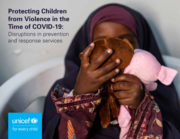
As daily lives and communities are upended by COVID-19, concern is mounting that children’s exposure to violence may increase. Children with a history of abuse may find themselves even more vulnerable – both at home and online – and may experience more frequent and severe acts of violence. Oth
...
This module is part of the WHO series The Immunological Basis for Immunization, which was initially developed in 1993 as a set of eight modules, comprising one module on general immunology and seven modules each devoted to one of the vaccines recommended for the Expanded Programme on Immunization, i
...
This new edition highlights once again the importance of collecting disaggregated data to conduct gender-based analysis in order to determine, address, reduce, and eliminate the causes of gender-related inequalities.

Under the theme Equity at the Heart of Health, this Plan seeks to catalyze efforts in Member States to reduce inequities in health within and between countries and territories in order to improve health outcomes. The Plan identifies specific actions to tackle health inequality, including those recom
...
Despite recommendations on the marketing of commercial baby and toddler foods, two new reports from WHO find widespread evidence of inappropriate promotion and poor nutritional quality of foods for infants and young children across the WHO European Region. To address these issues and help countries
...
Key considerations for the use of law to prevent noncommunicable diseases in the WHO European Region
Report of an intensive legal training and capacity-building workshop on law and noncommunicable diseases (Moscow, 30 May–3 June 2016)
The report summarizes important issues, themes and topics discussed during the meeting in Moscow, ranging from the design and implementation of legislation, reconc
...
The Federal Ministry of Health (FMOH) has been coordinating sector wide reforms that aim to improve equity and quality of maternal and child health services. As part of these efforts, the ministry is also exerting concerted efforts to improve availability and use of quality
...
Contact tracing is a key element of WHO’s recommended approach to control the spread of COVID-19 by breaking the chains of human-to-human transmission.
This document provides guidance to health authorities at all levels to improve the success rate of contact tracing by informing efforts with RCCE
...

The Handbook is a guide to the normative framework for humanitarian action and the operational approaches, coordination structures, and available tools and services that facilitate the mobilization of humanitarian assistance.
In resource restriced countries
The purpose of this TPP is to communicate the minimum and ideal characteristics desired to meet the need for discriminating low levels of risk for transmission, i.e. targeted prevalence thresholds in the surveyed areas. An in vitro diagnostic test is needed for the detection of analyte(s) specific t
...
UNAIDS and the World Health Organization have published this updated guidance on ethical considerations in HIV prevention trials. The new guidance is the result of a year-long process that saw more than 80 experts and members of the public give inputs and is published 21 years after the first editio
...
