
Filter
673
Text search:
demographics
Featured
58
181
Language
Document type
336
154
83
35
23
15
13
8
3
1
1
1
Countries
30
20
17
17
13
12
12
12
12
12
12
11
10
10
10
10
9
8
8
7
7
7
6
6
6
6
6
6
6
5
5
4
4
4
3
3
3
3
3
3
3
3
3
3
3
3
3
2
2
2
2
2
2
2
2
2
2
2
2
2
2
2
2
2
1
1
1
1
1
1
1
1
1
1
1
1
1
1
1
1
1
1
1
1
1
1
1
1
1
1
Authors & Publishers
Publication Years
Category
259
49
48
29
20
12
1
Toolboxes
70
54
39
37
31
26
21
20
19
19
15
15
15
13
12
11
8
7
6
6
5
5
4
3
3

The document “Guidelines for the Investigation and Control of Disease Outbreaks” provides practical guidance for public health professionals on how to detect, investigate, and manage outbreaks of communicable diseases. It describes the key steps of outbreak investigation, including confirming th
...

The International Federation of Red Cross and Red Crescent Societies (IFRC) is the world’s largest volunteer-based humanitarian network. With our 190 member National Red Cross and Red Crescent Societies worldwide, we are in every community reaching 160.7 million people annually through long-term s
...

The document provides practical guidelines for conducting a national disaster risk assessment, developed by the United Nations Office for Disaster Risk Reduction. It emphasizes the importance of understanding disaster risk as a foundation for effective disaster risk management and sustainable develo
...

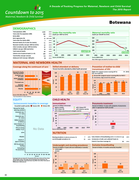
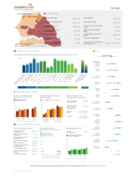
The Countdown country profile presents in one place the best and latest evidence to enable an assessment of a country’s progress in improving reproductive, maternal, newborn, and child health (RMNCH)
Worldometers is run by an international team of developers, researchers, and volunteers with the goal of making world statistics available in a thought-provoking and time relevant format to a wide audience around the world. Worldometers is owned by Dadax, an independent company. We have no political
...
Statistics and Monitoring Section / Policy and Practice
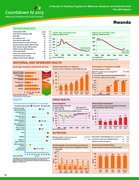
The Countdown country profile presents in one place the best and latest evidence to enable an assessment of a country’s progress in improving reproductive, maternal, newborn, and child health (RMNCH)
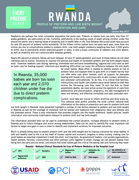
The information provided here can be used to understand the current situation, increase attention to preterm births in Rwanda and to inform dialogue and action among stakeholders. Data can be used to identify the most important risk factors to target and gaps in care in order to identify and impleme
...
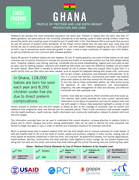
The information provided here can be used to understand the current situation, increase attention to preterm births in Rwanda and to inform dialogue and action among stakeholders. Data can be used to identify the most important risk factors to target and gaps in care in order to identify and impleme
...
Acessed on 01.03.2020
WHO Mortality Database
recommended
Interactive platform visualizing mortality data. The WHO Mortality Database is a compilation of mortality data by country and area, year, sex, age and cause of death, as transmitted annually by national authorities from their civil registration and vital statistics system. It comprises data since 19
...
Este relatório apresenta informações sobre o conhecimento, atitutes e comportamentos em relação ao HIV/SIDA, a prevalência da malária e de indicadores básicos de saúde da mulher e da criança em Moçambique, tal como recolhida através do IMASIDA 2015 que foi realizado no âmbito do program
...
