
Filter
6487
Text search:
national
survey
Featured
Recommendations
396
New Publications
1915
Language
Document type
No document type
3923
Studies & Reports
1285
Guidelines
521
Strategic & Response Plan
240
Manuals
237
Fact sheets
129
Training Material
62
Situation Updates
53
Infographics
18
Resource Platforms
10
Brochures
5
Online Courses
3
Countries / Regions
India
254
Kenya
252
Global
231
Nepal
183
Ethiopia
181
Nigeria
160
Uganda
149
Myanmar / Burma
139
Malawi
137
Sierra Leone
133
Rwanda
127
South Africa
126
Tanzania
117
Zambia
113
Western and Central Europe
111
Liberia
108
Bangladesh
104
Ghana
103
Namibia
93
Ukraine
87
Africa
85
Latin America and the Carribbean
82
Senegal
80
Congo, Democratic Republic of
76
Syria
71
Philippines
70
Indonesia
67
Cambodia
63
Lesotho
60
Zimbabwe
58
Eastern Europe
48
Haiti
46
Burkina Faso
44
South Sudan
43
Asia
43
Mozambique
38
Botswana
38
Cameroon
37
South–East Asia Region
37
Venezuela
32
Guinea
31
Pakistan
31
Russia
30
Benin
29
Yemen
28
Brazil
27
East and Southern Africa
26
Afghanistan
24
Eswatini/ Swaziland
23
Germany
21
Central African Republic
20
West and Central Africa
19
Middle East and North Africa
19
Jordan
17
Colombia
17
Eastern Europe and Central Asia
17
Mali
16
Lebanon
16
Sudan
16
Madagascar
16
Thailand
15
Somalia
14
Vietnam
14
Moldova
13
Argentina
12
Tajikistan
12
China
11
Peru
11
Albania
10
Côte d’Ivoire / Ivory Coast
9
Togo
9
Turkey
9
Paraguay
9
Laos
9
Georgia
9
USA
8
Egypt
8
Sri Lanka
8
Niger
7
Iraq
7
Western Pacific Region
7
Palestine
7
Papua New Guinea
6
Burundi
5
Honduras
5
Mexico
5
Chile
5
Southern Africa
5
Timor Leste/ East Timor
5
Kyrgyzstan
5
North America
5
Jamaica
5
Belarus
5
Gambia
4
Malaysia
4
North Macedonia
4
Bolivia
4
Guatemala
4
Poland
4
Kazakhstan
4
Chad
3
Singapore
3
Hungary
3
Ecuador
3
El Salvador
3
Libya
3
Nicaragua
3
Armenia
3
Canada
3
Romania
3
Iran
3
Turkmenistan
3
Spain
3
Guinea-Bissau
2
Morocco
2
Saudi Arabia
2
Serbia
2
Greece
2
Angola
2
Other region
2
Fiji
2
Bhutan
2
Djibouti
2
Qatar
2
Estonia
2
Lithuania
2
Uzbekistan
2
France
2
Mauritius
2
United Kingdom
2
Portugal
2
Bosnia and Herzegovina
2
Mauritania
1
Ireland
1
Dominican Republic
1
Italy
1
Mongolia
1
Congo-Brazzaville
1
Bulgaria
1
Slovakia
1
Gabon
1
Uruguay
1
Japan
1
Denmark
1
Belgium
1
Maldives
1
Tunisia
1
Norway
1
Azerbaijan
1
French Guyana
1
Latvia
1
Authors & Publishers
Publication Years
Category
Countries
3081
Public Health
314
Key Resources
307
Clinical Guidelines
305
Women & Child Health
270
Capacity Building
65
Pharmacy & Technologies
31
Toolboxes
HIV
515
Mental Health
496
COVID-19
393
Disability
300
TB
275
Planetary Health
195
NTDs
182
AMR
181
Conflict
174
NCDs
140
Caregiver
130
Ebola & Marburg
104
Global Health Education
97
Refugee
85
Pharmacy
68
Natural Hazards
65
Malaria
65
Rapid Response
54
Health Financing Toolbox
51
2.0 Rapid Response
34
Polio
32
Zika
26
Specific Hazards
20
Cholera
18
Social Ethics
13
South Sudan
2
Typhoon
2
A historic funding crisis is threatening to unravel decades of progress unless countries can make radical shifts to HIV programming and funding. The report highlights the impact that the sudden, large-scale funding cuts from international donors are having on countries most affected by HIV. Yet it a
...

This policy brief presents a summary of current evidence on vulnerability to TB and proposes interventions for equitable, person-centred, and human rights-based TB prevention and care. It aligns with WHO policies and guidance on TB prevention and screening, management of TB and comorbidities, access
...
Diabetes is an increasingly prevalent yet under-recognised health crisis in Africa, driven by demographic and socioeconomic transitions. In 2021, 24 million adults in the region were living with diabetes, and this figure is expected to increase by 129% by 2045.

This toolkit is a comprehensive set of practical tools and resources designed to support country-level risk communication and community engagement (RCCE) practitioners, decision-makers and partners to plan and implement readiness and response activities for Ebola disease outbreaks. The toolkit conta
...

This toolkit is a comprehensive set of practical tools and resources designed to support country-level risk communication and community engagement (RCCE) practitioners, decision-makers, and partners to plan and implement readiness and response activities for yellow fever outbreaks. The toolkit conta
...

Growing emergencies and displacements across the world demand increasingly complex interventions and responses. The World Health Organization (WHO) has developed Malaria control in emergencies: a field manual to provide technical guidance to help partners respond effectively to malaria in emergency
...
Effective surveillance and monitoring of noncommunicable diseases (NCDs) and their risk factors are essential for informing evidence-based public health policies, addressing health inequities, and ensuring progress toward global and regional targets. By tracking trends in NCDs, their modifiable risk
...

The objective of this guideline is to present the complete set of all WHO recommendations and best practice statements relating to abortion. While legal, regulatory, policy and service-delivery contexts may vary from country to country, the recommendations and best practices described in this docume
...
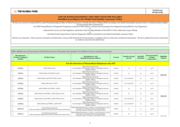
This document provides an overview of malaria rapid diagnostic tests (RDTs) for Principal Recipients (PRs) of Global Fund grants, indicating their eligibility for procurement under the Global Fund's Quality Assurance Policy. The included products have been assessed and approved by the WHO Prequalifi
...
Tuberculosis (TB) remains a significant global health challenge, with an estimated annual death rate of approximately one per 100,000 people in countries with low TB prevalence. Rapid reductions in TB cases and deaths worldwide depend on research breakthroughs, including the development of new vac
...

The Guidelines for the Use of the APCA African Palliative Outcome Scale (POS) has been developed by the APCA, in collaboration with
stakeholders, to help appropriately trained health practitioners and researchers across the region to utilise the APCA African POS in their work place (Powell et
...
In this guide, the African Palliative Care Association (APCA) has put together evidence‑based information on the use of specific opioids commonly used in the management of moderate‑to‑severe pain to manage both cancer and non‑cancer pain. APCA hopes that this guide will be a useful tool i
...

Public health challenges over the past decade have highlighted the importance of approaching health through a holistic lens of human, animal, and environmental sectors, recognizing the need for a collaborative response against shared threats. Zoonotic diseases, transmitted between humans and animals
...

WHO, as the coordinating authority on international health, supports countries in protecting public health through evidence-based policies and actions. Considering the significant health burden and the multiple potential benefits of interventions, the WHO Air Quality, Energy and Health Unit aims to
...
Tobacco mythbusters: tools for debunking common myths promoted by the tobacco industry

The health impacts of climate change are no longer a distant threat. They are being felt here and now and becoming more extreme.
To address these threats, the WHO Asia-Pacific Centre for Environment and Health in the Western Pacific Region (ACE) was established in 2019 through a partnership with
...
Current HIV/AIDS Reports (2022) 19:358–374. https://doi.org/10.1007/s11904-022-00615-z.
MINDSPACE is an acronym developed by the UK's behavioural insights team to summarise nine key influences on human behaviour: Messenger, Incentives, Norms, Default, Salience, Priming, Affect, Commitment, and E
...

Adolescents and young adults aged 10-24 remain underserved in the global response against HIV. Combination prevention, treatment and care programmes use a mix of evidence-based interventions to meet the current HIV prevention needs of adolescents and young adults. However, there needs to be a focus
...

In an era of constrained resources and tightening budgets, strategic prioritization in tuberculosis (TB) programming is more critical than ever. Countries must make informed decisions to allocate limited resources effectively - maximizing impact, preventing avoidable deaths, and sustaining progress
...

L'OIT a uni ses forces à celles de Gallup pour mener une enquête mondiale inédite couvrant 50 pays et permettant de mieux comprendre les causes de la stigmatisation et de la discrimination persistantes liées au VIH dans le monde du travail.
