
Filter
705
Text search:
visual
impairment
Featured
68
150
Language
Document type
513
78
52
35
13
8
2
2
2
Countries
41
26
23
20
17
16
16
13
11
11
11
9
9
8
8
7
7
7
7
6
6
5
5
5
5
4
4
4
4
4
3
3
2
2
2
2
2
2
2
2
2
2
2
2
1
1
1
1
1
1
1
1
1
1
1
1
1
1
1
1
1
1
1
1
1
1
1
1
1
Authors & Publishers
Publication Years
Category
246
68
52
26
19
10
1
Toolboxes
229
97
41
16
13
12
10
10
8
6
6
5
5
5
5
3
3
3
2
2
2
1
Anxiety disorders
Chapter F.3
Psychiatry and Pediatrics
Chapter I.4
Alcohol misuses
Substance use disorders
Chapter G.1
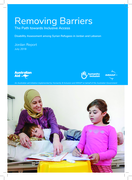
22.9% of surveyed Syrian refugees aged 2 years and above had disabilities (1,374 persons out of 6,003 persons): 13.8% in Azraq camp, 23.5% in Irbid and 30.5% in Zaatari camp. Understanding disability as the level of difficulties a person is facing when performing basic activities that could put him/
...
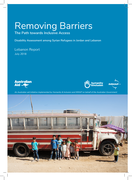
Disability. Assessment among Syrian Refugees in Jordan and Lebanon
Q3: What approaches are available to enable non-specialized health care providers to identify children with intellectual disabilities, including intellectual disabilities due to specific causes?
(Updated 2015)
Scoping question: What is the effectiveness of caregiver skills training in the management of children and adolescents with developmental disorders?

Recognition, Assessment and Treatment
National Clinical Guideline Number 159
SIGN 143. A national clinical guideline
Published May 2015, Revised 2018
Provides clinical descriptions, diagnostic guidelines, and codes for all mental and behavioural disorders commonly encountered in clinical psychiatry. The book was developed from chapter V of the Tenth Revision of the International Statistical Classification of Diseases and Related Health Problems (
...
Trastornos externalizantes
Capítulo D.1.1
Edición: Matías Irarrázaval & Andres Martin
Traductores: Fernanda Prieto-Tagle & Carlos Gómez
Dementia mhGAP module
recommended
DEM supporting material
• Person stories
• Role plays
• Case scenarios
• Treatment planning handouts
• Treatment planning suggestions
• Multiple choice questions
• Video link
Activity 3: mhGAP DEM module – assessment
Q7. SCOPING QUESTION: In adults with moderate-severe depressive disorder, what is the effectiveness and safety of antidepressant medication (ADM) in comparison with psychological treatment?
The WHO mhGAP programme’s existing guidelines recommend that either structured brief psychological treatm
...
The present booklet is about gender-responsive substance abuse treatment services for women. It is part of the United Nations Office on Drugs and Crime (UNODC) project to develop tools to support the development and improvement of substance abuse treatment services, based on evidence from the litera
...
The WHO Guidelines on risk reduction of cognitive decline and dementia provide evidence-based recommendations on lifestyle behaviours and interventions to delay or prevent cognitive decline and dementia. These WHO Guidelines are an important tool for health care providers as well as governments, pol
...
Better Parenting Nigeria is a parenting education program whose goal is to see that families have the knowledge and skills needed to raise healthy, safe and resilient children. The program aims to ensure that:
The caregiver-child relationship is strengthened;
Caregiver capacity to understa
...
ts goals are to ensure that:
Children and parents experience fewer conflicts;
Parents make better decisions about the care of their children and are better able to solve problems; and
Children feel more supported by their families to further their education and make good decisions a
...
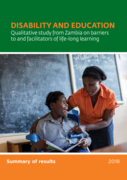
Qualitative study from Zambia on barriers to and facilitators of life-long learning
