
Filter
847
Text search:
UNICEF
Supply
Division
Featured
Recommendations
74
New Publications
314
Language
Document type
No document type
545
Studies & Reports
131
Guidelines
82
Manuals
37
Strategic & Response Plan
24
Training Material
10
Fact sheets
9
Situation Updates
6
Resource Platforms
2
Brochures
1
Countries / Regions
Nepal
52
Liberia
42
Kenya
38
Bangladesh
34
Nigeria
31
Uganda
31
Global
30
Myanmar / Burma
27
Sierra Leone
26
India
26
Namibia
18
Ethiopia
15
Ghana
15
Rwanda
14
Congo, Democratic Republic of
13
Senegal
12
Malawi
12
Latin America and the Carribbean
12
Africa
10
Pakistan
9
Ukraine
9
Lesotho
9
Zimbabwe
8
Syria
8
Tanzania
8
Western and Central Europe
8
Philippines
7
South Sudan
7
Zambia
7
Burkina Faso
6
Botswana
6
East and Southern Africa
6
South–East Asia Region
6
Guinea
5
Mali
5
Indonesia
5
Mozambique
5
Yemen
5
West and Central Africa
5
Asia
5
Haiti
4
Afghanistan
4
Middle East and North Africa
4
Western Pacific Region
4
Eastern Europe and Central Asia
4
Côte d’Ivoire / Ivory Coast
3
Cameroon
3
Niger
3
South Africa
3
Brazil
3
Russia
3
Somalia
2
Cambodia
2
Papua New Guinea
2
Benin
2
Sri Lanka
2
Eastern Europe
2
Turkmenistan
2
Togo
1
Jordan
1
Lebanon
1
Thailand
1
China
1
Mauritania
1
Sudan
1
Central African Republic
1
Argentina
1
North Macedonia
1
Serbia
1
Croatia
1
Burundi
1
Madagascar
1
Mexico
1
Other region
1
Bhutan
1
Venezuela
1
Southern Africa
1
Laos
1
Timor Leste/ East Timor
1
Bulgaria
1
Iran
1
Kyrgyzstan
1
Vietnam
1
Japan
1
Portugal
1
Spain
1
Azerbaijan
1
Bosnia and Herzegovina
1
Authors & Publishers
Publication Years
Category
Countries
445
Key Resources
78
Women & Child Health
77
Clinical Guidelines
52
Public Health
33
Capacity Building
14
Pharmacy & Technologies
7
Toolboxes
COVID-19
69
Ebola & Marburg
32
HIV
32
Disability
26
Conflict
26
Caregiver
25
Planetary Health
18
Global Health Education
17
Rapid Response
15
Mental Health
15
Pharmacy
15
AMR
13
Refugee
10
Health Financing Toolbox
10
2.0 Rapid Response
10
Polio
9
Natural Hazards
9
TB
8
NTDs
6
Cholera
5
Malaria
5
Zika
4
NCDs
3
Specific Hazards
1
Social Ethics
1


Nearly 800 women die every day from preventable maternal causes, and in 2022 alone, an estimated 2.3 million newborns died. For every maternal death, countless more women endure life-altering injuries, infections, and disabilities related to childbirth.
Maternal deaths are concentrated in the poo
...
The Monitoring Report, which covers the first two months of the response from 25 August to 31 October, highlights the work of the Government of Bangladesh, in cooperation with humanitarian partners who are working to provide relief services for the refugee population and Bangladeshi host communities
...

Myanmar has made significant progress in its disaster management policies, plans, and procedures since 2008, when Cyclone Nargis impacted the country leaving devastation in its aftermath. The Government of Myanmar (GoM) has modified the government structure and created new authorities and plans to i
...
People with underlying noncommunicable diseases (NCDs) such as hypertension, diabetes, cardiovascular disease, chronic respiratory disease and cancer have a high risk for developing severe and even fatal COVID-19. It is important for them to strictly follow basic protective measures and make sure th
...
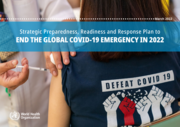
More than two years since the first SARS-CoV-2 infections were reported, the COVID-19 pandemic remains an acute global emergency. In this Strategic Preparedness, Readiness and Response plan for 2022, WHO sets out a number of key strategic adjustments that, if implemented rapidly and consistently at
...
The National Strategic Plan for HIV/AIDS and STIs 2017-2024 spells out the objectives and targets that we have jointly committed to achieve. The plan describes the strategies and activities that will need to be implemented on the ground across India's 36 States and Union Territories with the help of
...
Census Report Volume 4-L
Myanmar’s 2014 Census enumerated 4.5 million people aged 60 and over and by 2050 Myanmar is projected to have 13 million people in this age group.
Myanmar’s population has aged between 1973 and 2014; while the total population increased at an annual rate of 1. ...
Myanmar’s 2014 Census enumerated 4.5 million people aged 60 and over and by 2050 Myanmar is projected to have 13 million people in this age group.
Myanmar’s population has aged between 1973 and 2014; while the total population increased at an annual rate of 1. ...
Improvements in water sanitation and hygiene (WASH) and wastewater management in all sectors are critical elements of preventing infections and reducing the spread of antimicrobial resistance (AMR) as identified in the Global Action Plan to combat AMR. Yet, at present, WASH and wastewater management
...
Measuring progress towards universal health coverage.
This sixth edition of Health at a Glance Asia/Pacific presents a set of key indicators of health status, the determinants of health, health care resources and utilisation, health care expenditure and financing and quality of care across 27 Asia-
...
This Training module on malaria elimination has been developed by WHO to support health professionals in planning, managing, monitoring and evaluating malaria elimination programmes

The Infection prevention and control in the context of coronavirus disease 2019 (COVID-19): a living guideline consolidates technical guidance developed and published during the COVID-19 pandemic into evidence-informed recommendations for infection prevention and control (IPC). This living guideline
...
This study examines over 20 years of CBR implementation in Nepal. It includes an overview of CBR interventions, provides analysis of approaches and activities in terms of impact and sustainability and makes recommendations for future developments in CBR. This resource is useful for people interested
...
