
Filter
884
Text search:
European
Union
(EU)
Featured
Recommendations
49
New Publications
215
Language
Document type
No document type
437
Studies & Reports
247
Guidelines
78
Manuals
35
Strategic & Response Plan
29
Fact sheets
23
Situation Updates
12
Training Material
9
Resource Platforms
9
Brochures
2
Infographics
1
Online Courses
1
Videos
1
Countries / Regions
Western and Central Europe
126
Ukraine
36
Global
31
Germany
30
Eastern Europe
28
Sierra Leone
23
Syria
19
Eastern Europe and Central Asia
16
Liberia
15
Zambia
15
Myanmar / Burma
12
Zimbabwe
10
Malawi
10
Africa
10
Guinea
8
Kenya
8
Moldova
8
Nigeria
7
Rwanda
7
Lesotho
7
Venezuela
7
Ethiopia
6
Ghana
6
Nepal
6
Central African Republic
6
Uganda
5
Namibia
5
Eswatini/ Swaziland
5
Greece
5
Poland
5
Congo, Democratic Republic of
4
Philippines
4
India
4
Turkey
4
Cambodia
4
Bangladesh
4
Libya
4
West and Central Africa
4
Asia
4
Albania
4
Romania
4
Côte d’Ivoire / Ivory Coast
3
Somalia
3
Afghanistan
3
Tanzania
3
Thailand
3
South Africa
3
Hungary
3
Middle East and North Africa
3
Latin America and the Carribbean
3
Russia
3
Haiti
2
Pakistan
2
Iraq
2
Jordan
2
Mozambique
2
North Macedonia
2
Croatia
2
Botswana
2
Sri Lanka
2
Yemen
2
East and Southern Africa
2
Western Pacific Region
2
Italy
2
Laos
2
Bulgaria
2
Lithuania
2
Slovakia
2
Georgia
2
Burkina Faso
1
Mali
1
Niger
1
South Sudan
1
Lebanon
1
China
1
Ireland
1
Sudan
1
Brazil
1
Serbia
1
Colombia
1
Madagascar
1
Mexico
1
Chile
1
South–East Asia Region
1
Estonia
1
Iran
1
Vietnam
1
North America
1
Turkmenistan
1
Denmark
1
United Kingdom
1
Portugal
1
Spain
1
Israel
1
Authors & Publishers
Publication Years
Category
Countries
233
Key Resources
60
Public Health
33
Women & Child Health
20
Clinical Guidelines
17
Capacity Building
7
Pharmacy & Technologies
6
Toolboxes
Mental Health
94
Refugee
89
COVID-19
76
HIV
56
Planetary Health
55
Conflict
54
AMR
54
TB
43
Disability
27
Ebola & Marburg
25
Global Health Education
23
Pharmacy
23
Health Financing Toolbox
23
Rapid Response
16
Natural Hazards
11
Specific Hazards
10
NCDs
9
2.0 Rapid Response
9
Caregiver
6
NTDs
6
Social Ethics
4
Zika
3
Malaria
3
This FAQ responds to questions revolving around the topic of protecting refugee women and girls against violence. It begins with a glossary that clarifies key terms and their consequences for female refugees. The glossary will be amended and updated as required on the websites of b
...

To realize Agenda 2030, aid agencies, private philanthropies, and their partners in the Global South need better data to monitor how official development finance (ODF) dollars advance the Sustainable Development Goals (SDGs) and avoid missing the mark. In this report, we summarize the results of a n
...
In 2017, the World Bank and partners created the Global Investment Framework for Nutrition as a roadmap towards achieving the World Health Assembly (WHA) nutrition targets by 2025. The framework estimates that the world needs to mobilize an annual additional investment of $7 billion per year to scal
...

The occurrence of a high percentage of couterfeit medicines on the global medicines market is often attributed to a lack of effective regulation and a weak enforcement capacity. This review, while focusing on counterfeit medicines and medical devices in developing countries, will present information
...
The context of the Ebola epidemic presented extreme challenges for Oxfam, as it did for many organisations. At the onset of the epidemic, there was a general lack of understanding of the disease and how to respond to it effectively and safely. A pervasive and persistent climate of fear, coupled with
...
A regional guide for governments in Asia and the Pacific to review, update and develop policies to address antimicrobial resistance and antimicrobial use in animal production

Accessed: 26.09.2019
Waste Management & Research 39(1) DOI: 10.1177/0734242X211029175
The pharmaceutical sector of any nation is responsible for providing society with quality medicines and other pharmaceutical services. According to the World Health Organization (WHO), Pharmaceuticals may constitute as much as 40% of the national health budget in developing countries, yet portions o
...
Education of children with disabilities in India and Pakistan: An analysis of developments since 2000 | Background paper prepared for the Education for All Global Monitoring Report 2015 | Education for All 2000-2015: achievements and challenges

This fourth annual report monitors global progress towards the 2023 target for global elimination of industrially produced trans-fatty acids (TFA), highlighting achievements during the past year (October 2021 – September 2022). Countries are responding to the World Health Organization (WHO) call t
...
Since the beginning of the Ukraine crisis on 24 February 2022, WHO has supported Government-led efforts and initiatives alongside key partners on the ground. Building on efforts to date, and working alongside Bulgaria’s health authorities to bring added value to existing mechanisms, the WHO Countr
...
Infection prevention and control in the context of coronavirus disease (COVID-19): A living guideline
recommended
This second edition of the Infection prevention and control in the context of coronavirus disease (COVID-19): A living guideline provides the most up to date technical guidance on mask use in community settings in the context of COVID-19.
In this edition, new information includes updated mask re
...
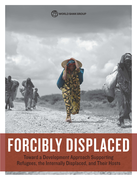
The report depicts the reality of forced displacement as a developing world crisis with implications for sustainable growth: 95 percent of the displaced live in developing countries and over half are in displacement for more than four years. To help the displaced, the report suggests ways to rebuild
...
A case study from Albania
June 2016
EHRN is grateful to all who contributed to this document, especially (in alphabetical order): Alena Alba, Program Officer, Eastern Europe and Central Asia Team, Asia, Europe, Latin America and the Caribbean Department, The Global Fund to Fight AIDS, Tuberc
...
States have committed and assumed obligations to address multiple and intersecting forms of discrimination against refugees, internally displaced persons, asylum seekers, returnees and stateless persons. The Global Compact on Refugees places ending discrimination of any kind based on the grounds of
...
