Filter
6313
Filtered Results: 6313
Text search:
HIV
services
Featured
Recommendations
542
New Publications
1762
Language
Document type
No document type
4032
Studies & Reports
883
Guidelines
666
Manuals
249
Strategic & Response Plan
184
Fact sheets
104
Training Material
91
Situation Updates
40
Infographics
25
Resource Platforms
21
Brochures
15
Online Courses
2
App
1
Countries / Regions
India
264
Kenya
231
Global
198
South Africa
195
Ethiopia
149
Malawi
147
Uganda
146
Zambia
139
Tanzania
133
Nigeria
131
Nepal
126
Namibia
114
Sierra Leone
113
Liberia
110
Rwanda
109
Western and Central Europe
94
Africa
90
Bangladesh
83
Myanmar / Burma
82
Ghana
81
Lesotho
71
Ukraine
65
Congo, Democratic Republic of
65
Zimbabwe
64
Latin America and the Carribbean
61
Senegal
60
Eastern Europe
58
Mozambique
53
Philippines
49
Cambodia
49
Indonesia
49
Asia
46
Haiti
42
Botswana
38
Burkina Faso
35
South Sudan
33
Russia
32
South–East Asia Region
30
Eswatini/ Swaziland
30
Syria
26
Guinea
26
Germany
26
East and Southern Africa
26
Venezuela
23
Cameroon
20
Brazil
19
Colombia
17
Benin
17
Central African Republic
17
West and Central Africa
16
Vietnam
15
Eastern Europe and Central Asia
14
Pakistan
14
Tajikistan
13
Albania
13
Middle East and North Africa
13
Madagascar
13
Georgia
11
Moldova
10
Yemen
10
Somalia
10
Jordan
9
Sudan
9
Angola
9
North Macedonia
8
Thailand
8
Papua New Guinea
8
Laos
7
Afghanistan
7
Southern Africa
7
Argentina
7
Lebanon
7
Mali
6
Turkey
5
Peru
5
Portugal
5
Côte d’Ivoire / Ivory Coast
5
Timor Leste/ East Timor
4
Mexico
4
China
4
Iran
4
Burundi
4
Armenia
4
Western Pacific Region
4
Sri Lanka
4
Iraq
4
Switzerland
3
El Salvador
3
Serbia
3
Togo
3
Estonia
3
Niger
3
Hungary
3
North America
3
Jamaica
3
Japan
3
United Kingdom
3
Bolivia
3
Romania
3
Poland
3
Honduras
3
Chad
3
Bhutan
3
Gambia
2
Kazakhstan
2
Chile
2
Kyrgyzstan
2
Morocco
2
Qatar
2
Bulgaria
2
USA
2
Guinea-Bissau
2
Saudi Arabia
2
Paraguay
2
Turkmenistan
2
France
2
Mauritius
2
Spain
2
Egypt
2
Greece
2
Palestine
2
North Korea
1
Canada
1
Singapore
1
Uzbekistan
1
Italy
1
Croatia
1
Gabon
1
Belgium
1
Tunisia
1
Norway
1
Azerbaijan
1
Belarus
1
Israel
1
Bosnia and Herzegovina
1
Guyana
1
Nicaragua
1
Djibouti
1
Slovakia
1
Libya
1
Solomon Islands
1
Guatemala
1
Authors & Publishers
Publication Years
Category
Countries
2719
Clinical Guidelines
457
Women & Child Health
391
Key Resources
243
Public Health
223
Capacity Building
162
Pharmacy & Technologies
52
Annual Report MEDBOX
3
Toolboxes
HIV
1041
TB
569
COVID-19
292
Mental Health
283
Caregiver
168
AMR
140
Disability
132
Conflict
112
Ebola & Marburg
111
Refugee
100
NTDs
88
Global Health Education
84
Health Financing Toolbox
83
Pharmacy
78
Rapid Response
71
Planetary Health
58
NCDs
53
Natural Hazards
49
Malaria
49
Cholera
27
2.0 Rapid Response
24
Polio
22
Zika
19
Social Ethics
16
Specific Hazards
5
South Sudan
1
Typhoon
1

WHO Technical Series 971
2016 ASCO EDUCATIONAL BOOK | asco.org/edbo

Accessed Sept, 5 2018
Weekly epidemiological record, Relevé épidémiologique hebdomadaire : Vol.93 (2018) No.13

Draft for consultation
Ces orientations se concentrent sur le SARS-CoV-2, mais s'appliquent également à d'autres agents pathogènes préoccupants pour la santé publique.

Myanmar, as a country going through rapid socio-political transition and institutional development also suffers with a high burden of infectious disease. An ongoing challenge has been to effectively reach its 51 million population, most of whom battle tuberculosis, acute respiratory infections, diar...
DHS Further Analysis Reports No. 98
Copenhagen, Denmark, 24–25 August 2017
DHS Further Analysis Reports No 102
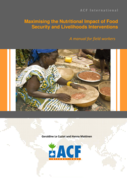
This manual aims to provide practical guidance to field workers in order to maximise the nutritional impact of food security & livelihoods (FSL) interventions. This requires the systematic use of a ‘nutrition lens’ at each step of the project cycle and a close collaboration between sectors.

Tsetse traps and targets (insecticide-impregnated screens) function by attracting the flies to a device that collects and/or kills them. Traps can be used for entomological surveillance, and also for control. Targets are simpler than traps, but are not used for surveillance. They are impregnated wit...
The WHO Cholera Vaccine Position Paper (August 2017) highlights the importance of oral cholera vaccines (OCVs) as a key tool in outbreak response and prevention, alongside water, sanitation, and hygiene (WASH) measures. It recommends OCVs for high-risk populations, endemic areas, and humanitarian cr...
This policy brief aims to provide a review of the current progress on implementing the Burkina Faso national action plan on AMR, identifies critical gaps, and highlights findings to accelerate further progress in the human health sector. The target audience includes all those concerned with implemen...
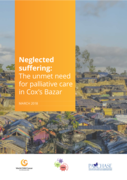
The unmet need for palliative care in Cox’s Bazar