
Filter
1469
Text search:
high-income
countries
Featured
145
269
Language
Document type
560
533
167
88
57
26
21
9
5
1
1
1
Countries
179
29
26
24
22
21
18
17
15
12
11
11
10
10
9
9
8
8
8
8
7
7
7
6
6
6
5
5
5
5
5
5
5
4
4
4
4
4
4
4
3
3
3
3
3
3
3
3
3
3
3
3
3
3
2
2
2
2
2
2
2
2
2
2
2
2
2
2
2
1
1
1
1
1
1
1
1
1
1
1
1
1
1
1
1
1
1
1
1
1
Authors & Publishers
Publication Years
Category
271
161
149
119
64
16
14
1
Toolboxes
251
139
111
101
74
72
68
68
60
51
51
33
17
15
15
9
8
8
5
4
4
3
2
2
Mental health disorders remain widely under-reported — in our section on Data Quality & Definitions we discuss the challenges of dealing with this data. Figures presented in this entry should be taken as estimates of mental health disorder prevalence — they do not strictly reflect diagnosis data
...

BMC Family Practice (2017) 18:56 DOI 10.1186/s12875-017-0628
Europe PMC Funders Group
Author Manuscript
Arch Dis Child. Author manuscript; available in PMC 2013 November 01.
Published in final edited form as:
Arch Dis Child. 2013 May ; 98(5): 323–327. doi:10.1136/archdischild-2012-302079.

Internationally, there is a growing concern over antimicro-bial resistance (AMR) which is currently estimated to ac-count for more than 700,000 deaths per year worldwide. If no appropriate measures are taken to halt its pro-gress, AMR will cost approximately 10 million lives andabout US$100 trillion
...
Only 8,730 asylum applications were registered in the EU+ in April, the lowest since at least 2008, and a massive 87% decrease from pre-COVID-19 levels in January and February.
The European Asylum Support Office (EASO) has released a special report which shows that the COVID-19 related travel restr
...
In the current absence of vaccine for COVID-19, public health response target breaking the chain of infection by focusing on the mode of transmission. This paper summarizes current evidence-base around the transmission dynamics, pathogenic, and clinical features of COVID-19, to critically identify i
...
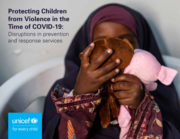
As daily lives and communities are upended by COVID-19, concern is mounting that children’s exposure to violence may increase. Children with a history of abuse may find themselves even more vulnerable – both at home and online – and may experience more frequent and severe acts of violence. Oth
...
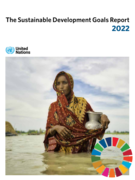
According to the Report, cascading and interlinked crises are putting the 2030 Agenda for Sustainable Development in grave danger, along with humanity’s very own survival. The Report highlights the severity and magnitude of the challenges before us. The confluence of crises, dominated by COVID-19,
...
With Safety Tips for Conducting Community Meetings
Updated July 2020
This document includes key Risk Communication and Community Engagement (RCCE) considerations during shifting lockdown measures, safety measures for conducting in-person community meetings, and a template that brings both of these
...
Science . 2020 Sep 11;369(6509):1309-1312. doi: 10.1126/science.abe2803. Epub 2020 Sep 3.
The Fair Priority Model offers a practical way to fulfill pledges to distribute vaccines fairly and equitably

Updated 25 January 2021
BMJ Global Health2020;5:e002014. doi:10.1136/bmjgh-2019-002014

Fair global distribution of COVID-19 vaccines
recommended
MEDBOX Issue Brief no.9 ,1 Febr. 2021
African Journal of Emergency Medicine
Volume 11, Issue 1, March 2021, Pages 132-139
The United Nations Secretary-General, António Guterres, echoed the concerns of people and organisations around the world when he recently referred to the impact of the COVID-19 pandemic on schooling as a
‘generational catastrophe’.
.

Background paper 9
The Independent Panel for Pandemic Preparedness and Response
May 2021
The WHO Guidance on community mental health services: Promoting person-centred and rights-based approaches document is part of the WHO Guidance and technical packages on community mental health services set of publications. It provides a detailed description of person-centred and human rights-based
...
