Filter
864
Text search:
World
Health
Organization
(
WHO),
Regional
Office
for
South-East-Asia
Featured
Recommendations
118
New Publications
231
Language
Document type
No document type
396
Studies & Reports
179
Guidelines
159
Manuals
44
Strategic & Response Plan
39
Training Material
13
Fact sheets
10
Situation Updates
8
Resource Platforms
8
Infographics
4
Brochures
2
Online Courses
2
Countries / Regions
South–East Asia Region
67
Global
63
India
45
Asia
38
Myanmar / Burma
27
Nepal
23
Bangladesh
17
Philippines
12
Indonesia
11
Western Pacific Region
11
Africa
11
Thailand
10
Cambodia
9
Western and Central Europe
9
Afghanistan
5
Sri Lanka
5
Pakistan
4
China
4
South Africa
4
Eastern Europe
4
Laos
4
Russia
4
Vietnam
4
Nigeria
3
Ethiopia
3
Ghana
3
Uganda
3
Syria
3
Kenya
3
East and Southern Africa
3
West and Central Africa
3
Middle East and North Africa
3
Venezuela
3
Timor Leste/ East Timor
3
Burkina Faso
2
Congo, Democratic Republic of
2
Haiti
2
South Sudan
2
Tanzania
2
Rwanda
2
Mozambique
2
Sudan
2
Yemen
2
Latin America and the Carribbean
2
Iran
2
Sierra Leone
1
Liberia
1
Senegal
1
Morocco
1
USA
1
Saudi Arabia
1
Cameroon
1
Iraq
1
Jordan
1
Lebanon
1
Zambia
1
Papua New Guinea
1
Namibia
1
Eswatini/ Swaziland
1
Brazil
1
Ukraine
1
Ecuador
1
Greece
1
Mexico
1
Eastern Europe and Central Asia
1
Other region
1
Paraguay
1
Bhutan
1
Palestine
1
North Korea
1
Albania
1
Mongolia
1
Tajikistan
1
Kazakhstan
1
Georgia
1
Tunisia
1
Bosnia and Herzegovina
1
Authors & Publishers
Publication Years
Category
Countries
187
Clinical Guidelines
125
Public Health
75
Women & Child Health
67
Key Resources
42
Capacity Building
21
Pharmacy & Technologies
14
Toolboxes
HIV
88
Mental Health
72
TB
60
COVID-19
59
NTDs
49
Planetary Health
41
AMR
36
Caregiver
31
Global Health Education
29
Rapid Response
25
NCDs
21
Disability
19
Malaria
19
Pharmacy
16
2.0 Rapid Response
16
Zika
12
Refugee
9
Health Financing Toolbox
9
Conflict
7
Natural Hazards
7
Ebola & Marburg
6
Specific Hazards
6
Cholera
4
Polio
4
Typhoon
1

Eradication of yaws in India | Éradication du pian en Inde - 17 April 2015, 90th Year / 17 Avril 2015, 90e Année | No. 16, 2015, 90, 161–168 | http://www.who.int/wer
This report on global leishmaniasis surveillance follows those published in 2016–2023.2–6 Six indicators of leishmaniasis are publicly available from the Global Health Observatory (GHO).7 In addition to the GHO, country profiles with up to 30 in
...
Primary care - Putting people first: This chapter describes how primary care brings promotion and prevention, cure and care together in a safe, effective and socially productive way at the interface between the population and the health system.
Taking a multisectoral, One Health approach is necessary to address complex health threats at the human-animal-environment interface, such as rabies, zoonotic influenza, anthrax, and Rift Valley fev
...

The purpose of this report is to provide an overview of the issues in regulating and managing international emergency in a selection of large and small-scale sudden onset disasters (SODs). In doing so, it aims to contribute to several key international commitments as well as its objective in disaste
...

Antimicrobials are precious agents for combating infectious diseases and had saved millions of lives throughout the world. However, the current trend of increasing antimicrobial resistance (AMR) ha
...
A tool for measuring alcohol policy implementation
Training for staff working at DR-TB management centres.
Training modules

Abbreviated Report of a WHO Consultation
The WHO Global tuberculosis report 2024 provides a comprehensive and up-to-date assessment of the TB epidemic, and of progress in prevention, diagnosis and treatment of the disease, at global, regional
...
Coordinated Use of Anthelminthic Drugs in Control Interventions: a Manual for Health Professionals and Programme Managers

The key to a lasting world free of all forms of poliovirus lies in rapidly interrupting all remaining endemic transmission of WPV in the endemic areas of Pakistan and Afghanistan. This is the only way to ensure that such strains do not re-emerge glo
...

Developmental disabilities are common. Yet, children with developmental disabilities have been neglected in health systems planning and policy provisions for
...

Access to NCD medicines: emergent issues during the COVID-19 pandemic and key structural factors
recommended
The coronavirus disease (COVID-19) pandemic exacerbated pre-existing inequalities in the treatment and care of noncommunicable diseases (NCDs). This report examines the effect of the COVID-19 pandemic on access to NCD medicines, and the policies and strategies implemented by countries and
...
Chapter 1 provides new data on the latest developments in the global treatment effort, highlighting positive trends as well as aspects that require improvement. Chapter 2 summarizes the impact of the scale-up in reducing AIDS-related mortality and new HIV infections. Chapter 3 examines the sequence
...
Lack of trained providers capable of identifying which labouring women could benefit from assisted vaginal birth (AVB), and of safely performing the procedure is a major barrier for its use. Education and training are, therefore, considered crucial
...
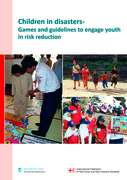
This guideline consists of two main parts:
i.) Guidelines for Red Cross and Red Crescent national societies on how to start up and engage with other stakeholders in country in rolling out disaster risk reduction (DRR) education and awareness act ...
i.) Guidelines for Red Cross and Red Crescent national societies on how to start up and engage with other stakeholders in country in rolling out disaster risk reduction (DRR) education and awareness act ...