
Filter
1863
Text search:
Vaccination
Coverage
Featured
181
528
Language
Document type
849
400
242
137
104
46
39
24
9
6
3
2
1
Countries
106
77
59
49
49
45
41
40
35
35
34
32
31
31
29
27
27
27
24
23
22
22
21
19
19
18
17
16
16
15
15
14
14
14
14
12
12
12
11
11
10
10
10
10
9
8
8
7
7
7
7
7
6
6
6
5
5
5
5
4
4
4
4
4
3
3
3
3
3
3
3
3
2
2
2
2
2
2
2
2
2
2
2
1
1
1
1
1
1
1
1
1
1
1
1
1
1
1
1
1
1
1
1
1
1
1
1
1
1
1
Authors & Publishers
Publication Years
Category
812
153
114
111
97
15
10
1
Toolboxes
291
85
77
64
56
53
47
46
43
40
40
40
36
33
33
31
28
25
25
18
16
12
2
2
2
1
Nat Med (2021). https://doi.org/10.1038/s41591-021-01381-y
This summary assesses the current state of evidence on each approach in tabular form, providing: the definition and objectives; evidence of effectiveness; operational considerations (e.g., training, staffing, and logistics); cost considerations and evidence on cost-effectiveness; operational success
...
Key findings from a February 2021 survey from the Partnership for Evidence-Based Response to COVID-19 (PERC)
This document aims to support those working in primary care to strengthen IPC, informed by existing WHO IPC guidance and implementation resources. Many of the existing WHO IPC guidance and implementation resources initially developed for acute health care facilities have a potential utility for IPC
...
World Health Organization, Food and Agriculture Organization of the United Nations & World Organisation for Animal Health. (2021). Antimicrobial resistance and the United Nations sustainable development cooperation framework: guidance for United Nations country teams. World Health Organization
...
27 September 2022
These WHO interim recommendations for use of the Novavax NVX-CoV2373 vaccine were developed on the basis of advice issued by the Strategic Advisory Group of Experts on Immunization (SAGE) and the evidence summary included in the background document and annexes referenced below.

20 April 2022. The response to the COVID-19 pandemic continues to adversely affect essential TB services in many countries. A first report of case studies was published in 2021 comprising 23 examples of innovative interventions implemented by countries to effectively respond to disruptions of TB ser
...
English Analysis on Brazil about Health, Protection and Human Rights and Epidemic; published on 26 May 2021 by SSHAP
As the world recovers from the shock of the COVID-19 pandemic and reflects on lessons learnt from failure of global public health systems to contain the global outbreak of SARS-CoV-2, new infectious disease threats, caused by movement of people globally, remain omnipresent, and repeated calls for mo
...
This document aims to encourage countries to develop and implement policies to maintain and strengthen IPC programmes and measures in health care facilities in the context of the current ongoing transmission of the SARS-CoV-2, with recognition that epidemiological trends may vary and the risk of tra
...
The EYE communication strategy is intended for use by all EYE partners and respective communication teams, as well as regional and country colleagues who will need to communicate about the work of EYE. It will also be publicly available for others, such as non-governmental organizations (NGOs) and p
...
Mettre fin au choléra- Feuille de route mondiale pour 2030 rend opérationnelle la nouvelle stratégie mondiale de lutte contre le choléra au niveau des pays et fournit une voie concrète vers un monde où le choléra ne représente plus une menace pour la santé publique. En mettant en œuvre la
...
The World Health Organization Regional Office for Africa (WHO AFRO), in accordance with recommendations from various WHO committees, has developed three flagship programmes to support Member States in the African region to prepare for, detect and respond to public health emergencies. They are the re
...
The Indigenous tribe called the Wiwa lives retracted in the Sierra Nevada de Santa Marta, Colombia. Little is known about their health status and whether the health care system in place covers their needs.
Rabies is a disease of animals but too often the outcome is gauged in terms of human suffering and
death. Despite this, in areas of the world where rabies is endemic there is often a lack of communication between veterinary and medical professionals, to the extent that the disease continues to thri
...

This fourth WHO report on neglected tropical diseases (NTDs) reviews the progress made towards achieving the Roadmap targets for 2020, noting the remaining challenges, then looks beyond 2020 to evaluate the changing global health and development landscape, considering the implications of integrating
...
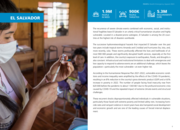
The recurrence of severe climate events combined with economic, social, and institutional fragilities leave El Salvador in an utterly critical humanitarian situation and highly vulnerable. Located in a disaster-prone subregion, El Salvador is among the 20 countries at the highest risk of disasters w
...
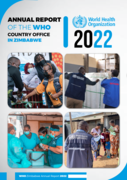
This report highlights the work of the World Health Organization (WHO) in Zimbabwe towards contributing to the triple billion targets in the context of the Sustainable Development Goals (SDGs

The development of this draft Proposed programme budget 2022–2023 comes at a unique moment for WHO. The world is in the grip of the coronavirus disease (COVID-19) pandemic and faces health, social and economic consequences on an unprecedented scale. Although it is not known when the COVID-19 pande
...
