
Filter
1952
Text search:
urgent
funding
Featured
184
520
Language
Document type
891
520
177
149
104
37
35
24
7
3
2
1
Countries
138
48
45
43
41
40
39
39
37
35
34
32
32
31
30
29
28
26
24
20
19
19
18
18
17
17
15
14
14
13
13
13
13
13
13
13
13
12
12
12
11
11
10
10
10
8
8
8
8
8
8
7
7
6
5
5
5
5
5
4
4
4
4
4
4
4
4
3
3
3
3
3
3
3
3
3
2
2
2
2
2
2
2
2
2
1
1
1
1
1
1
1
1
1
1
1
1
1
1
1
1
1
1
1
1
1
1
1
1
1
1
1
1
1
1
1
1
Authors & Publishers
Publication Years
Category
668
168
119
115
98
28
14
Toolboxes
181
131
113
104
95
81
74
72
70
62
56
50
45
44
43
42
37
29
23
17
14
11
10
5
4
2
1
It is a pressing question for donors and NGOs alike: is funding development and humanitarian work in fragile and conflict-affected states (FCAS) the equivalent of pouring money into a bottomless pit, if achievements are only going to be undone by fu
...
Establishing trauma referral pathways to provide urgent life-saving assistance for displaced populations and civilians remaining in Ar-Raqqa.
In July 2017, a WHO team comprising an external trauma care specialist and two WHO staff members visited
...
The risk of increasing rates of acute malnutrition during the COVID-19 pandemic demonstrates the urgent need to adapt, and expand access to, acute malnutrition diagnosis and treatment services in humanitarian and fragile contexts.
Antimicrobial resistance (AMR) is a global threat that requires urgent collaborative action within and among countries. AMR makes standard treatments ineffective and facilitates the spread of antimicrobial resistant infections rendering communities
...
This edition of UNICEF’s annual Humanitarian Action for Children highlights UNICEF’s funding appeal, which sets out an ambitious agenda to address the major challenges facing children and young people living through conflict and crisis. It prese
...
Child protection in emergencies
The prevention of and response to
abuse, neglect, exploitation and violence
against children in emergencies. An
emergency is defined as threatening
condition that requires urgent action.
Emergencies often have d
...
In the last quarter of 2019 Southern African Regional Interagency Standing Committee Africa (RIASCO) reported that more than 11 million people were experiencing crisis or emergency levels of food insecurity in nine Southern African countries1 due to deepening drought and climate related crisis. The
...
Antimicrobial resistance (AMR) is a global threat that requires urgent
collaborative action within and among countries. As a result of the worldwide reports of the increasing rates of AMR to hospital and community-acquired infections and in the agr
...

Abrupt reductions in international HIV assistance in 2025 have deepened existing funding shortfalls. The OECD estimates that external health assistance is projected to drop by 30–40% in 2025 compared with 2023, causing immediate and even more seve
...
Millions of children in Yemen could be pushed to ‘the brink of starvation’ due to huge shortfalls in humanitarian aid funding amid the COVID-19 pandemic – according to a new UNICEF report marking more than five years since conflict escalated i
...
The regional Migrant Response Plan (MRP) for the Horn of Africa and Yemen includes urgent life-saving humanitarian and protection interventions to improve safe and dignified access to basic services for migrants and host communities while ensuring m
...
CATALYST DIALOGUE ON HEALTH FINANCING
Insights from a debate on how to increase funding for health and spend existing funds more effectively.
Catalyst Dialogue participants:
Christoph Benn, Director for Global Health Diplomacy, Joep Lange Institu
...

HIV testing is an essential health service and a gateway to lifesaving treatment and high-impact strategies that
stop new HIV infections. However, reductions in international funding for global health—including national HIV programs—are causing
...
The resurgence of mpox in multiple African countries since 2022 has highlighted urgent gaps in preparedness, detection, and response capacities across the continent. While the mpox outbreak was initially classified as a Public Health Emergency of In
...

As a global community of +750 representatives of the world’s civil society, the C20 official Engagement Group of the G20 is submitting a list of policy priorities for the upcoming G20 Finance Ministers & Central Bank Governors meeting on July 18th and the G20 Extraordinary Sherpa Meeting on July 2
...

Across Zimbabwe, 7 million people in urban and rural areas are in urgent need of humanitarian assistance, compared to 5.5 million in August 2019. Since the launch of the Revised Humanitarian Appeal in August 2019, circumstances for millions of Zimba
...
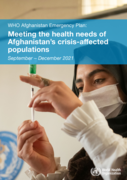
September – December 2021
The funds will be used by WHO to ensure:
continued coordination with other agencies and health actors in the response to the crisis situation
continuity of health services for the population of Afghanistan
provision of life-saving medical supplies
con
...
According to the latest available estimates, more than 1 in 7 adolescents aged 10–19 is estimated to live with a diagnosed mental disorder globally. Almost 46,000 adolescents die from suicide each year, among the top five causes of death for their age group. Meanwhile, wide gaps persist between me
...
The International Organization for Migration (IOM) is appealing for USD 158.9 million to respond to the urgent humanitarian needs of millions of Afghans and to support recovery and resilience within the country and the region.
IOM’s Comprehensi
...
First and foremost, Ukraine’s priority is winning the war and ensuring the safety and security of its people. Ukraine is facing a harsh winter and needs urgent aid and solutions including power generators, heating, and temporary housing to withsta
...
