Filter
1050
Text search:
specimen
collection
Featured
170
307
Language
Document type
514
268
109
72
38
20
17
7
2
1
1
1
Countries
88
41
37
36
33
32
32
27
21
21
19
19
18
17
17
16
13
12
12
12
11
11
10
9
7
7
7
6
6
5
5
4
4
4
4
4
4
4
3
3
3
3
2
2
2
2
2
2
2
2
2
2
2
2
2
2
2
2
1
1
1
1
1
1
1
1
1
1
1
1
1
1
1
1
1
1
1
1
1
1
1
1
1
1
1
1
Authors & Publishers
Publication Years
Category
475
127
57
41
36
17
14
Toolboxes
127
122
59
56
56
52
50
47
19
16
15
15
15
12
10
10
8
5
4
4
3
3
1
This Mpox SPRP Global Monitoring & Evaluation (M&E) Framework, also referred to as the Framework, aims to monitor and report on global progress towards these objectives, including information about country-level response efforts and WHO support to Member States. Regular
...
This document provides technical guidance for manufacturers seeking World Health Organization (WHO) prequalification of in vitro diagnostic devices (IVDs) for malaria, with a focus on rapid diagnostic tests (RDTs) for symptomatic patients. It summarises the minimum performance requirements, includin
...
This document provides technical guidance for manufacturers seeking World Health Organization (WHO) prequalification of in vitro diagnostic devices (IVDs) for malaria, with a focus on rapid diagnostic tests (RDTs) for symptomatic patients. It summarises the minimum performance requirements, includin
...

The document provides a standardized protocol for evaluating the Early Warning Alert and Response Network (EWARN), a surveillance system used during humanitarian emergencies when regular national health surveillance may be disrupted. The purpose of EWARN is to detect outbreaks of communicable diseas
...

The document “Public Health Surveillance for Cholera – Guidance Document (2024)” provides practical recommendations for countries on how to design, implement, and strengthen cholera surveillance systems. Developed by the Global Task Force on Cholera Control (GTFCC), it outlines the minimum req
...
This curricula guide builds on several existing products of WHO and partners, aimed at supporting countries in their effort to address the first objective of the GAP-AMR (to improve awareness and understanding of AMR). It is targeted specifically at health educators and policy planners, and applies
...
The Strategy provides a high-level unifying framework to leverage existing capacities, address barriers and strengthen the use of genomic surveillance in the detection, monitoring and response to public health threats. Genomic surveillance is part of the broader surveillance and laboratory system, a
...

The GTFCC Laboratory Support for Public Health Surveillance document provides guidelines on using DNA-based molecular techniques for identifying and monitoring Vibrio cholerae strains in cholera outbreaks. It highlights the importance of genetic sequencing for tracking transmission, detecting new va
...
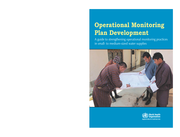
The guide is presented in two parts:
Part 1. Principles of Operational Monitoring: Describes the key principles of operational monitoring, alongside the types of operational monitoring that may be performed and the information required within an OMP.
Part 2. Operational Monitorin ... Describes the stepwise development of an OMP for a water supply system, including the source, water treatment, intermediate storage, distribution and household. For illustration purposes, practical guidance is provided using a specimen water supply system considered to be representative of a conventional small- to medium-sized supply in a lower resource setting. This template may be used to develop system-specific OMPs for individual water supply systems.
Part 1. Principles of Operational Monitoring: Describes the key principles of operational monitoring, alongside the types of operational monitoring that may be performed and the information required within an OMP.
Part 2. Operational Monitorin ... Describes the stepwise development of an OMP for a water supply system, including the source, water treatment, intermediate storage, distribution and household. For illustration purposes, practical guidance is provided using a specimen water supply system considered to be representative of a conventional small- to medium-sized supply in a lower resource setting. This template may be used to develop system-specific OMPs for individual water supply systems.
This report provides an overview of the latest tuberculosis (TB) epidemiological situation and is published jointly by the WHO Regional Office for Europe and the European Centre for Disease Prevention and Control. In 2023, 38 993 cases of TB were reported in 29 European Union and European Economic A
...
This publication provides recommendations for the management of critically ill adult patients with COVID-19 being treated in intensive care units (ICUs) in the Americas. These clinical practice guidelines provide evidence-informed recommendations for identifying markers and mortality risk factors in
...

Health Care Facilities (HCFs) are primarily responsible for management of the healthcare waste generated within the facilities, including activities undertaken by them in the community. The health care facilities, while generating the waste are responsible for segregation,
...

Household transmission investigation protocol for 2019-novel coronavirus (2019-nCoV) infection
recommended
The household transmission investigation is a case-ascertained prospective study of all identified household contacts of a laboratory confirmed 2019-nCoV infection (see 2.2 Study population). It is intended to provide rapid and early information on the clinical, epidemiological and virological chara
...
Available in Arabic, Chinese, English, French, Portuguese and Spanish
https://apps.who.int/iris/handle/10665/334254
Here you can find the various e-learning courses


This is a case-ascertained prospective investigation of all identified health care contacts working in a health care facility in which a laboratory confirmed 2019-nCoV infected patient (see 2.2 Study population) receives care. Note that this study can be done in health care facilities at all 3 level
...
Improve identification, verification, communication and coordination.
Zika and dengue viruses remain significant public health threats. These viruses share the same Aedes (Stegomyia) mosquito vectors and geographic distributions but infections cannot be readily distinguished clinically and need to be differentiated from each other, and from other circulating arboviral
...