
Filter
206
Text search:
rabies
vaccines
Featured
23
66
Language
Document type
88
43
31
18
9
8
3
3
1
1
1
Countries
16
13
11
9
7
5
5
4
4
4
4
4
3
3
3
3
3
3
3
2
2
2
2
2
2
2
2
1
1
1
1
1
1
1
1
1
1
1
1
1
1
1
1
Authors & Publishers
Publication Years
Category
89
25
6
6
5
4
2
Toolboxes
40
21
14
12
12
11
5
4
3
3
3
2
2
1
1
1
1
1

The position papers are intended for use by national public health officials and managers of immunization programmes. They may also be of interest to international funding agencies, vaccine advisory groups, vaccine manufacturers, health professionals, researchers, the scientific media and the genera
...
Rabies is a neglected zoonotic disease responsible for an estimated 59,000 human deaths annually. Rural populations in Africa and Asia are predominantly affected, and approximately
40% of cases occur in children under the age of 15 years. Transmitt
...

These new guidelines should help medical and paramedical professionals to provide the state of art rabies prophylaxis to all animal bite victims in the government hospitals and prevent human rabies
...
Website last accessed in 12.03.23
CDC’s Lauren Greenberg writes about building rabies diagnostic capacity in the effort to control rabies in countries that are most affected by the disease.
‘World Rabies Day’ is observed worldwide to mark the death anniversary of Louis Pasteur, a
French biologist, microbiologist and chemist who developed the first rabies vaccine. It’s a day wher
...
Accessed on 07.03.2023
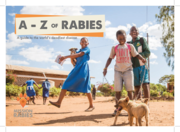
A – Z of Rabies – A guide to the world´s deadliest disease
Mission Rabies
Rabies is a disease of animals but too often the outcome is gauged in terms of human suffering and
death. Despite this, in areas of the world where rabies is endemic there is often a lack of commun
...
This guide provides a comprehensive overview of essential information related to immunization, including technical information about vaccines, a review of immunization program management best practices, guidance on the delivery of immunization servi
...

The Committee discussed the implications for preparedness for smallpox-like events reflected by the ongoing COVID-19 pandemic. The Committee noted how quickly diagnostics and vaccines could be developed and deployed when resources and political will
...
Climate change, increasing population densities, and intensified globalisation in trade, travel and migration are among the most important factors shaping the 21st century. Each impacts upon population health and the risk of infectious disease, particularly those originating at the human-animal-envi
...

The desired impact of the OH JPA is a world better able to prevent, predict, detect and
respond to health threats and improve the health of humans, animals, plants and the
environment while contributing to sustainable development. The OH JPA aims to work
towards this vision in the following way:
...


Updated 28 December 2020
Accessed: 11.03.2019
WHO Vaccine Management Handbook
WHO Secretariat Information paper July 2016
