
Filter
543
Text search:
planetary
health
Featured
18
13
Language
Document type
328
51
26
25
20
20
16
14
14
11
8
6
2
Countries
58
9
7
5
4
4
3
3
3
2
2
2
2
2
2
2
1
1
1
1
1
1
1
1
1
1
1
1
1
1
1
1
1
1
1
1
1
Authors & Publishers
Publication Years
Category
43
32
17
4
2
2
Toolboxes
451
35
22
10
9
5
5
5
3
2
2
2
2
1
1
1
1
Issue Brief No. 29:
Planetary Health is an interdisciplinary academic collective of many scientific disciplines. In addition to the fields of
environmental and social sciences, that of human
...
The longlist of knowledge gaps is based on existing research agendas published in 2015 or later and expert input from reviewers of the first draft of the longlist. It only includes knowledge gaps focussing on a better
understanding of the relationship between global environmental change and human
...

The Lancet Planetary Health Volume 2, ISSUE 2, e58-e59, February 01, 2018
We live in a world in which global warming, pollution, social
injustice, inequity and population health fundamentally influence each other. As a result, health and
...

Accessed on 26.01.22
Website: Nurses for Planetary Health: A Call to Action
2020 Symposium Report
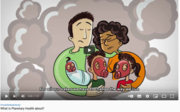
The climate crisis and accelerating environmental changes caused by human activity are posing bigger and bigger threats to health worldwide, so it’s more vital than ever before that we turn our ingenuity to making our planet a healthier place to l
...
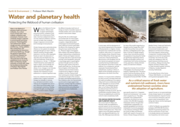
Water is the lifeblood of planetary health and human civilisation. As a critical source of fresh water, rivers underpin civilisations, past and present. However, rivers constantly change in response
...

The American Journal of Tropical Medicine and Hygiene Volume 106: Issue 1 p.12-14.he piece highlights a body of research that suggests tiny plastic particles could disrupt immune and endocrine systems, damage organs, and cause other health probl
...
The Lancet Planetary Health Volume 6, ISSUE 5, e388-e390, May 01, 2022. As the Stockholm Declaration on the Human Environment turns 50, the role of the h
...
Wet markets have been implicated in multiple zoonotic outbreaks, including COVID-19. They are also a conduit for legal and illegal trade in wildlife, which threatens thousands of species. Yet wet markets supply food to millions of people around the world, and differ drastically in their physical com
...
Report V of Conversations on Planetary Health
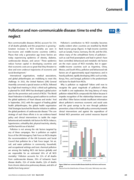
Non-communicable diseases (NCDs) account for 72% of all deaths globally and this proportion is growing. Greatest increases in NCD mortality are seen in low-income and middle-income countries (LMICs). Places that only a generation ago knew famine are
today experiencing epidemics of obesity, diabetes
...
Nosotros, la comunidad global de Salud Planetaria, levantamos una alarma de que la continua degradación de los sistemas naturales de nuestro planeta es un peligro claro y presente para la salud de todas las personas en todas partes. Se requiere una transición justa y global en la forma en
...

Necesitamos un cambio fundamental en la forma en que vivimos en la Tierra, es lo que llamamos la Gran Transición. Lograr la Gran Transición, requerirá cambios
estructurales rápidos y profundos en la mayoría de las dimensiones de la actividad humana. Esto incluye cómo producimos y consumimo
...

The Lancet Planetary Health, Vol.5 Issue 2, Feb. 1,2021.
Nationally determined contributions (NDCs) serve to meet the goals of the Paris Agreement of staying “well below 2°C”, which could als
...
Pollution and health: a progress update
recommended
The Lancet Planetary Health Published:May 17, 2022DOI:https://doi.org/10.1016/S2542-5196(22)00090-0
Every year pollution causes 9 million deaths—1 in every 6 deaths worldwide, according to a Lanc
...
Lancet Planet Health 2022;6: e760–68
The emergence of COVID-19 has drawn the attention of health researchers sharply back to the role that food systems can play in generating human disease burden
...
