
Filter
563
Text search:
pipeline
Featured
64
142
Language
Document type
221
131
79
44
40
16
11
7
5
3
3
2
1
Countries
35
15
14
13
13
13
13
11
11
10
10
9
9
8
7
7
7
7
6
5
5
5
4
4
4
4
4
3
3
3
2
2
2
2
2
2
2
2
2
2
1
1
1
1
1
1
1
1
1
1
1
1
1
1
1
1
1
1
1
1
1
1
1
1
1
1
1
1
1
1
1
1
1
1
1
1
1
Authors & Publishers
Publication Years
Category
169
42
31
26
16
13
3
1
Toolboxes
75
70
46
38
29
23
20
18
17
17
11
10
8
7
7
4
3
3
3
3
2
2
1
1
1
Antimicrobial resistance (AMR) is a complex issue of global concern. AMR is not simply a problem of medical science being beaten by nature; human action and perverse incentives play a major role in its development. The misuse of antibiotics in the medical, veterinary and agricultural sectors, which
...
This action plan for the Kingdom Saudi Arabia to combat antimicrobial resistance has been formulated in the line of the WHO five objectives. It addresses the need for effective “one health” approach involving coordination among numerous national sectors and actors, including human and veterinary
...
This course is designed for anyone with an interest in antibiotic resistance, no matter if you are a member of the public, a student, a health professional or any other expert.
Our focus is to provide an overview of antibiotic resistance from several different angles. An important aim is to give an
...
Combatting the rising global threat of AMR through a One Health Approach
This technical guidance aims to provide guidelines to laboratories and relevant stakeholders in the European Union (EU), European Economic Area (EEA) and other countries in the WHO European region in making decisions on establishing sequencing capacities and capabilities, in making decisions on whic
...
2nd edition. Essential guideline for humanitarian assistance
Antimicrobial resistance (AMR) has emerged as a major public health problem all over the world. Infections caused by resistant microbes fail to respond to treatment, resulting in prolonged illness and greater risk of death. This document focuses on the mechanism to develop a practically applicable h
...

Semi-annual Update
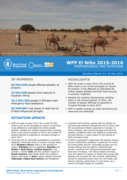
IN NUMBERS
60 MILLION people affected globally at present.
32 MILLION people food insecure in Southern Africa.
10.2 MILLION people in Ethiopia need emergency food assistance.
50 PERCENT crop losses in Haiti due to El Niño-influenced drought.
Global Action Plan on Antimicrobial Resistance
recommended
The goal of the draft global action plan is to ensure, for as long as possible, continuity of successful treatment and prevention of infectious diseases with effective and safe medicines that are quality-assured, used in a responsible way, and accessible to all who need them.
The World Health Organization was requested by Member States to develop a global priority pathogens list (global PPL) of antibiotic-resistant bacteria to help in prioritizing the research and development (R&D) of new and effective antibiotic treatments. To date, the selection of pathogens for R&D ac
...
