Filter
500
Text search:
incentives
and
motivation
Featured
26
183
Language
Document type
331
86
30
22
17
6
4
4
Countries
22
22
22
20
19
18
16
16
15
15
14
12
11
11
10
10
9
9
9
8
8
8
6
5
4
4
4
4
4
4
3
3
3
3
2
2
2
2
2
2
2
2
2
2
1
1
1
1
1
1
1
1
1
1
1
1
1
1
1
1
1
1
Authors & Publishers
Publication Years
Category
247
49
31
20
14
6
2
Toolboxes
33
30
26
23
16
16
14
12
10
8
8
7
6
5
5
3
3
3
3
2
1
1
1


Background Paper prepared for the 2015 Global Assessment Report on Disaster Risk Reduction
The aim of this paper is to help bring voluntary standards into the toolbox of disaster risk reduction, including both by encouraging their use by business and ...
The aim of this paper is to help bring voluntary standards into the toolbox of disaster risk reduction, including both by encouraging their use by business and ...

Qualitative study from Zambia on barriers to and facilitators of life-long learning

Antibiotics and other antimicrobial agents are invaluable life savers, particularly in resource-limited countries where infectious diseases are abundant. Both uncomplicated and severe in
...
For the purpose of this document, Interprofessional is defined as: Multiple health disciplines with diverse knowledge and skills who share an integrated set of goals and who utilize interdependent c
...
A companion to the Child Friendly Schools Manual
WASH in Schools aims to improve the health and learning performance of school-aged children – and, by extension, that of their families ...
WASH in Schools aims to improve the health and learning performance of school-aged children – and, by extension, that of their families ...

Glob Health Sci Pract February 1, 2014 vol. 2 no. 1 p. 103-116
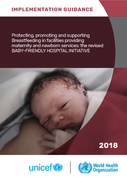
This updated implementation guidance is intended for all those who set policy for, or offer care to, pregnant women, families and infants: governments; national managers of maternal and child healt
...
Draft May 2011
The first ever nursing and midwifery services policy document in the history of MoPH was developed with the following aims:
1. Create a positive environment for Nursing and ...
The first ever nursing and midwifery services policy document in the history of MoPH was developed with the following aims:
1. Create a positive environment for Nursing and ...
Draft Working Discussion Paper
This publication summarizes the facilitators and barriers that will be encountered in the deinstitutionalization process and identifies useful and
...