Filter
351
Text search:
hand
washing
stations
Featured
53
104
Language
Document type
157
70
36
26
24
12
12
8
3
2
1
Countries
25
24
18
14
11
10
10
9
9
7
6
6
5
5
5
5
4
4
4
4
4
4
3
3
3
3
3
3
3
2
2
2
2
2
2
2
1
1
1
1
1
1
1
1
1
1
1
1
1
1
1
1
1
1
1
1
1
1
1
Authors & Publishers
Publication Years
Category
143
59
20
14
11
10
3
Toolboxes
96
44
17
13
11
9
9
8
7
6
5
4
4
4
4
4
3
1
1
1
1
This guide focuses on three main areas: how to support a person whose condition warrants home care because of non-severe symptoms and home care is recommended by local jurisdictions; how to prevent the spread of COVID-19 in the home; and how to provide emotional support to family members. While this
...

Draft version 2017

This Interim Guidance outlines how key public health and social measures needed to reduce the risk of COVID-19 spread and the impact of the disease can be adapted for use in low capacity and humanitarian settings. The recommendations outlined here need to be adjusted to the scale of transmission, co
...
16 June 2020
PAHO’s Smart Hospitals Project started in 2009 and has been implemented across nine countries in the Caribbean Region. The onset of the COVID-19 pandemic has introduced new lessons to be incorporated as part of Smart Retrofits. This document is intended to describe simple natural and
...
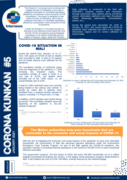
Internews’ Rooted In Trust (RiT) Project tracks COVID-19-related rumors circulating among social media users and vulnerable communities in Mali, as well as other countries around the globe. The rumors are used to inform risk communication efforts by humanitarians and public health actors, and to s
...

Covid19 - Standard Operating Procedures – UNHAS ROSS
This SOP defines WFP Aviation/UNHAS procedures to be followed when operating in areas affected by the current outbreak of the coronavirus disease (COVID-19). This SOP will be communicated to UNHAS staff, Operators, and user organisations.
Acco
...
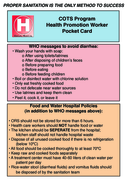
COTS (Cholera Outbreak Training and Shigellosis) Program Health Promotion Worker Pocket Card
recommended
The COTS Cholera Outbreak Training and Shigellosis Program Pocket Card provides essential guidelines for health promotion workers to prevent and manage cholera and shigellosis outbreaks. It emphasizes proper sanitation, hygiene practices, safe water handling, and food safety as the primary methods f
...

communicable Disease Toolkit
Purpose of this document: to present eight practical steps that Member States can take at the national and sub-national level to improve WASH in health care facilities
Program for Early Recovery and Resilience Building from EVD Outbreak in Liberia
The development of water, sanitation and hygiene (WASH) in schools guidelines for TimorLeste is a landmark moment in our quest to make every school child-friendly – a place where every child can learn, play and grow with pride and dignity. The overarching goal is to improve health, boost education
...

This guidance note developed by UNICEF helps WASH staff in their preparedness and response to the current COVID-19 pandemic. It provides an overview of Infection Prevention and Control (IPC) and its intersection with water, sanitation and hygiene (WASH). It also provides key actions that staff can i
...

This guidance note developed by UNICEF is intended to help WASH staff in their preparedness and response to the current COVID-19 pandemic. It provides an overview of Infection Prevention and Control (IPC) and its intersection with water, sanitation and hygiene (WASH), and how staff can help prevent
...
This Interim Guidance is intended for field coordinators, site managers and public health personnel, as well as national and local governments and the wider humanitarian community working in humanitarian situations at food distribution sites, who are involved in the decision making and implementatio
...

According to WHO, infection prevention and control (IPC) is a scientific approach and practical solution designed to prevent harm caused by infection to patients and health workers. It is grounded in infectious diseases, epidemiology, social science and health system strengthening. IPC occupies a un
...

This guidance note is for UNICEF Regional and Country Office WASH staff to help them in their preparedness and response to the current COVID-19 global pandemic. It provides an overview of Infection Prevention and Control (IPC) and its intersection with water, sanitation and hygiene (WASH) and how UN
...
Physical distancing measures are important to reduce COVID-19 transmission. However, when stringently applied, they can result in negative health and socio-economic impacts. This report draws on a rapid review of available literature, case studies from across Africa and expert knowledge to make reco
...