
Filter
492
Text search:
World
Health
Organization
(Thailand)
Featured
Recommendations
35
New Publications
110
Language
Document type
No document type
277
Studies & Reports
92
Guidelines
67
Manuals
29
Strategic & Response Plan
8
Training Material
7
Fact sheets
5
Situation Updates
4
Resource Platforms
2
Infographics
1
Countries / Regions
Global
25
South–East Asia Region
21
Myanmar / Burma
18
India
14
Asia
14
Kenya
9
Thailand
9
Philippines
8
Syria
7
South Africa
7
Nepal
6
Indonesia
6
Bangladesh
5
Senegal
4
Tanzania
4
Cambodia
4
Latin America and the Carribbean
4
Western and Central Europe
4
Ethiopia
3
Uganda
3
Brazil
3
Ukraine
3
East and Southern Africa
3
Russia
3
Liberia
2
Cameroon
2
Ghana
2
Haiti
2
Afghanistan
2
Lebanon
2
China
2
West and Central Africa
2
Middle East and North Africa
2
Africa
2
Eastern Europe
2
Guinea
1
Burkina Faso
1
Sierra Leone
1
Nigeria
1
Congo, Democratic Republic of
1
Mali
1
Côte d’Ivoire / Ivory Coast
1
Morocco
1
Niger
1
Zimbabwe
1
Pakistan
1
Iraq
1
Jordan
1
Zambia
1
Rwanda
1
Malaysia
1
Mozambique
1
Benin
1
Argentina
1
North Macedonia
1
Hungary
1
Colombia
1
Greece
1
Madagascar
1
Mexico
1
Sri Lanka
1
Eastern Europe and Central Asia
1
Other region
1
Bhutan
1
Mongolia
1
Congo-Brazzaville
1
Estonia
1
Iran
1
Kyrgyzstan
1
Georgia
1
Vietnam
1
Turkmenistan
1
Jamaica
1
Japan
1
France
1
Maldives
1
Norway
1
Portugal
1
Authors & Publishers
Publication Years
Category
Countries
84
Clinical Guidelines
53
Key Resources
30
Public Health
29
Women & Child Health
21
Pharmacy & Technologies
7
Capacity Building
2
Toolboxes
HIV
96
Mental Health
40
TB
37
Disability
30
AMR
26
COVID-19
23
Planetary Health
18
Global Health Education
16
Caregiver
12
NTDs
12
Refugee
10
Pharmacy
10
Conflict
9
Rapid Response
9
Natural Hazards
8
Zika
6
2.0 Rapid Response
6
NCDs
5
Polio
4
Health Financing Toolbox
4
Specific Hazards
3
Ebola & Marburg
2
Malaria
2
Cholera
1
The Health Equity Assessment Toolkit (HEAT) is a software application for use on desktop or laptop computers and mobile devices (minimum screen size of 7.9 inches recommended). It was developed to facilitate the assessment of within-country
...
Every year, around 830 000 children die from unintentional or "accidental" injuries. The vast majority of these injuries occur in low-income and middle-income countries. However, dozens of prevention strategies and programmes exist. If they were integrated into other child survival programmes and im
...
Self-care interventions are among the most promising and exciting new approaches to improve health and well-being, both from a health systems perspective and for people who use these interventions.
...
The COVID-19 pandemic has led to large increases in healthcare waste, straining under resourced healthcare facilities and exacerbating environmental impacts from solid waste. This report quantifies the additional COVID-19 healthcare waste generated, describes current healthcare waste management syst
...
22 April 2022, This document provides updated interim recommendations on the use of masks by health workers providing care to patients with suspected or confirmed COVID-19. This update is prompted by new evidence around mask use and COVID-19 transmi
...
The Asia Pacific Observatory on Health Systems and Policies is a collaborative partnership which supports and promotes evidence-based health policy making in the Asia Pacific Region. Based in WHO’
...
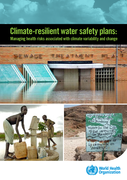
Long-term planning for an adequate and safe supply of drinking-water should be set in the context of growing external uncertainties arising from changes in the climate and environment. The water safety plan (WSP) process offers a systematic framework to manage these risks by considering the implica
...


The Millennium Development Goals (MDGs) showed
that global commitment and collective action
could significantly reduce the disease burdens of
three deadly communicable diseases: HIV/AIDS,
tuberculosis (TB) and malaria. The MDGs helped
focus efforts on these three deadly diseases
and leveraged
...
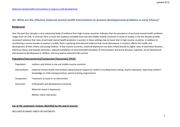
Q1: What are the effective maternal mental health interventions to prevent developmental problems in early infancy?
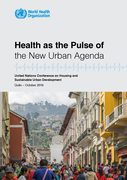
This report considers how to integrate health into urban planning, investments, and policy decisions, so as to support the implementation and achievement of the goals and objectives of the New Urban Agenda.

The purpose of the landscape analysis is ultimately to facilitate improved engagement of private providers, thereby contributing to universal access to quality and affordable TB care and the end of the TB epidemic. It focuses on the role of private for-profit providers and on specific challenges and
...

Mental disorders impose an enormous burden on society, accounting for almost one in three years lived with disability globally. •In addition to their health impact, mental disorders cause a significant economic burden due to lost economic output a
...

Experience of national TB partnerships

- Module 1: Understanding modelling approaches for sexual, reproductive, maternal, newborn, child and adolescent health, and nutrition
Coronavirus disease 2019 (COVID-19) has a wide range of documented effects. It directly causes death and disabili
...
