
Filter
522
Text search:
World
Health
Organization
(Bangladesh)
Featured
Recommendations
49
New Publications
129
Language
Document type
No document type
285
Studies & Reports
116
Guidelines
58
Manuals
32
Strategic & Response Plan
12
Training Material
7
Situation Updates
5
Fact sheets
4
Resource Platforms
2
Infographics
1
Countries / Regions
Global
49
Bangladesh
34
Nepal
16
Myanmar / Burma
15
South–East Asia Region
15
Asia
15
India
11
Ethiopia
5
Uganda
5
Philippines
5
Pakistan
4
Thailand
4
Zimbabwe
3
Syria
3
Kenya
3
Rwanda
3
Indonesia
3
Western and Central Europe
3
Africa
3
Russia
3
Liberia
2
Nigeria
2
Senegal
2
Congo, Democratic Republic of
2
Afghanistan
2
Zambia
2
Tanzania
2
Cambodia
2
China
2
South Africa
2
Malawi
2
Colombia
2
Sri Lanka
2
Latin America and the Carribbean
2
Venezuela
2
Guinea
1
Burkina Faso
1
Sierra Leone
1
Mali
1
Cameroon
1
Ghana
1
Niger
1
Haiti
1
Somalia
1
South Sudan
1
Iraq
1
Lebanon
1
Eswatini/ Swaziland
1
Brazil
1
North Macedonia
1
Ukraine
1
Yemen
1
East and Southern Africa
1
West and Central Africa
1
Middle East and North Africa
1
Other region
1
Bhutan
1
Eastern Europe
1
Mongolia
1
Authors & Publishers
Publication Years
Category
Countries
109
Women & Child Health
61
Key Resources
51
Clinical Guidelines
50
Public Health
30
Capacity Building
9
Pharmacy & Technologies
7
Toolboxes
TB
45
COVID-19
40
Disability
36
HIV
36
Planetary Health
28
Mental Health
27
Global Health Education
19
Caregiver
19
NTDs
19
Health Financing Toolbox
12
Natural Hazards
10
Refugee
10
AMR
10
Conflict
7
NCDs
7
2.0 Rapid Response
6
Polio
5
Pharmacy
5
Rapid Response
3
Social Ethics
3
Ebola & Marburg
2
Cholera
2
Zika
2
Typhoon
1
Specific Hazards
1

The Millennium Development Goals (MDGs) showed
that global commitment and collective action
could significantly reduce the disease burdens of
three deadly communicable diseases: HIV/AIDS,
tuberculosis (TB) and malaria. The MDGs helped
focus efforts on these three deadly diseases
and leveraged
...

The report identifies major global gaps in WASH services: one third of health care facilities do not have what is needed to clean hands where care is provided; one in four facilities have no water services, and 10% have no sanitation services. This
...

There is a broad consensus nowadays that the Earth is warming up as a result of greenhouse gas emissions caused by anthropogenic activities. It is also clear that current trends in the fields of energy, development and population growth will lead to continuous and ever more dramatic climate change.
...
The primary audience for the guideline is health programme managers, including governmental and non-governmental organizations, and policy makers who are responsible for designing maternal, newborn and child
...
Planned and regulated task shifting and task sharing can have a range of benefits. It can ensure a rational optimization of the available health workforce, address health system shortages of special
...
The purpose of the landscape analysis is ultimately to facilitate improved engagement of private providers, thereby contributing to universal access to quality and affordable TB care and the end of the TB epidemic. It focuses on the role of private for-profit providers and on specific challenges and
...
his practical Guide serves as a companion to the “WHO guideline: recommendations on digital interventions for health system strengthening” and provides a systematic process for countries to develop a costed implementation plan for digital
...
The WHO/UNICEF JMP report, WASH in Health Care Facilities, is the first comprehensive global assessment of water, sanitation and hygiene (WASH) in health care facilities. It also finds that 1 in 5
...
31 Janaury 2021
SCORE for health data technical package. The first global assessment on the status and capacity of health information systems in 133 countries, covering 87% of the global population
...
Background document to the 2018 joint statement by WHO, UNFPA, UNICEF, ICM, ICN, FIGO and IPA: definition of skilled health personnel providing care during childbirth
This guide is an attempt to redress the deficit in understanding of implementation research and to encourage programme personnel and implementers to take a greater interest in the subject, recognizing that implementation research is in fact an integral part of programme planning and execution, rathe
...

Experience of national TB partnerships
Bangladesh has been going through incremental trend of GDP growth rates for a long time. The GDP is the key aspect to measure the economic growth of a country. But the current world wid
...

- Module 1: Understanding modelling approaches for sexual, reproductive, maternal, newborn, child and adolescent health, and nutrition
Coronavirus disease 2019 (COVID-19) has a wide range of documented effects. It directly causes death and disabili
...
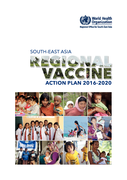
The current SEARVAP (South-East Asia regional vaccine action plan) describes a set of regional goals and objectives for immunization and control of vaccine-preventable diseases for 2016 – 2020 and highlights priority actions, targets and indicators that address the specific needs and challenges of
...

Antimicrobial resistance (AMR) is described as a situation when bacteria, viruses, fungi and parasites
change over time and no longer respond to medicines, making infections harder or impossible to treat,
and increasing the risk of disease spread, severe illness and death.1 AMR in recent years has
...
WHO REPORT ON THE GLOBAL TOBACCO EPIDEMIC, 2017
