
Filter
144
Text search:
World
Health
Organization,
United
Nations
Office
on
Drugs
and
Crime
Featured
Recommendations
4
New Publications
23
Language
Document type
No document type
93
Studies & Reports
25
Guidelines
11
Strategic & Response Plan
6
Manuals
4
Situation Updates
2
Fact sheets
2
Resource Platforms
1
Countries / Regions
India
7
Global
7
Nepal
5
Syria
5
Eastern Europe
5
South Africa
4
South–East Asia Region
4
Western and Central Europe
4
Afghanistan
3
Ukraine
3
Myanmar / Burma
3
Latin America and the Carribbean
3
Asia
3
Russia
3
Nigeria
2
Senegal
2
Uganda
2
Zambia
2
Kenya
2
Thailand
2
Mozambique
2
Mexico
2
Kyrgyzstan
2
Burkina Faso
1
Congo, Democratic Republic of
1
Mali
1
Morocco
1
Ethiopia
1
Ghana
1
Somalia
1
Pakistan
1
South Sudan
1
Lebanon
1
Tanzania
1
Cambodia
1
Indonesia
1
Bangladesh
1
Malawi
1
Central African Republic
1
Argentina
1
Eswatini/ Swaziland
1
Brazil
1
North Macedonia
1
Hungary
1
Colombia
1
Libya
1
Lesotho
1
Sri Lanka
1
Chile
1
Yemen
1
Eastern Europe and Central Asia
1
Africa
1
Bhutan
1
Palestine
1
Armenia
1
Tajikistan
1
Uzbekistan
1
Kazakhstan
1
Georgia
1
Jamaica
1
Mauritius
1
Norway
1
Portugal
1
Authors & Publishers
Publication Years
Category
Countries
34
Public Health
8
Women & Child Health
6
Clinical Guidelines
5
Key Resources
5
Capacity Building
1
Toolboxes
HIV
37
Mental Health
27
TB
13
COVID-19
8
Disability
5
Conflict
5
Refugee
5
Planetary Health
4
Health Financing Toolbox
4
AMR
2
Pharmacy
2
Global Health Education
1
Caregiver
1
NCDs
1

The strategic priorities of the CCS 2014–2018 are:
(1) Strengthening the health system.
(2) Enhancing the achievement of communicable disease control targets.
(3) Controlling the growth of the noncommunicable disease burden.
(4 ...
(1) Strengthening the health system.
(2) Enhancing the achievement of communicable disease control targets.
(3) Controlling the growth of the noncommunicable disease burden.
(4 ...
"Some of the problems with our current drug policies stem from the fact that these policies have been largely bifurcated between two different and often contradictory approaches. One treats drug use as a c
...
School health programmes are the most cost-effective way to influence health behaviours in young people. The purpose of this two-part handbook is to support schools as they seek to im
...
This document outlines PAHO’s regional priorities for the year 2023 to sustain and scale up health emergency and humanitarian assistance in the A
...
The 2021 Financing for Sustainable Development Report responds to the request made by Member States to review the impact of the COVID-19 pandemic on nancing for sustainable development, and to prop
...
Joint actions by the Global Fund and UNAIDS are guided by a strong alignment of strategies, goals and targets. UNAIDS has worked with all stakeholders to set a common agenda
...
The pandemic presents tough choices for governments, local communities, health and school systems, as well as families and businesses: How to re-op
...
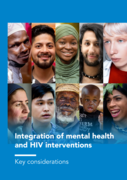
This joint publication by UNAIDS and WHO emphasizes the importance of integrating HIV prevention, testing, treatment and care and mental
...

Discussion Paper "Mental health, poverty and development", July 2009

In the present report, the Special Rapporteur on the sale and sexual exploitation of children, including child prostitution, child pornography
...
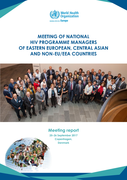
Meeting report, 25-26 September 2017 Copenhagen, Denmark
Accessed: 07.11.2019
How WHO works to prevent drug use, reduce harm and improve safe access to medicines

Report of a mission 20–24 April 2015

Regional Tuberculosis Program, Pan American Health Organization (PAHO/WHO)

The key updates include: content update in various sections based on new evidence; design changes for enhanced usability; a streamlined and simplified clinical assessment that includes an algorithm
...
