
Filter
169
Text search:
World
Health
Organization,
UN
Children's
Fund
Featured
Recommendations
16
New Publications
52
Language
Document type
No document type
89
Studies & Reports
39
Guidelines
14
Manuals
10
Situation Updates
6
Fact sheets
5
Strategic & Response Plan
3
Training Material
1
Brochures
1
Infographics
1
Countries / Regions
Global
17
Yemen
7
Kenya
5
Senegal
4
Ethiopia
4
Somalia
4
Nepal
4
Lebanon
4
Mozambique
4
Myanmar / Burma
4
South Sudan
3
Zambia
3
Syria
3
Tanzania
3
Bangladesh
3
Central African Republic
3
Namibia
3
South–East Asia Region
3
India
2
Pakistan
2
Afghanistan
2
Cambodia
2
Indonesia
2
South Africa
2
Colombia
2
Libya
2
Sri Lanka
2
Western and Central Europe
2
Venezuela
2
Guinea
1
Liberia
1
Nigeria
1
Mali
1
Guinea-Bissau
1
Saudi Arabia
1
Uganda
1
Niger
1
Togo
1
Haiti
1
Philippines
1
Iraq
1
Jordan
1
Turkey
1
Egypt
1
Chad
1
Rwanda
1
Malaysia
1
Malawi
1
Sudan
1
Greece
1
Lesotho
1
Mexico
1
West and Central Africa
1
Middle East and North Africa
1
Latin America and the Carribbean
1
Africa
1
Eastern Europe
1
Laos
1
Authors & Publishers
Publication Years
Category
Countries
56
Women & Child Health
37
Key Resources
9
Clinical Guidelines
4
Public Health
3
Toolboxes
Disability
25
COVID-19
19
Planetary Health
13
Mental Health
11
Conflict
9
HIV
8
Polio
4
Cholera
3
Refugee
3
Pharmacy
3
Natural Hazards
2
Specific Hazards
2
Global Health Education
2
Caregiver
2
Rapid Response
1
Zika
1
AMR
1
Young people living in the Central African Republic, Chad, Nigeria, Guinea, and Guinea-Bissau are the most at risk of the impacts of climate change, threatening their health, education, and protection, and exposing them to deadly diseases. The repor
...
Tanzania is prone to refugee influxes, often of long duration. Despite facing its own economic challenges, for decades Tanzania has welcomed thousands of refugees fleeing conflicts in neighboring countries of Great Lakes Region. The counties geographic proximity to the strifetorn Congo Basin is resp
...
Submitted to the US Agency for International Development by the Systems for Improved Access to Pharmaceuticals and Services (SIAPS) Program. Arlington, VA: Management Sciences for Health. Submitted to the United Nations
...
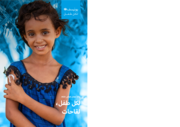
The article focuses on "The State of the World’s Children 2023" report published by UNICEF. It highlights the critical role of vaccines in saving lives and the challenges in global immunization efforts, especially for marginalized and underserved
...
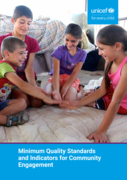
The Minimum Standards and Indicators for Community Engagement were developed through an inter‑agency consultation process that engaged a large number of experts from around the world. UNICEF wishes to acknowledge the contribution of all those that
...
This brief summarizes current evidence and guidance for maintaining safe and effective care across the spectrum of maternal, newborn and infant care while protecting mother and child and health care providers during COVID-19. Furthermore, implicatio
...
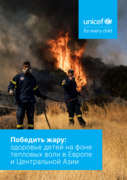
Beat the heat: child health amid heatwaves in Europe and Central Asia finds that half of these children died from heat-related illnesses in their first year of life. Most children died during the summer months.
"Around half of children across Eur
...
The report studied child poverty in nine dimensions – development/stunting, nutrition, health, water, sanitation, and housing. Other dimensions included education, health related knowledge, and in
...

At the threshold of Sustainable Development Goals (SDG) era, this document captures the remarkable achievements by Member States towards achieving MDGs 4 and 5. It acknowledges new opportunities in the post-2015 phase shaped by the SDGs and the Global Strategy for women’s,
...
The State of the World’s Children 2013: Children with Disabilities examines the barriers – from inaccessible buildings to dismissive attitudes, from invisibility in official statistics to vicious discrimination – that deprive children with dis
...

Technical Note on Antimicrobial Resistance
This document reflects UNICEF’s response to the growing global threat of AMR to child survival, growth and development. It identifies UNICEF’s AMR-specific and AMR-sensitive actions in reducing infections, promoting access to and optimal use of antimic
...

This report makes clear that there is a path to end AIDS. Taking that path will help ensure preparedness to address other pandemic challenges, and advance progress across the Sustainable Development Goals. The data and real-world examples in the rep
...

Thirty years ago, the United Nations General Assembly adopted the Convention on the Rights of the Child at a moment of rapid global change marked by the end of apartheid, the fall of the Berlin Wall and the birth of the World Wide Web. These develop
...
Technical Note: Cholera treatment facilities provide inpatient care for cholera patients during outbreaks. Proper case management and isolation of cholera patients is essential to prevent deaths and help control the spread of
the disease. Traditionally, these structures have been referred to as ch
...
Child marriage and female genital mutilation (FGM) threaten the well-being of millions of girls around the world. Both have existed for generations, as manifestations of gender inequality, and have been propagated by discriminatory norms that devalu
...
Pregnancy and childbirth during adolescence profoundly affects the lives of millions of girls worldwide, and is a leading cause of maternal mortality and morbidity, and infant and child mortality. Every year, an estimated 21 million girls aged 15–19 years old in low- and middle-income countries be
...
Children without access to safe water are more likely to die in infancy -- and throughout childhood -- from diseases caused by
water-borne bacteria, to which their small bodies are more vulnerable.
