
Filter
491
Text search:
World
Health
Organization,
South-East
Asia
Featured
Recommendations
60
New Publications
133
Language
Document type
No document type
237
Studies & Reports
104
Guidelines
71
Manuals
31
Strategic & Response Plan
21
Training Material
8
Fact sheets
6
Resource Platforms
5
Situation Updates
4
Infographics
3
Online Courses
1
Countries / Regions
Global
41
South–East Asia Region
34
India
20
Myanmar / Burma
15
Asia
15
Bangladesh
10
Nepal
7
Western and Central Europe
6
Nigeria
5
Philippines
5
Kenya
5
Cambodia
5
Syria
4
Indonesia
4
Latin America and the Carribbean
4
Congo, Democratic Republic of
3
Tanzania
3
Thailand
3
South Africa
3
Middle East and North Africa
3
Western Pacific Region
3
Ethiopia
2
Uganda
2
China
2
Rwanda
2
Brazil
2
East and Southern Africa
2
West and Central Africa
2
Eastern Europe and Central Asia
2
Africa
2
Russia
2
Cameroon
1
Ghana
1
South Sudan
1
Egypt
1
Malaysia
1
Malawi
1
Sudan
1
Benin
1
Eswatini/ Swaziland
1
Serbia
1
Croatia
1
Sri Lanka
1
Yemen
1
Other region
1
Venezuela
1
Eastern Europe
1
Timor Leste/ East Timor
1
Tajikistan
1
Kazakhstan
1
Vietnam
1
Japan
1
Maldives
1
Authors & Publishers
Publication Years
Category
Countries
94
Clinical Guidelines
71
Women & Child Health
44
Public Health
43
Key Resources
32
Capacity Building
13
Pharmacy & Technologies
10
Toolboxes
HIV
45
Mental Health
36
NTDs
34
TB
32
Planetary Health
28
COVID-19
25
AMR
21
Caregiver
20
Rapid Response
16
Global Health Education
15
Disability
14
NCDs
10
Zika
9
Pharmacy
9
Conflict
7
Natural Hazards
7
Ebola & Marburg
6
Refugee
6
2.0 Rapid Response
6
Polio
5
Malaria
4
Specific Hazards
3
Cholera
2
Typhoon
1
Social Ethics
1
Health Financing Toolbox
1
Birth defect has been an emerging major cause of child mortality in the region. Scarcity of the birth defects information hampers policy decisions and control measures at national level. In order to create evidence for action for birth defects prevention in the region, WHO-SEARO in collaboration wit
...
Schools are generally the most popular setting for drug-use-
prevention programmes, and are used both by governmental and
non-governmental agencies. This may be for many reasons: ease of
obtaining funding for school drug-use-prevention programmes, the
captive audience, and the popular perception
...

Notable progress has also been made on other key health indicators such as reducing maternal, infant and child deaths and malnutrition, increasing immunization coverage, eliminating infectious diseases such as polio and reducing the incidence of mal
...
Birth defect has been an emerging major cause of child mortality in the region. Scarcity of the birth defects information hampers policy decisions and control measures at national level. In order to create evidence for action for birth defects prevention in the region, WHO-SEARO in collaboration wit
...
During the Programme Managers’ Review Meeting of Central and East Africa and South-East Asia (online meeting, June 2022), experts proposed additi
...

This report includes analysis from informal regional consultations in the African Region, the Caribbean and North America, Latin America, South-East Asia
...
World Health Organization. Regional Office for South-
...
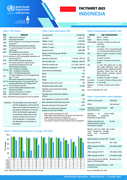
World Health Organization. Regional Office for South-
...
Schistosomiasis is a public health problem in tropical and subtropical regions of Africa, Asia, the Caribbean and South America. It is one of the neglected tropical diseases (NTDs) - a group of dise
...
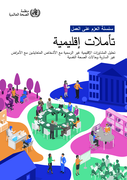
This report includes analysis from informal regional consultations in the African Region, the Caribbean and North America, Latin America, South-East Asia
...
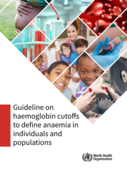
Anaemia is a global public health concern, especially afflicting adolescent girls, women 15–49 years of age, pregnant women, and children in low- and middle-income countries. WHO estimates that in 2019 30% (571 million) of women aged 15–49 years
...
Member States of the Region have initiated processes to strengthen leadership and governance for mental health. Several countries have developed and implemented mental health plans, strategies and l
...

Access to safe blood and blood products is recognized as one of the key requirements for delivery of modern health care in the journey towards health for all. The foundation of safe and sustainable
...
The availability of controlled medicines is crucial for patients requiring palliative care, pain relief and symptom management. Many individuals worldwide, especially in low- and middle-income countries, continue to experience limited access to these essential medicines. Enhancing access to controll
...
Bioethics 519 (online) doi:10.1111/bioe.12145 Volume 29 Number 8 2015 pp. 488–596;
Pandemic plans recommend phases of response to an emergent infectious disease (EID) outbreak, and are primarily aimed at preventing and mitigating human-to-human transmission. These plans carry presumptive weight
...
During the first two years of the project (2019–2020), through a ‘One Health’ approach, comprehensive engagement was established with AMR coordinating committees, WHO regional and country offices and SORT IT partners in
...
Report of the Joint World Health Organization–Brien Holden Vision Institute Global Scientific Meeting on Myopia | University of New South Wales,
...

The Polio Transition1
Monitoring and Evaluation (M&E) Framework was designed to monitor progress towards achieving the strategic and operational outcomes of the post-2023 Strategic Action Plan on Polio Transition (2018– 2023), as outlined in the Global Vision to use polio investments to build st
...
