
Filter
3895
Text search:
World
Health
Organisation
(WHO)
Featured
Recommendations
314
New Publications
899
Language
Document type
No document type
1925
Studies & Reports
843
Guidelines
451
Strategic & Response Plan
178
Manuals
173
Fact sheets
102
Training Material
79
Situation Updates
59
Infographics
29
Resource Platforms
18
Brochures
14
Online Courses
10
Videos
9
App
4
Dashboards/Maps
1
Countries / Regions
Global
199
India
178
South Africa
116
Nigeria
88
Kenya
87
Zambia
81
Uganda
79
Sierra Leone
75
Africa
75
Latin America and the Carribbean
72
Western and Central Europe
68
Nepal
61
Myanmar / Burma
57
Ghana
55
Namibia
55
Malawi
52
Syria
44
Tanzania
44
Rwanda
36
Liberia
34
Zimbabwe
33
Ethiopia
32
Congo, Democratic Republic of
31
Ukraine
31
Bangladesh
29
Haiti
27
Lesotho
26
Germany
25
Mozambique
24
Senegal
23
Indonesia
23
East and Southern Africa
23
Cameroon
22
South Sudan
22
Eastern Europe
21
Guinea
20
Cambodia
20
West and Central Africa
20
Asia
20
Botswana
19
South–East Asia Region
18
Philippines
16
Middle East and North Africa
16
Russia
15
Mali
14
Burkina Faso
13
Benin
13
Central African Republic
13
Eswatini/ Swaziland
13
Brazil
12
Madagascar
12
Pakistan
11
Chad
11
Vietnam
11
Niger
10
China
10
Sri Lanka
10
Laos
9
Thailand
8
Argentina
8
Colombia
8
Western Pacific Region
8
Venezuela
8
Côte d’Ivoire / Ivory Coast
7
Iraq
7
Jordan
7
Afghanistan
7
Lebanon
7
Yemen
7
Somalia
6
Turkey
6
Sudan
6
Angola
6
Togo
5
Mexico
5
Tajikistan
5
Kyrgyzstan
5
France
5
Malaysia
4
Peru
4
Guatemala
4
Eastern Europe and Central Asia
4
Poland
4
Moldova
4
Iran
4
United Kingdom
4
Spain
4
Guinea-Bissau
3
Serbia
3
Hungary
3
Burundi
3
Ecuador
3
El Salvador
3
Bolivia
3
Libya
3
Chile
3
Congo-Brazzaville
3
Timor Leste/ East Timor
3
Kazakhstan
3
Georgia
3
Jamaica
3
Japan
3
Mauritius
3
Portugal
3
Morocco
2
Gambia
2
Mauritania
2
Singapore
2
North Macedonia
2
Croatia
2
Cuba
2
Honduras
2
Greece
2
Nicaragua
2
Paraguay
2
Fiji
2
Bhutan
2
Albania
2
Armenia
2
Southern Africa
2
Qatar
2
Romania
2
Uzbekistan
2
Gabon
2
Tunisia
2
Belarus
2
Israel
2
USA
1
Saudi Arabia
1
Egypt
1
Ireland
1
Papua New Guinea
1
Dominican Republic
1
Switzerland
1
Palestine
1
North Korea
1
Italy
1
Mongolia
1
Bulgaria
1
Lithuania
1
Slovakia
1
Australia
1
North America
1
Uruguay
1
Turkmenistan
1
Denmark
1
Maldives
1
Norway
1
Algeria
1
Azerbaijan
1
Bosnia and Herzegovina
1
Eritrea
1
Authors & Publishers
Publication Years
Category
Countries
1400
Key Resources
253
Clinical Guidelines
238
Public Health
197
Women & Child Health
169
Capacity Building
61
Pharmacy & Technologies
33
Annual Report MEDBOX
2
Toolboxes
COVID-19
311
Mental Health
274
Disability
263
HIV
197
Planetary Health
197
AMR
192
TB
138
Caregiver
114
Global Health Education
112
NTDs
105
Conflict
98
Ebola & Marburg
96
Refugee
96
Rapid Response
95
Health Financing Toolbox
84
NCDs
70
Malaria
63
2.0 Rapid Response
47
Cholera
44
Natural Hazards
43
Pharmacy
42
Social Ethics
22
Specific Hazards
20
Zika
18
Polio
15
Typhoon
1
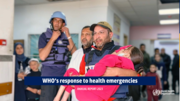
In 2023, the World Health Organization was responding to 72 health emergencies, including 19 grade-3 emergencies which required the highest level o
...
WHO needs US$2.54 billion to provide life-saving assistance to millions of people around the world facing health emergencies.
...

This document puts forward the joint position and vision of an expert, global, multistakeholder working group on implementing Kangaroo Mother Care (KMC) for all preterm or low birth weight (LBW) infants as the foundation for small and/or sick newborn care within maternal, newborn, and child
...
Community health nurses have the potential to make significant contributions to meet the health care needs of various population groups in a variety of community settings. In order to assess the ext
...
The extensive use of natural resources threatens to exceed the carrying capacity of the Earth. The concept of a
circular economy offers an avenue to sustainable growth, good health and decent jobs, while saving the environment
and its natural reso
...

This global progress report attempts to lay the groundwork for the kind of accelerated action needed. Section 1 presents key data, trends and developments in women’s, children’s and adolescents’ health and well-being. That is followed in Secti
...
Complementary feeding, defined as the process of providing foods in addition to milk when breast milk or milk formula alone are no longer adequate to meet nutritional requirements, generally starts at age 6 months and continues until 23 months of age. This is a developmental period when it is critic
...
WAHA International’s mHealth programme addresses several barriers to maternal and neonatal care, including: a lack of information at the community level about locally available services; a large distance from services and a lack of affordable transport for patients; and ineffective communication b
...
This draft Roadmap for the Global Health for Peace Initiative has been developed in response to decision WHA75(24) of the 75th World Health Assembl
...
This report summarizes the latest scientific knowledge on the links between exposure to air pollution and adverse health effects in children. It is intended to inform and motivate individual and collective action by
...
Download (2 MB)
Overview
Internationally harmonized modules on key issues for paediatricians and paediatric nurses, family and public health professionals.

In an ambitious new era for health development under the 2030 Agenda for Sustainable Development, WHO and
its partners have a solid foundation of success on which to build.
...
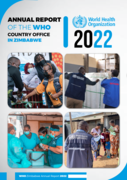
This report highlights the work of the World Health Organization (WHO) in Zimbabwe towards contributing to the triple billion targets in the contex
...
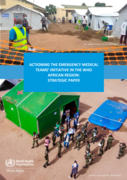
Emergency medical teams (EMT) are first response health care providers – doctors, nurses, paramedics, and others – during outbreaks and emergencies or disasters, working with governments, charities such as nongovernmental organizations (NGOs), a
...
This publication aims to provide an overview of the state of developmental monitoring in selected countries across the Europe and Central Asia region (ECAR), to document the existing evidencebased approaches and models for developmental monitoring and to identify the key considerations necessary to
...
The Framework serves to guide efforts to deliver safe and sustainable water, sanitation and hygiene (WASH), health care waste management and reliable electricity in all health care facilities. The u
...

All health and care workers require the knowledge and skills to prevent the transmission of Ebola virus or Marburg virus when providing care for patients. This course provides an overview of the mode of transmission of these viruses, the personal pr
...

Nearly 260 000 people died in parts of Somalia between October 2010 and April 2012, including
133 000 children under five during the famine and food crisis in Somalia making it the worst famine in history.
A study commissioned and funded by the Food and Agriculture Organization of the United Natio
...
This fourth annual report monitors global progress towards the 2023 target for global elimination of industrially produced trans-fatty acids (TFA), highlighting achievements during the past year (October 2021 – September 2022). Countries are responding to the
...
In this report, we present the findings from this study, discuss the issues as
understood through interactions with the Finance and Health Department Officials, and provide some short-, medium- and long-term recommendations that could help the Uni
...
