Filter
457
Text search:
UNICEF,
World
Health
Organisation
(WHO)
Featured
Recommendations
35
New Publications
125
Language
Document type
No document type
278
Studies & Reports
87
Guidelines
35
Strategic & Response Plan
21
Manuals
19
Situation Updates
6
Fact sheets
6
Training Material
3
Resource Platforms
2
Countries / Regions
India
18
Sierra Leone
16
Global
16
Nepal
15
Ghana
12
Malawi
12
Nigeria
11
Kenya
10
Namibia
9
Zambia
8
Africa
8
Congo, Democratic Republic of
7
South Sudan
7
Indonesia
7
Myanmar / Burma
7
Uganda
6
Zimbabwe
6
Rwanda
6
South Africa
6
Ethiopia
5
Syria
5
Tanzania
5
Madagascar
5
East and Southern Africa
5
West and Central Africa
5
Latin America and the Carribbean
5
Senegal
4
Haiti
4
Mozambique
4
Benin
4
Burkina Faso
3
Mali
3
Côte d’Ivoire / Ivory Coast
3
Niger
3
Pakistan
3
Afghanistan
3
Central African Republic
3
Lesotho
3
Middle East and North Africa
3
Western and Central Europe
3
Guinea
2
Cameroon
2
Togo
2
Lebanon
2
Cambodia
2
China
2
Malaysia
2
Bangladesh
2
Croatia
2
Botswana
2
Sri Lanka
2
Yemen
2
South–East Asia Region
2
Asia
2
Iran
2
Vietnam
2
Japan
2
France
2
Liberia
1
Philippines
1
Jordan
1
Germany
1
Chad
1
Thailand
1
Papua New Guinea
1
Brazil
1
Serbia
1
Burundi
1
Ukraine
1
Colombia
1
Greece
1
Angola
1
Bhutan
1
Eastern Europe
1
Albania
1
Laos
1
Congo-Brazzaville
1
Timor Leste/ East Timor
1
Russia
1
Moldova
1
Kyrgyzstan
1
Gabon
1
Turkmenistan
1
Portugal
1
Spain
1
Azerbaijan
1
Bosnia and Herzegovina
1
Authors & Publishers
Publication Years
Category
Countries
176
Key Resources
44
Women & Child Health
42
Clinical Guidelines
24
Public Health
18
Capacity Building
3
Pharmacy & Technologies
3
Toolboxes
COVID-19
44
Disability
35
HIV
30
Mental Health
24
Conflict
18
Ebola & Marburg
15
Planetary Health
15
Global Health Education
13
Refugee
12
Health Financing Toolbox
11
Caregiver
10
AMR
9
Natural Hazards
7
Rapid Response
6
NTDs
5
Cholera
4
TB
4
2.0 Rapid Response
4
Pharmacy
3
NCDs
3
Polio
2
Zika
2
Specific Hazards
2
Social Ethics
2

While there has been real progress in addressing the burden of disease in the WHO African region, the COVID-19 pandemic has highlighted the link between health, economics and security, as the region
...
Personne ne se rend dans un établissement de soins de santé pour tomber malade. On s’y rend pour aller mieux, pour accoucher, pour se faire vacciner. Cependant, des centaines de millions de gens sont confrontés à un risque accru d’infection quand ils se font soigner dans des établissements
...
WHO/UNICEF/UNFPA joint statement
Adolescent girls and young women (AGYW) remain disproportionately affected by HIV in Eastern and Southern Africa (ESA), with 26 per cent of new infections attributed to this population. AGYW face many personal, social and structural barriers to access, uptake and use of traditional HIV prevention me
...
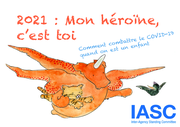
Un nouveau livre d'histoires visant à aider les enfants à comprendre et à accepter le COVID-19 a été publié.
Avec l'aide d'une créature fantastique, Ario, "My Hero is You, How kids can fight COVID-19 !" explique comment les enfants peuvent se protéger, protéger leur famille et leurs amis c
...
Organisation mondiale de la Santé. (2022). Normes et recommandations techniques minimales pour les soins de santé reproductive et de santé de la mère, du nouveau-né et de l’enfant pour les équipes médicales d’urgence.
...
Over half a billion children are living in areas with extremely high levels of floods and nearly 160 million children live in areas of high or extremely high droughts. The World Health
...
The purpose of this publication is to to provide a practical, stepwise approach to the implementation of the national action plans on AMR within the human health sector; and to provide a process and collation of existing
...
The WHO Quality Toolkit: Navigating tools to improve the quality of health services helps easy identification and access to a wide range of WHO pub
...

This fourth WHO report on neglected tropical diseases (NTDs) reviews the progress made towards achieving the Roadmap targets for 2020, noting the remaining challenges, then looks beyond 2020 to evaluate the changing global
...
In response to COVID-19, countries around the world have implemented several public health and social measures (PHSM), such as movement restrictions, closure of schools and businesses, and internati
...
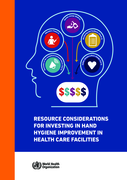
Investment in all the drivers and facilitators of hand hygiene action in health care to ensure that it occurs at the point of care and other critical moments requires a multidisciplinary, multifaceted approach.
...
This new guideline on non-clinical interventions to reduce unnecessary caesarean sections incorporates the views, fears and beliefs of both women and health professionals about caesarean sections. It also considers the complex dynamics and limitatio
...
This guide is available in English, French, Spanish, Russian, Arabic and Chinese
This guide consolidates COVID-19 guidance for human resources for health managers and policy-makers at national, subnational and facility levels to design, manage and
...
The COVID-19 pandemic has led to large increases in healthcare waste, straining under resourced healthcare facilities and exacerbating environmental impacts from solid waste. This report quantifies the additional COVID-19 healthcare waste generated, describes current healthcare waste management syst
...