
Filter
5146
Text search:
Provision
of
appropriate
care
Featured
500
1509
Language
5057
98
66
47
46
21
16
13
9
8
7
5
5
5
5
5
4
4
4
4
4
4
4
3
3
3
3
3
3
3
3
3
3
3
3
2
2
2
2
2
2
2
2
2
2
1
1
1
1
1
1
1
1
1
1
1
1
1
1
1
1
Document type
2897
736
729
333
247
86
61
39
8
5
2
1
1
Countries
245
208
171
156
135
127
118
117
113
113
110
92
90
89
88
82
76
74
59
56
54
51
49
45
39
38
37
36
36
33
33
32
31
30
28
25
25
24
20
20
19
18
17
17
17
17
17
16
16
13
12
12
11
11
10
10
10
9
8
7
6
6
6
6
6
6
6
6
6
5
5
5
5
4
4
4
4
4
4
4
4
4
4
4
4
3
3
3
3
3
3
3
3
3
2
2
2
2
2
2
2
2
2
2
2
2
2
2
2
2
2
2
1
1
1
1
1
1
1
1
1
1
1
1
1
1
1
1
1
1
1
1
1
1
1
Authors & Publishers
685
201
149
140
110
110
86
77
53
50
36
33
32
31
27
26
24
23
22
22
21
21
20
20
19
19
19
19
19
18
18
18
18
18
17
17
17
16
16
16
16
16
16
15
15
15
14
14
13
13
13
13
12
12
11
11
11
11
11
11
11
11
11
10
10
10
10
10
10
10
10
10
9
9
9
9
9
9
9
9
9
9
9
9
9
8
8
8
8
8
8
8
7
7
7
7
7
7
7
7
7
7
7
7
7
7
7
7
7
7
7
7
7
7
7
7
6
6
6
6
6
6
6
6
6
6
6
6
6
6
6
6
6
6
6
6
6
5
5
5
5
5
5
5
5
5
5
5
5
5
5
5
5
5
5
5
5
5
5
5
5
5
5
5
5
5
5
5
5
5
5
5
4
4
4
4
4
4
4
4
4
4
4
4
4
4
4
4
4
4
4
4
4
4
4
4
4
4
4
4
4
4
4
4
4
4
4
4
4
4
4
4
4
4
4
4
4
4
4
4
4
4
4
3
3
3
3
3
3
3
3
3
3
3
3
3
3
3
3
3
3
3
3
3
3
3
3
3
3
3
3
3
3
3
3
3
3
3
3
3
3
3
3
3
3
3
3
3
3
3
3
3
3
3
3
3
3
3
3
3
3
3
3
3
3
3
3
3
3
3
3
3
3
3
3
3
3
3
3
3
3
3
3
2
2
2
2
2
2
2
2
2
2
2
2
2
2
2
2
2
2
2
2
2
2
2
2
2
2
2
2
2
2
2
2
2
2
2
2
2
2
2
2
2
2
2
2
2
2
2
2
2
2
2
2
2
2
2
2
2
2
2
2
2
2
2
2
2
2
2
2
2
2
2
2
2
2
2
2
2
2
2
2
2
2
2
2
2
2
2
2
2
2
2
2
2
2
2
2
2
2
2
2
2
2
2
2
2
2
2
2
2
2
2
2
2
2
2
2
2
2
2
2
2
2
2
2
2
2
2
2
2
2
2
2
2
2
2
2
2
2
2
2
2
2
2
2
2
2
2
2
2
2
2
2
2
2
2
2
2
2
2
2
2
2
2
2
2
2
2
2
2
2
2
2
2
2
2
2
2
2
2
2
2
2
2
2
2
2
2
2
2
2
2
2
2
2
2
2
2
2
2
2
2
2
2
2
2
2
2
2
2
2
2
2
2
2
2
2
2
2
2
2
2
2
2
2
2
2
2
2
2
2
2
2
2
2
2
2
2
2
2
2
2
2
2
2
2
2
2
2
2
2
2
2
2
2
2
2
2
2
2
2
2
2
2
2
2
2
2
2
2
2
2
2
2
1
1
1
1
1
1
1
1
1
1
1
1
1
1
1
1
1
1
1
1
1
1
1
1
1
1
1
1
1
1
1
1
1
1
1
1
1
1
1
1
1
1
1
1
1
1
1
1
1
1
1
1
1
1
1
1
1
1
1
1
1
1
1
1
1
1
1
1
1
1
1
1
1
1
1
1
1
1
1
1
1
1
1
1
1
1
1
1
1
1
1
1
1
1
1
1
1
1
1
1
1
1
1
1
1
1
1
1
1
1
1
1
1
1
1
1
1
1
1
1
1
1
1
1
1
1
1
1
1
1
1
1
1
1
1
1
1
1
1
1
1
1
1
1
1
1
1
1
1
1
1
1
1
1
1
1
1
1
1
1
1
1
1
1
1
1
1
1
1
1
1
1
1
1
1
1
1
1
1
1
1
1
1
1
1
1
1
1
1
1
1
1
1
1
1
1
1
1
1
1
1
1
1
1
1
1
1
1
1
1
1
1
1
1
1
1
1
1
1
1
1
1
1
1
1
1
1
1
1
1
1
1
1
1
1
1
1
1
1
1
1
1
1
1
1
1
1
1
1
1
1
1
1
1
1
1
1
1
1
1
1
1
1
1
1
1
1
1
1
1
1
1
1
1
1
1
1
1
1
1
1
1
1
1
1
1
1
1
1
1
1
1
1
1
1
1
1
1
1
1
1
1
1
1
1
1
1
1
1
1
1
1
1
1
1
1
1
1
1
1
1
1
1
1
1
1
1
1
1
1
1
1
1
1
1
1
1
1
1
1
1
1
1
1
1
1
1
1
1
1
1
1
1
1
1
1
1
1
1
1
1
1
1
1
1
1
1
1
1
1
1
1
1
1
1
1
1
1
1
1
1
1
1
1
1
1
1
1
1
1
1
1
1
1
1
1
1
1
1
1
1
1
1
1
1
1
1
1
1
1
1
1
1
1
1
1
1
1
1
1
1
1
1
1
1
1
1
1
1
1
1
1
1
1
1
1
1
1
1
1
1
1
1
1
1
1
1
1
1
1
1
1
1
1
1
1
1
1
1
1
1
1
1
1
1
1
1
1
1
1
1
1
1
1
1
1
1
1
1
1
1
1
1
1
1
1
1
1
1
1
1
1
1
1
1
1
1
1
1
1
1
1
1
1
1
1
1
1
1
1
1
1
1
1
1
1
1
1
1
1
1
1
1
1
1
1
1
1
1
1
1
1
1
1
1
1
1
1
1
1
1
1
1
1
1
1
1
1
1
1
1
1
1
1
1
1
1
1
1
1
1
1
1
1
1
1
1
1
1
1
1
1
1
1
1
1
1
1
1
1
1
1
1
1
1
1
1
1
1
1
1
1
1
1
1
1
1
1
1
1
1
1
1
1
1
1
1
1
1
1
1
1
1
1
1
1
1
1
1
1
1
1
1
1
1
1
1
1
1
1
1
1
1
1
1
1
1
1
1
1
1
1
1
1
1
1
1
1
1
1
1
1
1
1
1
1
1
1
1
1
1
1
1
1
1
1
1
1
1
1
1
1
1
1
1
1
1
1
1
1
1
1
1
1
1
1
1
1
1
1
1
1
1
1
1
1
1
1
1
1
1
1
1
1
1
1
1
1
1
1
1
1
1
1
1
1
1
1
1
1
1
1
1
1
1
1
1
1
1
1
1
1
1
1
1
1
1
1
1
1
1
1
1
1
1
1
1
1
1
1
1
1
1
1
1
1
1
1
1
1
1
1
1
1
1
1
1
1
1
1
1
1
1
1
1
1
1
1
1
1
1
1
1
1
1
1
1
1
1
1
1
1
1
1
1
1
1
1
1
1
1
1
1
1
1
1
1
1
1
1
1
1
1
1
1
1
1
1
1
1
1
1
1
1
1
1
1
1
1
1
1
1
1
1
1
1
1
1
1
1
1
1
1
1
1
1
1
1
1
1
1
1
1
1
1
1
1
1
1
1
1
1
1
1
1
1
1
1
1
1
1
1
1
1
1
1
1
1
1
1
1
1
1
1
1
1
1
1
1
1
1
1
1
1
1
1
1
1
1
1
1
1
1
1
1
1
1
1
1
1
1
1
1
1
1
1
1
1
1
1
1
1
1
1
1
1
1
1
1
1
1
1
1
1
1
1
1
1
1
1
1
1
1
1
1
1
1
1
1
1
1
1
1
1
1
1
1
1
1
1
1
1
1
1
1
1
1
1
1
1
1
1
1
1
1
1
1
1
1
1
1
1
1
1
1
1
1
1
1
1
1
1
1
1
1
1
1
1
1
1
1
1
1
1
1
1
1
1
1
1
1
1
1
1
1
1
1
1
1
1
1
1
1
1
1
1
1
1
1
1
1
1
1
1
1
1
1
1
1
1
1
1
1
1
1
1
1
1
1
1
1
1
1
1
1
1
1
1
1
1
1
1
1
1
1
1
1
1
1
1
1
1
1
1
1
1
1
1
1
1
1
1
1
1
1
1
1
1
1
1
1
1
1
1
1
1
1
1
1
1
1
1
1
1
1
1
1
1
1
1
1
1
1
1
1
1
1
1
1
1
1
1
1
1
1
1
1
1
1
1
1
1
1
1
1
1
1
1
1
1
1
1
1
1
1
1
1
1
1
1
1
1
1
1
1
1
1
1
1
1
1
1
1
1
1
1
1
1
1
1
1
1
1
1
1
1
1
1
1
1
1
1
1
1
1
1
1
1
1
1
1
1
1
1
1
1
1
1
1
1
1
1
1
1
1
1
1
1
1
1
1
1
1
1
1
1
1
1
1
1
1
1
1
1
1
1
1
1
1
1
1
1
1
1
1
1
1
1
1
1
1
1
1
1
1
1
1
1
1
1
1
1
1
1
1
1
1
1
1
1
1
1
1
1
1
1
1
1
1
1
1
1
1
1
1
1
1
1
1
1
1
1
1
1
1
1
1
1
1
1
1
1
1
1
1
1
1
1
1
1
1
1
1
1
1
1
1
1
1
1
1
1
1
1
1
1
1
1
1
1
1
1
1
1
1
1
1
1
1
1
1
1
1
1
1
1
1
1
1
1
1
1
1
1
1
1
1
1
1
1
1
1
1
1
1
1
1
1
1
1
1
1
1
1
1
1
1
1
1
1
1
1
1
1
1
1
1
1
1
1
1
1
1
1
1
1
1
1
1
1
1
1
1
1
1
1
1
1
1
1
1
1
1
1
1
1
1
1
1
1
1
1
1
1
1
1
1
1
1
1
1
1
1
1
1
1
1
1
1
1
1
1
1
1
1
1
1
1
1
1
1
1
1
1
1
1
1
1
1
1
1
1
1
1
1
1
1
1
1
1
1
1
1
1
1
1
1
1
1
1
1
1
1
1
1
1
1
1
1
1
1
1
1
1
1
1
1
1
1
1
1
1
1
1
1
1
1
1
1
1
1
1
1
1
1
1
1
1
1
1
1
1
1
1
1
1
1
1
1
1
1
1
1
1
1
1
1
1
1
1
1
1
1
1
1
1
1
1
1
1
1
1
1
1
1
1
1
1
1
1
1
1
1
1
1
1
1
1
1
1
1
1
1
1
1
1
1
1
1
1
1
1
1
1
1
1
1
1
1
1
1
1
1
1
1
1
1
1
1
1
1
1
1
1
1
1
1
1
1
1
1
1
1
1
1
1
1
1
1
1
1
1
1
1
1
1
1
1
1
1
1
1
1
1
1
1
1
1
1
1
1
1
1
1
1
1
1
1
1
1
1
1
1
1
1
1
1
1
1
1
1
1
1
1
1
1
1
1
1
1
1
1
1
1
1
1
1
1
1
1
1
1
1
1
1
1
1
1
1
1
1
1
1
1
1
1
1
1
1
1
1
1
1
1
1
1
1
1
1
1
1
1
1
1
1
1
1
1
1
1
1
1
1
1
1
1
1
1
1
1
1
1
1
1
1
1
1
1
1
1
1
1
1
1
1
1
1
1
1
1
1
1
1
1
1
1
1
1
1
1
1
1
1
1
1
1
1
1
1
1
1
1
1
1
1
1
1
1
1
1
1
1
1
1
1
1
1
1
1
1
1
1
1
1
1
1
1
1
1
1
1
1
1
1
1
1
1
1
1
1
1
1
1
1
1
1
1
1
1
1
1
1
1
1
1
1
1
1
1
1
1
1
1
1
1
1
1
1
1
1
1
1
1
1
1
1
1
1
1
1
1
1
1
1
1
1
1
1
1
1
1
1
1
1
1
1
1
1
1
1
1
1
1
1
1
1
1
1
1
1
1
1
1
1
1
1
1
1
1
1
1
1
1
1
1
1
1
1
1
1
1
1
1
1
1
1
1
1
1
1
1
1
1
1
1
1
1
1
1
1
1
1
1
1
1
1
1
1
1
1
1
1
1
1
1
1
1
1
1
1
1
1
1
1
1
1
1
1
1
1
1
1
1
1
1
1
1
1
1
1
1
1
1
1
1
1
1
1
1
1
1
1
1
1
1
1
1
1
1
1
1
1
1
1
1
1
1
1
1
1
1
1
1
1
1
1
1
1
1
1
1
1
1
1
1
1
1
1
1
1
1
1
1
1
1
1
1
1
1
1
1
1
1
1
1
1
1
1
1
1
1
1
1
1
1
1
1
1
1
1
1
1
1
1
1
1
1
1
1
1
1
1
1
1
1
1
1
1
1
1
1
1
1
1
1
1
1
1
1
1
1
1
1
1
1
1
1
1
1
1
1
1
1
1
1
1
1
1
1
1
1
1
1
1
1
1
1
1
1
1
1
1
1
1
1
1
1
1
1
1
1
1
1
1
1
1
1
1
1
1
1
1
1
1
1
1
1
1
1
1
1
1
1
1
1
1
1
1
1
1
1
1
1
1
1
1
1
1
1
1
1
1
1
1
1
1
1
1
1
1
1
1
1
1
1
1
1
1
1
1
1
1
1
1
1
1
1
1
1
1
1
1
1
1
1
1
1
1
1
1
1
1
1
1
1
1
1
1
1
1
1
1
1
1
1
1
1
1
1
1
1
1
1
1
1
1
1
1
1
1
1
1
1
1
1
1
1
1
1
1
1
1
1
1
1
1
1
1
1
1
1
1
1
1
1
1
1
1
1
1
1
1
1
1
1
1
1
1
1
1
1
1
1
1
1
1
1
1
1
1
1
1
1
1
1
1
1
1
1
1
1
1
1
1
1
1
1
1
1
1
1
1
1
1
1
1
1
1
1
1
1
1
1
1
1
1
1
1
1
1
1
1
1
1
1
1
1
1
1
1
1
1
1
1
1
1
1
1
1
1
1
1
1
1
1
1
1
1
1
1
1
1
1
1
1
1
1
1
1
1
1
1
1
1
1
1
1
1
1
1
1
1
1
1
1
1
1
1
1
1
1
1
1
1
1
1
1
1
1
1
1
1
1
1
1
1
1
1
1
1
1
1
1
1
1
1
1
1
1
1
1
1
1
1
1
1
1
1
1
1
1
1
1
1
1
1
1
1
1
1
1
1
1
1
1
1
1
1
1
1
1
1
1
1
1
1
1
1
1
1
1
1
1
1
1
1
1
1
1
1
1
1
1
1
1
1
1
1
1
1
1
1
1
1
1
1
1
1
1
1
1
1
1
1
1
1
1
1
1
1
1
1
1
1
1
1
1
1
1
1
1
1
1
1
1
1
1
1
1
1
1
1
1
1
1
1
1
1
1
1
1
1
1
1
1
1
1
1
1
1
1
1
1
1
1
1
1
1
1
1
1
1
1
1
1
1
1
1
1
1
1
1
1
1
1
1
1
1
1
1
1
1
1
1
1
1
1
1
1
1
1
1
1
1
1
1
1
1
1
1
1
1
1
1
1
1
1
1
1
1
1
1
1
1
1
1
1
1
1
1
1
1
1
1
1
1
1
1
1
1
1
1
1
1
1
1
1
1
1
1
1
1
1
1
1
1
1
1
1
1
1
1
1
1
1
1
1
1
1
1
1
1
1
1
1
1
1
1
1
1
1
1
1
1
1
1
1
1
1
1
1
1
1
1
1
1
1
1
1
1
1
1
1
1
1
1
1
1
1
1
1
1
1
1
1
1
1
1
1
1
1
1
1
1
1
1
1
1
1
1
1
1
1
1
1
1
1
1
1
1
1
1
1
1
1
1
1
1
1
1
1
1
1
1
1
1
1
1
1
1
1
1
1
1
1
1
1
1
1
1
1
1
1
1
1
1
1
1
1
1
1
1
1
1
1
1
1
1
1
1
1
1
1
1
1
1
1
1
1
1
1
1
1
1
1
1
1
1
1
1
1
1
1
1
1
1
1
1
1
1
1
1
1
1
1
1
1
1
1
1
1
1
1
1
1
1
1
1
1
1
1
1
1
1
1
1
1
1
1
1
1
1
1
1
1
1
1
1
1
1
1
1
1
1
1
1
1
1
1
1
1
1
1
1
1
1
1
1
1
1
1
1
1
1
1
1
1
1
1
1
1
1
1
1
1
1
1
1
1
1
1
1
1
1
1
1
1
1
1
1
1
1
1
1
1
1
1
1
1
1
1
1
1
1
1
1
1
1
1
1
1
1
1
1
1
1
1
1
1
1
1
1
1
1
1
1
1
1
1
1
1
1
1
1
1
1
1
1
1
1
1
1
1
1
1
1
1
1
1
1
1
1
1
1
1
1
1
1
1
1
1
1
1
1
1
1
1
1
1
1
1
1
1
1
1
1
1
1
1
1
1
1
1
1
1
1
1
1
1
1
1
1
1
1
1
1
1
1
1
1
1
1
1
1
1
1
1
1
1
1
1
1
1
1
1
1
1
1
1
1
1
1
1
1
1
1
1
1
1
1
1
1
1
1
1
1
1
1
1
1
1
1
1
1
1
1
1
1
1
1
1
1
1
1
1
1
1
1
1
1
1
1
1
1
1
1
1
1
1
1
1
1
1
1
1
1
1
1
1
1
1
1
1
1
1
1
1
1
1
1
1
1
1
1
1
1
1
1
1
1
1
1
1
1
1
1
1
1
1
1
1
1
1
1
1
1
1
1
1
1
1
1
1
1
1
1
1
1
1
1
1
1
1
1
1
1
1
1
1
1
1
1
1
1
1
1
1
1
1
1
1
1
1
1
1
1
1
1
1
1
1
1
1
1
1
1
1
1
1
1
1
1
1
1
1
1
1
1
1
1
1
1
1
1
1
1
1
1
1
1
1
1
1
1
1
1
1
1
1
1
1
1
1
1
1
1
1
1
1
1
1
1
1
1
1
1
1
1
1
1
1
1
1
1
1
1
1
1
1
1
1
1
1
1
1
1
1
1
1
1
1
1
1
1
1
1
1
1
1
1
1
1
1
1
1
1
1
1
1
1
1
1
1
1
1
1
1
1
1
1
1
1
1
1
1
1
1
1
1
1
1
1
1
1
1
1
1
1
1
1
1
1
1
1
1
1
1
1
1
1
1
1
1
1
Publication Years
1408
3172
541
23
2
Category
2186
388
331
323
293
115
40
1
Toolboxes
390
357
285
217
199
183
176
145
120
117
104
98
92
87
87
82
66
65
43
41
36
33
22
22
19
4
The Ministry of Health together with its partners realizes that efficient and effective
delivery of clinical care is highly dependent on the avail
...
ability of appropriately
upgraded environment, which is in well facilitated space. Such facilities and utilities
should always be properly designed, built, and maintained, so as to ensure efficient
treatment in clean and safe from infection.
The main challenges in achieving this include the lack of, appropriate holistic and
futuristic management plans, human resource for facility/utility management and
maintenance, adequate budget funds for renovation/maintenance activities at all
levels which means daily and long-term of facility maintenance plans and executions.
It is hoped that the guidelines will help to standardise
design of medical facilities and utilities country wide and result in efficient and
effective establishment of these life-saving function
more
USAID funded/ Primary Health Care Project in Iraq (PHCPI) in cooperation with Iraqi Ministry of Health (MOH) aims to promote Primary Health Care (P
...
HC) services provided by Primary Health Care Clinics (PHCCs) in Iraq in order to achieve the development goal in enhancing the PHC provision system through achieving the following results: First: Enhancing management and operations systems, which support clinical care. Second: Improving the quality of the delivered PHC according to quality standards. Third: Enhancing and expanding local community participation and partnership in PHC. Maintaining the medical & service devices in the hospitals and health clinics besides making them function according to the adapted standard specifications, lead to providing most efficient medical services for people and accomplish the purposes for which they were invented. Maintenance and repair of facilities and infrastructure, and keeping them safe and clean are also of the important approaches for the results referred to in (first) and (second) above. This can be achieved through enhancing and developing facilities, and medical & service devices management. This guideline seeks to develop work mechanism for engineers, technicians and the PHCCs’ facilities and medical & service equipment maintenance workers; clarify the concept of maintenance, its importance and classifications in health area, its planning and implementation, the tasks and duties of other directorates and departments of the Ministry in relation to all kinds of maintenance. Add to that preparing documents and forms, which are used in documenting and monitoring the steps required to be accomplished in the maintenance of PHCCs’ facilities and medical & service equipment, for the equipment to perform the best possible services for people and get their satisfaction.
more
Health worker roles in providing safe abortion care and post-abortion contraception
World Health Organization
(2015)
Planned and regulated task shifting and task sharing can have a range of benefits. It can ensure a rational optimization of the available health workforce, address health system shortages
...
of specialized health-care professionals, improve equity in access to health care and increase the acceptability of health services for those receiving them. This guideline provides a range of options for expanding of health worker roles in the provision of safe abortion care, the management of complications of abortion (also known as post-abortion care in some settings and provided as part of emergency obstetric care) and for post-abortion contraception provision.
more
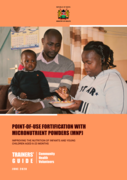
The harmonized training package for Point-of-use-fortification using micronutrient powders has been developed to guide in training frontline health workers. The micronutrient powders will be distributed at the health facilities where instructions on
...
use will be provided by Health Care Providers. Community Health Volunteers will educate, counsel, and mobilize caregivers at the community level to visit health facilities for nutrition assessment and provision of the micronutrient powders.
more

In 2008 the Ministry of Health and Social Services (MOHSS) commissioned a national health and social service system review which found that although some progress has been made in primary health care
...
, provision of health services did not go beyond the health facilities, irrespective of the fast distances between the Health facilities and community. The review then recommended that health services should be extended in a structured manner to communities through the establishment of paid health workers.
more
Digital health technology can make health systems more efficient and sustainable, facilitating the provision of high-quality
care across a wide
...
range of contexts and for diverse population health needs. The pace of innovation in digital health is
rapid and constant, with new interventions being developed, implemented, tested and refined against a diversity of contexts,
constraints and challenges to address a variety of health and health system needs.
more
The primary audience for these recommendations includes health professionals who are responsible for developing national and local health-care guidelines and protocols and health workers involved in the pr
...
ovision of care to women and their newborns during pregnancy, labour and childbirth; this includes midwives, nurses, general medical practitioners and obstetricians. The primary audience also includes managers of maternal and child health programmes, and relevant staff in ministries of health and educational and training institutions, in all settings.
more
The primary audience for these recommendations includes health professionals who are responsible for developing national and local health-care guidelines and protocols and health workers involved in the pr
...
ovision of care to women and their newborns during pregnancy, labour and childbirth; this includes midwives, nurses, general medical practitioners and obstetricians. The primary audience also includes managers of maternal and child health programmes, and relevant staff in ministries of health and educational and training institutions, in all settings.
more
The primary audience for these recommendations includes health professionals who are responsible for developing national and local health-care guidelines and protocols and health workers involved in the pr
...
ovision of care to women and their newborns during pregnancy, labour and childbirth; this includes midwives, nurses, general medical practitioners and obstetricians. The primary audience also includes managers of maternal and child health programmes, and relevant staff in ministries of health and educational and training institutions, in all settings.
more
This report details the challenges many women and girls with disabilities face throughout the justice process: reporting abuse to the police, obtaining appropriate medical care, having complaints in
...
vestigated, navigating the court system, and getting adequate compensation.
more
Global Experience of Community Health Workers for Delivery of Health Related Millennium Development Goals
Zulfiqar A. Bhutta, Zohra S. Lassi, George Pariyo and Luis Huicho
World Health Organization WHO; Global Health Workforce Alliance
(2010)
C_WHO
A Systematic Review, Country Case Studies, and Recommendations for Integration into National Health Systems
Alliance Report
Participation of community health workers (CHWs) in the provision
...
of primary health care has been experienced all over the world for several decades, and there is an amount of evidence showing that they can add significantly to the efforts of improving the health of the population, particularly in those settings with the highest shortage of motivated and capable health professionals.
more
Objective: To identify gaps in national stroke guidelines that could be bridged to enhance the quality of stroke care services in low- and
middle-income countries.
Methods: We systematically searc
...
hed medical databases and websites of medical societies and contacted international organizations.
Country-specific guidelines on care and control of stroke in any language published from 2010 to 2020 were eligible for inclusion. We reviewed
each included guideline for coverage of four key components of stroke services (surveillance, prevention, acute care and rehabilitation).
We also assessed compliance with the eight Institute of Medicine standards for clinical practice guidelines, the ease of implementation of
guidelines and plans for dissemination to target audiences.
Findings: We reviewed 108 eligible guidelines from 47 countries, including four low-income, 24 middle-income and 19 high-income countries.
Globally, fewer of the guidelines covered primary stroke prevention compared with other components of care, with none recommending
surveillance. Guidelines on stroke in low- and middle-income countries fell short of the required standards for guideline development;
breadth of target audience; coverage of the four components of stroke services; and adaptation to socioeconomic context. Fewer low- and
middle-income country guidelines demonstrated transparency than those from high-income countries. Less than a quarter of guidelines
encompassed detailed implementation plans and socioeconomic considerations.
Conclusion: Guidelines on stroke in low- and middle-income countries need to be developed in conjunction with a wider category of
health-care providers and stakeholders, with a full spectrum of translatable, context-appropriate interventions.
more
WHO Recommendations 2018 Update
The primary audience for these recommendations includes health professionals who are responsible for developing national and local health care guidelines and protocols (particularly those related to PPH prevention an
...
d treatment) and those involved in the provision of care to women and their newborns during labour and childbirth, including midwives, nurses, general medical practitioners and obstetricians, as well as managers of maternal and child health programmes, and relevant staff in ministries of health and training institutions, in all settings.
more
Interim guidance. 12 May 2021. The Continuity of essential health services: Facility Assessment Tool can be used by countries to rapidly assess the capacity of health facilities to maintain the
...
provision of essential health services during the COVID-19 pandemic. It can help to alert the authorities and other stakeholders about where service delivery and utilization may require modification and/or investment. This assessment tool covers the following aspects of essential health services:
health workforce (numbers, absences, COVID-19 infections, health workforce management, training and support);
financial management and barriers;
service delivery and utilization (facility closures, changes in service delivery, community communication campaigns, changes in service utilization and catch-up strategies);
IPC capacities (protocols, safety measures, guidelines and the availability of personal protective equipment (PPE) for staff);
availability of therapeutics, diagnostics and supplies, and vaccine readiness; and
provision of COVID-19 primary care services.
more

This treatment guideline is intended to assist clinicians in the Behavioral Health department in treatment planning and service delivery for patients with Post Traumatic Stress Disorder (PTSD). It may also assist clinicians treating patients who have some
...
of the signs and symptoms of PTSD but who do not meet the full criteria of PTSD. The treatment guideline is not intended to cover every aspect of clinical practice, but to focus specifically on the treatment models and modalities that clinicians in our outpatient treatment setting could provide. These guidelines were developed through a process of literature review and discussion amongst clinicians in the Behavioral Health department and represent a consensus recommendation for service provision for this disorder. The guideline is intended to inform both clinical and administrative practices with the explicit goals of outlining treatment that is: effective, efficient, culturally relevant and acceptable to clinicians, program managers, and patients.
more
Burns are a global public health problem, accounting for close to 200,000 deaths annually. The majority of these occur in low- and middle-income countries, where a number of constraints complicate t
...
he public health task of addressing burns. While the primary prevention of burns in low- and middle-income countries is a pressing need, the World Health Organization (WHO) also actively encourages further development of burn-care systems, including the training of health-care providers in the appropriate triage and management of people with burns.
more

Outstanding child and adolescent TB priorities include the need to: find the missing children with active TB and link them to TB care; prevent TB in children who are in contact with infectious TB cases (through implementation
...
of active contact investigation and provision of preventive treatment); and advance integration within general child health services, including maternal and child health/ reproductive, maternal, newborn, child and adolescent health, HIV, nutrition and other programmes.
more

From channels to commissioning - a practical guide to epilepsy: lecture notes (Chapter 30 - Drug treatment of paediatric epilepsy)
Appleton, R.E. & Cross, J.H.
International League Against Epilepsy (UK Chapter) and Epilepsy Society
(2015)
CC
This is the fifteenth edition of the lecture notes. They were first published in 1987 as a summary of the material used in the biannual epilepsy teaching weekend organised under the auspices
...
of the UK Chapter of the International League against Epilepsy.
(Lecture series consist of a total of 59 chapters. Section one - introduction (chapter 1-2). Section two - basic science (chapters 3-5). Section (chapters 6-16). Section four - differential diagnosis (chapter 17-19). Section five - investigations (chapter 20-24). Section six - medical treatment of epilepsy (chapters 25-35). Section seven - outcome (chapters 36-40). Section eight - special groups (chapters 41-44). Section nine - surgical treatment of epilepsy (chapters 45-49). Section ten - social aspects (chapters 50-56). Section eleven - provision of care (chapters 57-59). All chapters available at: https://www.epilepsysociety.org.uk/lecture-notes-0#.Wq-cn8NubIU)
more
This publication is based on the list of clinical interventions selected from clinical guidelines on prevention, screening, diagnosis, treatment, palliative care, monitoring and end
...
of life care. This publication addresses medical devices for six types of cancer: breast, cervical, colorectal, leukemia, lung and prostate. The first section defines the global increase in cancer cases, the global goals to manage NCDs and the WHO activities related to these goals. The second section presents the methodology used for the selection of medical devices that support clinical interventions required to screen, diagnose, treat and monitor cancer stages, as well as the provision of palliative care, based on evidence-based information. The third section lists the priority medical devices required to manage cancer in seven different units of health care services: 1. Vaccination, clinical assessment and endoscopy, 2. Medical imaging and nuclear medicine, 3. Surgery, 4. Laboratory and pathology, 5. Radiotherapy, 6. Systemic therapy and 7. Palliative and end of life care
more
Good primary care may lead to fewer avoidable hospitalizations, but unsafe primary care can cause avoidable illness and injury, leading to unnecessary hospitalizations, and in some cases, disability
...
and even death.Implementing system changes and practices are crucial to improve safety at all levels of health care. Recognizing the paucity of accessible information on primary care, World Health Organization (WHO) set up a Safer Primary Care Expert Working Group. The Working Group reviewed the literature, prioritized areas in need of further research and compiled a set of nine monographs which cover selected priority technical topics. WHO is publishing this technical series to make the work of these distinguished experts available to everyone with an interest in Safer Primary Care.The aim of this technical series is to provide a compendium of information on key issues that can impact safety in the provision of primary health care.
more
