
Filter
914
Text search:
Infecciones
Featured
99
147
Language
Document type
313
266
97
76
59
35
20
14
9
8
6
5
5
Countries
84
79
50
49
48
45
29
25
22
20
19
13
8
6
6
6
4
4
4
3
3
3
3
3
2
2
2
2
2
2
2
1
1
1
1
1
1
1
1
1
1
1
1
1
1
1
1
1
1
1
1
1
1
1
1
1
1
1
1
1
Authors & Publishers
Publication Years
Category
396
143
67
66
16
15
13
Toolboxes
226
110
58
51
39
33
32
27
26
22
18
16
15
14
11
5
5
5
5
4
4
2
La higiene de manos es la más eficaz de todas las medidas para reducir la propagación de infecciones mediante estrategias multimodales que incluyen el acceso a los suministros correspondientes. Por tanto, las presentes o
...
Los antibióticos son medicamentos importantes. Son eficaces contra las infecciones causadas por bacterias. Ayudan muy bien en muchas enfermedades, pero no son adecuados o necesarios para todas las infecci
...
El pian es una treponematosis endémica, un grupo de infecciones bacterianas crónicas causadas por espiroquetas del género Treponema, entre las que se encuentran también la sífilis endémica (bejel) y el mal de pinto. El pian es la más frecuent
...
Website last accessed on 23.04.2023
La leptospirosis es una enfermedad infecciosa causada por bacterias que pueden producir infecciones potencialmente mortales de los riñones, el hígado, el cerebro, los pulmones o el corazón.
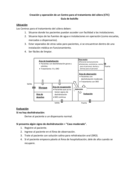
El documento es una guía de bolsillo para establecer y operar un Centro de Tratamiento de Cólera (CTC). Proporciona pautas para seleccionar la ubicación, clasificar a los pacientes según la gravedad de la deshidratación, implementar medidas de control de
...

El abuso y el uso indebido de los antibióticos en animales y humanos están contribuyendo al aumento de la resistencia a estos fármacos. Algunos tipos de bacterias causantes de infecciones humanas graves ya son resistentes
...
Este documento ha sido concebido para proporcionar un marco que respalde los estudios de prevalencia de las ITS en los niveles local y nacional. El propósito de estos estudios es conocer la carga de las infecciones por NG y CT, dos ITS prioritarias
...
En El Salvador, desde el surgimiento del primer caso de infección por Virus de Inmunodeficiencia Humana (VIH), la consejería de VIH se constituye en un recurso que favorece la prevención, encaminada a la identificación de factores de riesgo para ITS/VIH y otras
...
La COVID-19 se ha propagado a los 54 países y territorios de las Américas. Para el 26 de mayo del 2020, los casos y las muertes en América Latina habían sobrepasado los de Europa y Estados Unidos en lo que se refiere al número diario de infecciones
...
Una de las muchas desigualdades de género en el personal sanitario y asistencial que COVID-19 ha puesto de manifiesto es la relativa al ajuste y el diseño de los equipos de protección individual (EPP). La rápida aparición y la escala de COVID-19 condujeron a la escasez de EPP en la mayoría de
...
Los residuos generados por las actividades sanitarias, desde agujas infectadas hasta isótopos radiactivos, pueden ser una fuente de infecciones o lesiones y su gestión inadecuada puede tener graves consecuencias para la salud pública y efectos no
...
El presente documento de trabajo fue elaborado en el marco de una investigación bibliográfica participativa y la experiencia acumulada por los técnicos de las áreas involucradas en la respuesta a las Infecciones Respiratorias Agudas (IRA) .
El
...
Este informe presenta los resultados obtenidos de la evaluación de la efectividad de las vacunas contra la COVID-19 en Chile utilizando la red de vigilancia centinela de infecciones respiratorias agudas graves (IRAG). Los resultados que se presenta
...
El matrimonio infantil viola los derechos humanos independientemente de si la persona involucrada es un niño o una niña, pero sin duda se trata de la forma más generalizada de abuso sexual y explotación de las niñas. Algunas consecuencias negativas son la separación de la
familia y los amigos
...
Objetivos
• Los dispositivos médicos enumerados en este documento proporcionan estándares mínimos y descripciones técnicas y especificaciones de dispositivos médicos para el tratamiento de soporte de COVID-19.§ • Estos dispositivos médicos no son limitados y son adaptables a todos los p
...
La RAM se produce cuando los microorganismos (bacterias, hongos, virus y parásitos) sufren cambios al verse expuestos a los antimicrobianos (antibióticos, antifúngicos, antivíricos, antipalúdicos o antihelmínticos, por ejemplo). Los microorganismos resistentes a la mayoría de los antimicrobia
...

El uso de los antimicrobianos en seres humanos es imprescindible para combatir a los microorganismos causantes de distintas enfermedades, no obstante, el uso y abuso de estos productos farmacéuticos ha propiciado un aumento en la resistencia, desarrollo y propagación de microorganismos multirresis
...
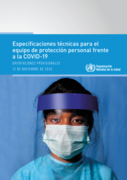
El documento "Lista de productos sanitarios prioritarios para la respuesta a COVID-19 y especificaciones técnicas asociadas" complementa esta directriz.
Este documento proporciona una orientación provisional sobre la calidad, las características de rendimiento y las normas conexas de los equi
...
Continuidad de los servicios de salud esenciales: herramienta de evaluación de los centros
recommended
módulo del conjunto de evaluaciones de la capacidad de los servicios de salud en el contexto de la pandemia de COVID-19: orientaciones provisionales, 12 de mayo de 2021; La herramienta de evaluación de la continuidad de los servicios sanitarios esenciales: Herramienta de evaluación de instalacion
...
La presente publicación describe la evidencia científica disponible sobre la precisión diagnóstica de las pruebas rápidas de detección de antígenos para SARS-COV-2. El conocimiento de las pruebas diagnósticas para el coronavirus del síndrome respiratorio agudo grave 2 (SARS-COV-2) sigue evo
...
