Filter
373
Text search:
Government
of
Nepal
National
Planning
Commission
Featured
Recommendations
26
New Publications
136
Language
Document type
No document type
264
Studies & Reports
62
Guidelines
20
Manuals
13
Situation Updates
5
Strategic & Response Plan
4
Training Material
2
Resource Platforms
1
Infographics
1
Fact sheets
1
Countries / Regions
Nepal
98
Global
22
India
16
Asia
15
South–East Asia Region
14
Bangladesh
8
Myanmar / Burma
6
Ethiopia
5
Uganda
5
Pakistan
5
Thailand
5
Nigeria
4
Philippines
4
Cambodia
4
Indonesia
4
Malawi
3
Africa
3
Congo, Democratic Republic of
2
Ghana
2
Afghanistan
2
Lebanon
2
Syria
2
Tanzania
2
Mozambique
2
Namibia
2
Western Pacific Region
2
Latin America and the Carribbean
2
Laos
2
Sierra Leone
1
Liberia
1
Zimbabwe
1
Haiti
1
Somalia
1
Jordan
1
Zambia
1
Rwanda
1
South Africa
1
Papua New Guinea
1
Brazil
1
Colombia
1
Sri Lanka
1
Yemen
1
East and Southern Africa
1
West and Central Africa
1
Middle East and North Africa
1
Eastern Europe and Central Asia
1
Western and Central Europe
1
Other region
1
Bhutan
1
Vietnam
1
Authors & Publishers
Publication Years
Category
Countries
141
Key Resources
42
Public Health
22
Women & Child Health
16
Capacity Building
6
Clinical Guidelines
6
Pharmacy & Technologies
1
Toolboxes
Disability
46
HIV
40
Mental Health
27
Planetary Health
13
Natural Hazards
12
Global Health Education
12
COVID-19
12
Health Financing Toolbox
9
Caregiver
8
TB
7
Conflict
6
Pharmacy
5
Refugee
4
AMR
4
2.0 Rapid Response
4
NCDs
3
Typhoon
2
Rapid Response
2
NTDs
2
Malaria
2
Ebola & Marburg
1
Polio
1
Specific Hazards
1

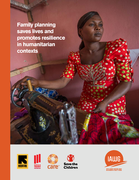
Globally, it is estimated that 128.6 million people are currently in need of humanitarian assistance. Of these individuals, approximately one-fourth are women and girls
...
This report is from the National study on living conditions among people
with disabilities carried out in Nepal in 2014-2015. The study was carried
out as a household survey with two-stage stratif
...
The WHO Quality Health Services: a planning guide focuses on actions required at the national, district and facility levels to enhance quality of h
...
An interdisciplinary approach to address global health challenges such as the Covid-19 pandemic, climate change, loss of biodiversity, human migration has been framed by the One Health approach. This approach is promoted at global level by the Tripa
...
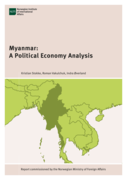
After almost 50 years of military dictatorship, and following the 2010 general elections which were rigged in favour of the military Union Solidarity and Development Party (USDP), Myanmar underwent
...
MICS surveys measure key indicators that allow countries to generate data for use in
policies and programmes, and to monitor progress towards the Millennium Development Goals (MDGs) and
other internationally agreed upon commitments.


Pakistan Global Antibiotic Resistance Partnership (GARP) was formed in the wake of international and national efforts for AMR curtailment. A group
...
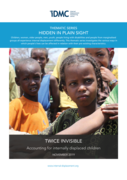
Internally displaced children are twice invisible in global and national data. First, because internally displaced people (IDPs) of all ages are often unaccounted for. Second, because age-disaggrega
...

Climate change is a growing concern for Bangladesh because 90 percent of the country is approximately 10 feet above sea level. An evaluation was completed which discovered that high tides in Bangladesh were increasing 10 times more rapidly than the
...

To enhance health co-benefits across urban policies which tackle air pollution and climate change, WHO, in cooperation with various international, national, and local partners, implemented the Urban Health Initiative (UHI) pilot project in Accra, Gh
...

This evaluation is the first systematic effort by UNICEF to generate evidence on how well its global as well as country level Community Management of Acute Malnutrition (CMAM) strategies have worked, including their acceptance and ownership in vario
...