
Filter
1575
Text search:
Fact
Sheet
Featured
123
463
Language
Document type
859
190
166
147
87
46
30
15
14
10
6
1
1
Countries
77
67
46
40
37
34
34
26
25
24
24
21
21
20
19
19
18
18
18
15
15
15
15
12
11
11
10
9
9
9
8
8
7
7
7
7
7
7
6
6
6
6
5
5
5
4
4
4
4
4
3
3
3
3
3
3
3
2
2
2
2
2
2
2
2
2
2
2
2
2
2
2
2
1
1
1
1
1
1
1
1
1
1
1
1
1
1
1
1
1
1
1
1
1
1
1
1
1
Authors & Publishers
Publication Years
Category
549
108
106
100
78
50
9
Toolboxes
108
80
71
67
66
63
61
56
43
42
42
41
41
37
31
27
26
24
22
19
18
15
14
9
5
Your healthcare team has decided you or your loved one has an infection that requires antibiotics, or needs antibiotics to prevent an infection in certain circumstances, such as before surgery - Fact Sheet
...
Antimicrobial Resistance (AMR) occurs when organisms that cause disease are no longer susceptible/responsive to antimicrobial agents that previously were effective in combating them. AMR is a global problem with particularly dire consequences for Africa which is already grappling with high levels
...
This fact sheet developed by CAWST describes the history of soap, how it’s made, and the two processes for making soap. This fact
...
June 6, 2022

Diese Veröffentlichung befasst sich mit der öffentlichen Entwicklungshilfe (Official Development Assistance, ODA) der USA mit Schwerpunkt auf den Bereichen Gesundheit, HIV/AIDS, Tuberkulose und Malaria. Außerdem wird die ODA der USA im Vergleich zu anderen Gebern und Finanzierungszielen betrachte
...
Lymphatic filariasis, commonly known as elephantiasis, is a neglected tropical disease. Infection
occurs when filarial parasites are transmitted to humans through mosquitoes. When a mosquito
with infective stage larvae bites a person, the parasites are deposited on the person’s skin from
where
...
Trachoma is one of the 17 WHO-defined Neglected Tropical Diseases
(NTDs) that affect over 1 billion of the world’s poorest and most
marginalized people. It is caused by the bacterium chlamydia trachomatis.
Yaws forms part of a group of chronic bacterial infections commonly known as the endemic treponematoses. These diseases are caused by spiral bacteria of the genus Treponema, which also includes endemic syphilis (bejel) and pinta. Yaws is the most common of these three infections.
Chikungunya: WHO fact sheet on Chikungunya providing key facts and information on scope of the problem, who is at risk, prevention, WHO response.
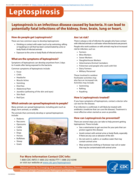
Leptospirosis is an infectious disease caused by bacteria. It can lead to potentially fatal infections of the kidney, liver, brain, lung or heart.

Leptospirosis is a zoonotic disease with epidemic potential, especially after a heavy rainfall,
caused by a bacterium called Leptospira. Leptospira interrogans is pathogenic to humans and
animals, with more than 200 serologic variants or serovars. Humans usually acquire
leptospirosis through dire
...
Leptospirosis is an infectious disease caused by pathogenic organisms belonging to the genus Leptospira, that are transmitted directly or indirectly from animals to humans. Leptospirosis is a major direct zoonosis. Humanto-human transmission occurs only very rarely.
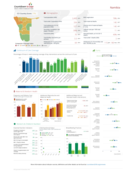
The Countdown country profiles present in one place the latest evidence to assess country progress in improving women’s, children’s and adolescents’ health. The profiles, including an interactive version of them and all associated data, can be found by viewing the latest country profile data.
This publication discusses official development assistance (ODA) provided by the USA with a focus on health, HIV/AIDS, tuberculosis and malaria. It also reflects upon ODA by the USA in comparison to other donors and funding targets.
Diabetes is an increasingly prevalent yet under-recognised health crisis in Africa, driven by demographic and socioeconomic transitions. In 2021, 24 million adults in the region were living with diabetes, and this figure is expected to increase by 129% by 2045.
UNICEF, as the lead agency of a multi-partner approach across 21 member states in Eastern and Southern Africa, identified that this point represents a moment for the WASH sector to take stock of progress towards SDG6,
understand the gaps in our current knowledge on levels of access, and take cours
...
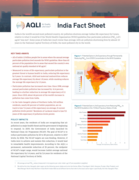
India is the world’s second most polluted country. Air pollution shortens average Indian life expectancy by 5 years,
relative to what it would be if the World Health Organization (WHO) guideline fine particulate pollution (PM2.5) of 5 μg/m3 was met. Some areas of India fare much worse than avera
...
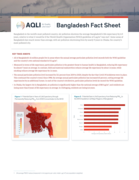
Bangladesh is the world’s most polluted country. Air pollution shortens the average Bangladeshi’s life expectancy by 6.9 years, relative to what it would be if the World Health Organization (WHO) guideline of 5 μg/m³ was met. Some areas of Bangladesh fare much worse than average, with air poll
...
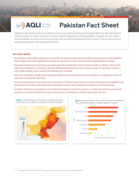
Pakistan is the world’s fourth most polluted country. Air pollution shortens the average Pakistani’s life expectancy by 3.8 years, relative to what it would be if the World Health Organization (WHO) guideline of 5 μg/m3 was met.1 Some areas of Pakistan fare much worse than average, with air pol
...
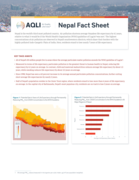
Nepal is the world’s third most polluted country. Air pollution shortens average Nepalese life expectancy by 4.1 years, relative to what it would be if the World Health Organization (WHO) guideline of 5 μg/m3 was met.1 The highest concentrations of air pollution are observed in Nepal’s southwes
...
