
Filter
182
Text search:
Event-based
surveillance
Featured
29
41
Language
Document type
44
43
32
28
22
6
4
2
1
Countries
15
11
10
9
6
6
5
5
5
5
4
4
4
4
4
4
4
3
3
3
3
2
2
2
2
2
2
2
2
2
2
2
2
1
1
1
1
1
1
1
1
1
1
1
1
1
1
1
1
1
1
1
1
1
1
1
1
1
1
1
1
1
Authors & Publishers
Publication Years
Category
74
23
12
6
2
1
Toolboxes
39
38
23
14
9
8
8
5
3
3
2
2
1
1
1
1
1
1
L'importance de systèmes de surveillance de la mortalité robustes ne peut être surestimée à une époque marquée par des défis sanitaires mondiaux croissants, où les menaces sanitaires pèsent lourd et la dynamique des populations continue d'
...
Surveillance Mpox. Protocole de notification pour les états membres de l'union Africaine
recommended
On 13 August 2024, the Africa Centres for Disease Control (Africa CDC) declared the multi-country mpox outbreak a public health emergency of continental security, with strong recommendations to improve surveillance and vaccine deployment in all AU M
...
Responding to a poliovirus event and outbreak, Part 1: General (SOPs) describes the general principles and steps to facilitate timely and effective responses to poliovirus events and outbreaks, and incorporate lessons learned from recent previous outbreak response efforts. This document summarizes r
...
This guidance provides interim guidance for the integration of SARS-CoV-2 and influenza virologic and genomic surveillance, from sentinel site case enrolment and sampling to the eventual sharing of the virus sequence data, a process known as end-to-
...
Le cadre de surveillance basé sur les événements est destiné à être utilisé par les autorités et les
agences responsables de la surveillance et de l'intervention. Ce cadre sert de cadre po
...
Эпидемиологический надзор за COVID-19
recommended
16 December 2020. This document summarizes current WHO guidance for public health surveillance of coronavirus disease 2019 (COVID-19) in humans caused by infection with severe acute respiratory syndrome coronavirus 2 (SARS-CoV-2) (hereafter referred
...
Mise en oeuvre de l’alerte précoce et réponse notamment la surveillance fondée sur les évènements

This document outlines minimum requirements of laboratory testing for COVID-19 and link laboratory testing with surveillance and contact tracing to guide the outbreak response by national health authorities using a reduced number of tests performed.
...

This document summarizes current WHO guidance for public health surveillance of coronavirus disease 2019 (COVID-19) in humans caused by infection with severe acute respiratory syndrome coronavirus 2 (SARS-CoV-2).
New elements include:
upda
...
The presentation “Data for Global Pandemic and Epidemic Intelligence” outlines how improved data collection, surveillance, analytics, and digital tools can strengthen global preparedness and response to health emergencies. It explains the concep
...
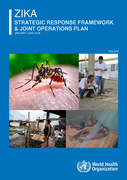
The strategy focuses on mobilizing and coordinating partners, experts and resources to help countries enhance surveillance of the Zika virus and disorders that could be linked to it, improve vector control, effectively communicate risks, guidance an
...

The strategic priorities of the CCS 2014–2018 are:
(1) Strengthening the health system.
(2) Enhancing the achievement of communicable disease control targets.
(3) Controlling the growth of the noncommunicable disease burden.
(4) Promoting health throughout the life course.
...
(1) Strengthening the health system.
(2) Enhancing the achievement of communicable disease control targets.
(3) Controlling the growth of the noncommunicable disease burden.
(4) Promoting health throughout the life course.
...
The presentation “Lessons Learned from Pandemic Outbreaks and Preparedness Strategies” discusses key insights from past pandemics—such as COVID-19, HIV/AIDS, and influenza—and emphasizes the importance of stronger global preparedness. It outlines strategies for improving pandemic response, i
...
The Tanzania Public Health Bulletin provides updates on important public health issues in Tanzania. It includes government statements, surveillance reports, outbreak updates, and research articles on communicable diseases such as Ebola and cholera.
...
The frequency of infectious disease epidemics is increasing, and the role of the health sector in the management of epidemics is crucial in terms of response. In the context of infectious disease epidemics, the use of climate-informed early warning systems (EWS) has the potential to increase the eff
...

The Ethiopia Multi-Sectorial Cholera Elimination Plan (2022-2028) outlines a national strategy to eliminate cholera in Ethiopia by 2028. The plan follows the Global Roadmap to End Cholera by 2030 and is based on six key pillars: Leadership & Coordination, Water, Sanitation & Hygiene (WASH),
...

The target audience of this document (and the associated online companion tool) includes WHO country offices in Member States of the African Region; Member States’ ministries of health and their public health emergency operation centres; relevant external assessment teams; and partners looking to
...
Zimbabwe has, over the years, grappled with the repercussions of the climate crisis, which have led to erratic rainfall patterns characterized by either severe floods or prolonged periods of drought. The nation has experienced a concerning trend of numerous regions reporting rainfall levels below th
...

The Best Buys for Disease Elimination is a practical, evidence-based guide to the most effective actions for countries to implement in order to eliminate communicable diseases. The guide highlights the efficient use of resources and prioritizing populations in vulnerable situations.
“The Region
...
