
Filter
5932
Text search:
numbers
Featured
Recommendations
479
New Publications
1649
Language
Document type
No document type
3408
Studies & Reports
1086
Guidelines
610
Manuals
323
Strategic & Response Plan
188
Fact sheets
107
Training Material
82
Situation Updates
59
Infographics
34
Resource Platforms
22
Brochures
6
Dashboards/Maps
2
Online Courses
2
Videos
1
Countries / Regions
Global
265
India
249
Kenya
161
Sierra Leone
146
Western and Central Europe
126
Uganda
124
Ethiopia
123
South Africa
118
Myanmar / Burma
117
Nepal
116
Liberia
114
Bangladesh
101
Syria
97
Nigeria
95
Zambia
92
Malawi
90
Tanzania
77
Rwanda
77
Africa
73
Ghana
72
Ukraine
71
Namibia
70
Latin America and the Carribbean
61
Congo, Democratic Republic of
54
South Sudan
46
Lesotho
45
East and Southern Africa
45
Zimbabwe
44
Asia
44
Indonesia
43
Philippines
41
Mozambique
39
West and Central Africa
39
South–East Asia Region
39
Eastern Europe
38
Guinea
37
Cambodia
36
Haiti
32
Middle East and North Africa
30
Senegal
28
Germany
28
Botswana
26
Pakistan
25
Venezuela
25
Yemen
24
Afghanistan
22
Lebanon
22
Eastern Europe and Central Asia
22
Burkina Faso
21
Colombia
21
Cameroon
20
Brazil
20
China
17
Russia
16
Jordan
15
Benin
15
Central African Republic
15
Tajikistan
15
Sudan
14
Western Pacific Region
14
Vietnam
14
Mali
13
Iraq
13
Eswatini/ Swaziland
13
Somalia
12
Thailand
12
Moldova
12
Turkey
10
Peru
10
USA
9
Sri Lanka
9
Laos
9
Chile
8
Paraguay
8
Palestine
8
Albania
8
Georgia
8
Libya
7
Poland
7
Egypt
6
Hungary
6
Burundi
6
Angola
6
Southern Africa
6
Romania
6
Kyrgyzstan
6
Niger
5
Greece
5
Madagascar
5
Armenia
5
Iran
5
North America
5
Côte d’Ivoire / Ivory Coast
4
Togo
4
Chad
4
Papua New Guinea
4
North Macedonia
4
Serbia
4
El Salvador
4
Mexico
4
Timor Leste/ East Timor
4
Uzbekistan
4
Kazakhstan
4
Gambia
3
Argentina
3
Croatia
3
Ecuador
3
Bolivia
3
Guatemala
3
Bhutan
3
Turkmenistan
3
Jamaica
3
Guinea-Bissau
2
Morocco
2
Switzerland
2
Honduras
2
Fiji
2
Italy
2
Slovakia
2
Japan
2
Mauritius
2
United Kingdom
2
Portugal
2
Spain
2
Belarus
2
Saudi Arabia
1
Malaysia
1
Ireland
1
Singapore
1
Dominican Republic
1
Nicaragua
1
Other region
1
North Korea
1
Canada
1
Qatar
1
Bulgaria
1
Estonia
1
Lithuania
1
Gabon
1
Tunisia
1
Norway
1
Azerbaijan
1
Israel
1
Bosnia and Herzegovina
1
Authors & Publishers
Publication Years
Category
Countries
2218
Key Resources
378
Clinical Guidelines
361
Public Health
293
Women & Child Health
279
Capacity Building
108
Pharmacy & Technologies
64
Annual Report MEDBOX
3
Toolboxes
COVID-19
518
HIV
481
Mental Health
388
TB
315
Disability
248
Conflict
223
Planetary Health
207
Ebola & Marburg
204
NTDs
185
Refugee
163
Caregiver
125
Rapid Response
112
AMR
103
Global Health Education
100
Natural Hazards
99
Pharmacy
87
NCDs
80
Malaria
64
2.0 Rapid Response
56
Health Financing Toolbox
52
Specific Hazards
47
Cholera
46
Polio
33
Zika
26
Social Ethics
26
Typhoon
9
South Sudan
1

This toolkit is a comprehensive set of practical tools and resources designed to support country-level risk communication and community engagement (RCCE) practitioners, decision-makers, and partners to plan and implement readiness and response activities for yellow fever outbreaks. The toolkit conta
...
STANDARD OPERATING PROCEDURES - PREVENTION AND CARE FOR CHILD SURVIVORS

National tuberculosis (TB) prevalence surveys provide a nationally representative measurement of the burden of TB disease in the population, at a given point in time. Repeat surveys allow assessment of trends and tracking of progress towards national and global targets for reductions in TB disease b
...

WHO guidelines for clinical management of arboviral diseases: dengue, chikungunya, Zika and yellow fever
recommended
The new WHO guidelines provide clinical management recommendations for four of the most widespread arboviruses affecting humans: dengue, chikungunya, Zika, and yellow fever.
An integrated approach is vital, as these four diseases often present with similar symptoms, especially in the early stages
...

Integrated Outbreak Analytics (IOA) applies a multidisciplinary approach to understanding outbreak dynamics and to inform outbreak response. It aims to drive comprehensive, accountable, and effective public health and clinical strategies by enabling communities, and national and subnational health a
...

The Compendium of Solid Waste Management in Humanitarian Contexts is a comprehensive, structured and userfriendly manual and planning guide that provides a systematic overview of existing Solid Waste Management (SWM) technologies and approaches appropriate for use in humanitarian contexts.
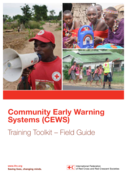
The Training Toolkit for Community Early Warning Systems is an operational manual that aims to strengthen early warning systems in a developing country context. It accompanies and should put into practice the guiding strategic principles found in the Community Early Warning Systems: Guiding Principl
...

Growing emergencies and displacements across the world demand increasingly complex interventions and responses. The World Health Organization (WHO) has developed Malaria control in emergencies: a field manual to provide technical guidance to help partners respond effectively to malaria in emergency
...

Despite being a preventable and curable infectious disease, tuberculosis (TB) has continued to elude global controll efforts. In 2023, 8.2 milion people with TB were diagnosed and notified to the WHO, the hightest number ever reported since WHO began tracking.
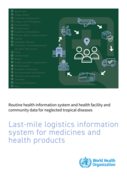
This document on logistics management information systems (LMIS) was developed to address the increasing need for harmonization and standardization of core indicators for managing medicines and health products for neglected tropical diseases (NTDs) at country level (i.e. for last-mile logistics). It
...

Breastfeeding is a cornerstone of healthy infant nutrition, development and survival. It is critical for countries* to improve breastfeeding rates in order to achieve global targets for newborn and child health and survival, as well as economic growth and environmental sustainability

Noncommunicable diseases (NCDs) (e.g., cardiovascular diseases, cancers, diabetes, and chronic respiratory diseases) and mental health conditions (e.g., Alzheimer’s disease and related dementias, depression, anxiety, autism spectrum disorders) are the world’s leading cause of preventable illness
...
2023 was another year of significant progress in the fight against HIV, tuberculosis (TB) and malaria. In countries where the Global
Fund invests, there has been a full recovery from the disruptive impact of the COVID-19 pandemic. The results we have achieved in the last year build on our extraord
...

The objective of this guideline is to present the complete set of all WHO recommendations and best practice statements relating to abortion. While legal, regulatory, policy and service-delivery contexts may vary from country to country, the recommendations and best practices described in this docume
...

This document provides technical guidance for manufacturers seeking World Health Organization (WHO) prequalification of in vitro diagnostic devices (IVDs) for malaria, with a focus on rapid diagnostic tests (RDTs) for symptomatic patients. It summarises the minimum performance requirements, includin
...

The annual bulletin of the Mekong Malaria Elimination (MME) programme is a yearly report that reviews ongoing efforts to combat multidrug resistance and eliminate malaria in the 6 countries of the Greater Mekong subregion (GMS): Cambodia, China (Yunnan province), Lao People's Democratic Republic, My
...
This document provides technical guidance for manufacturers seeking World Health Organization (WHO) prequalification of in vitro diagnostic devices (IVDs) for malaria, with a focus on rapid diagnostic tests (RDTs) for symptomatic patients. It summarises the minimum performance requirements, includin
...

Malaria remains a significant public health concern in the SADC region, accounting for 20% of childhood deaths, as well as prompting numerous outpatient visits and hospitalisations. Around three-quarters of the population, including 35 million children under the age of five and 8.5 million pregnant
...

This resulting toolkit is a practical guide intended to assist users to become advocates for palliative care in a practical and effective
way. It is not necessarily a resource to read from cover to cover; rather, it can also be used selectively to each reader’s needs to engage audiences and
...

For education to be competency-based and effective, appropriate training methodologies have to be used to support the learner to have the appropriate knowledge and to translate this knowledge into skills and competencies. Such education and training should lead to a change in attitudes, beliefs a
...
