
Filter
659
Text search:
alimentaire
Featured
57
196
Language
Document type
337
123
77
50
25
15
9
8
7
3
2
1
Countries
95
41
35
35
30
23
21
15
15
14
13
11
8
8
7
6
6
6
5
4
4
3
3
3
2
2
2
2
2
2
1
1
1
1
1
1
1
1
1
1
1
1
1
1
1
1
1
Authors & Publishers
Publication Years
Category
282
140
41
30
19
7
4
Toolboxes
72
43
29
27
23
17
16
14
13
13
10
10
9
8
5
4
4
4
3
2
2
1
1
1
Un Plan humanitaire multisectoriel spécifique à la réponse COVID-19 a été développé en avril 2020. Il s’agit d’un Addendum au Plan de réponse humanitaire 2020 (PRH) qui a pour but d’intégrer l’impact de la pandémie de COVID-19 sur les besoins humanitaires existants, ainsi que sur l
...
Un Plan humanitaire multisectoriel spécifique à la réponse COVID-19 a été développé en avril 2020 et constitue un Addendum au Plan de réponse humanitaire 2020 (PRH) afin d’intégrer l’impact de la pandémie de COVID-19 sur les besoins humanitaires existants et sur les activités des part
...
Recognizing the extent to which the COVID-19 outbreaks affects women and men differently is hugely important. Some preliminary data suggested that more men than women are dying, potentially due to sex-based immunological differences, higher rates of cardiovascular disease for men and lifestyle choic
...

Orientations provisoires
Lettre du Saint-Pére Francois

Plusieurs membres du réseau CDAC (Communicating with Disaster Affected Communities, Communication avec les communautés sinistrées) ont reconnu le besoin de gérer les rumeurs durant leurs missions afin de prévenir la perte de vies et d’alléger les souffrances. En particulier, Internews avec l
...
Le présent Plan du SNU en RDC d’appui à la réponse socioéconomique au COVID-19 est adossé au Programme Multisectoriel d’Urgence d’Atténuation des effets de la COVID-19 en RDC, formulé par le Gouvernement, avec le soutien des partenaires au développement. Il est également aligné au Pl
...

Une note d'orientation interagencesur la collaboration avec les communautés des zones à forte densité pour planifier des approches locales de prévention et de gestion de la COVID-19.
3ieme edition. Vol.1:
Les fermetures d’écoles et les impacts socio-économiques plus larges du COVID-19 sur les communautés et la société perturbent également les systèmes de soutien normaux des enfants et des jeunes, les rendant plus vulnérables aux maladies et aux risques de protection de l’enfance tels que
...

Lettre Encyclique Laudato Si' du Saint-Père Francois sur la sauvegarde de la maison commune
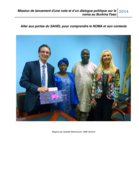
Cette mission menée conjointement par la représentante du Ministère de la Santé en charge du projet, la
responsable EVIPNet de l’OMS à Genève et le directeur de la fondation Winds of Hope visait à établir le lien entre
le Ministère de la Santé et les différentes parties prenantes du B
...
Ainsi, le présent profil peint le faciès épidémiologique du pays pour l’année 2015
avec un clin d’œil sur le niveau de réalisation des Objectifs du millénaire pour le
développement (OMD) et un focus particulier sur l’appropriation des Objectifs de
développement durable (ODD). Il e
...
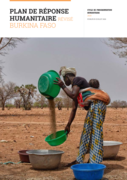
Au cours des derniers mois, la situation sécuritaire et humanitaire s'est rapidement détériorée dans les régions du Nord, du CentreNord, du Sahel, de la Boucle du Mouhoun et de l’Est du Burkina Faso. Cette dégradation a entraîné un accroissement substantiel des déplacements internes et ag
...
Le Plan de réponse humanitaire (PRH) 2020 a été révisé et publié en mai 2020 afin d’intégrer l’impact de l’épidémie de COVID-19 sur les besoins humanitaires existants et sur les activités des partenaires humanitaires.
La pandémie causée par le coronavirus s’est propagée au Niger le 19 mars, date de la notification du premier cas. A la date du 21 juillet 2020, le pays avait enregistré 1 113 cas, dont 1 1018 guéris, 26 sous traitement et 69 décès. Selon l’analyse des données effectuée par le Ministère
...
Le Plan de réponse humanitaire (PRH) 2020 a été révisé et publié en mai 2020 afin d’intégrer l’impact de l’épidémie de COVID-19 sur les besoins humanitaires existants et sur les activités des partenaires humanitaires.
Dans le contexte de l’épidémie de COVID-19, la portée de lâ€
...
Au plan conceptuel, le PNDS 2011-2020 est l’instrument de mise en œuvre de la
Politique nationale de santé (PNS). Dans cette perspective, il est organisé autour des
huit orientations prioritaires retenues dans la Politique nationale de santé. Chacune de ces orientations stratégiques est tra
...
