Filter
1196
Text search:
UN
Medical
Services
Division
Featured
Recommendations
93
New Publications
378
Language
Document type
No document type
767
Studies & Reports
194
Guidelines
97
Manuals
73
Strategic & Response Plan
40
Fact sheets
9
Training Material
7
Situation Updates
7
Resource Platforms
2
Countries / Regions
India
51
Nepal
46
Kenya
44
Global
42
Bangladesh
38
Myanmar / Burma
38
Liberia
35
Western and Central Europe
31
Uganda
29
Rwanda
29
Nigeria
26
Congo, Democratic Republic of
23
Namibia
22
Sierra Leone
21
Africa
21
Ethiopia
19
Ghana
16
Syria
16
Latin America and the Carribbean
16
Zambia
15
Malawi
15
Eastern Europe
14
Ukraine
13
Senegal
12
South Sudan
12
Lesotho
12
Tanzania
11
South–East Asia Region
11
Guinea
10
South Africa
9
Botswana
9
Asia
9
Mali
8
Philippines
8
Cambodia
8
Zimbabwe
7
Thailand
7
West and Central Africa
7
Cameroon
6
Benin
6
East and Southern Africa
6
Vietnam
6
Haiti
5
Somalia
5
Pakistan
5
Jordan
5
Afghanistan
5
Mozambique
5
Middle East and North Africa
5
Laos
5
Burkina Faso
4
Lebanon
4
Colombia
4
Venezuela
4
Côte d’Ivoire / Ivory Coast
3
Niger
3
Germany
3
Chad
3
Indonesia
3
Brazil
3
Sri Lanka
3
Yemen
3
Western Pacific Region
3
USA
2
Malaysia
2
Sudan
2
Central African Republic
2
Peru
2
Eswatini/ Swaziland
2
Burundi
2
Angola
2
Bhutan
2
Albania
2
Timor Leste/ East Timor
2
Tajikistan
2
Moldova
2
Mauritius
2
Togo
1
Iraq
1
China
1
Singapore
1
Papua New Guinea
1
North Macedonia
1
Hungary
1
Croatia
1
Greece
1
Libya
1
Madagascar
1
Mexico
1
Paraguay
1
Poland
1
Armenia
1
Russia
1
Romania
1
Slovakia
1
Kyrgyzstan
1
Japan
1
United Kingdom
1
Spain
1
Belarus
1
Authors & Publishers
Publication Years
Category
Countries
523
Key Resources
78
Women & Child Health
72
Clinical Guidelines
62
Public Health
46
Pharmacy & Technologies
13
Capacity Building
11
Toolboxes
Disability
96
Mental Health
84
HIV
75
COVID-19
61
TB
55
Conflict
42
Refugee
30
Global Health Education
30
Ebola & Marburg
29
Planetary Health
26
AMR
19
Rapid Response
18
Caregiver
17
Pharmacy
15
NTDs
14
NCDs
14
2.0 Rapid Response
12
Natural Hazards
11
Malaria
11
Health Financing Toolbox
9
Specific Hazards
8
Zika
5
Cholera
4
Polio
4
Social Ethics
1
A toolkit for pharmacists.
Emerging data show that medication errors and adverse events cause significant harm to patients’ health and
well-being. It is estimated that the burden of adverse events due to medicines is now comparable to that of
widespread diseases, such as malaria or tuberculosis
...

Résumé des résultats de l’Etude
(1) Situation du secteur de la santé en Guinée
(2) Politiques et plans de santé en Guinée
(3) Formation de personnels de santé
(4) Infrastructures et équipements sanitaires
(5) Aide des partenaires au développement
(6) Problèmes pour le renfor
...
The training you receive will give you the tools you need to feel confident about broaching the subject with your patients. Reviewing the materials the job aids, especially job aids 4a and 7a, can help refresh your knowledge in the months and years ahead. Remember, with practice over time, you will
...
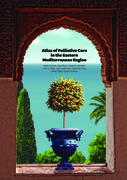
The Atlas of Palliative Care in the Eastern Mediterranean Region is the first systematic attempt to assess the status of resources, activities, and needs of palliative care in the region. It provides a comparative picture of the current state of palliative care in simple and clear graphics, utilisin
...

This interim operational guide outlines infection prevention, control, and water, sanitation, and hygiene measures for home care and isolation of mpox in resource-limited settings. It focuses on practical strategies to manage and prevent the spread of the virus when persons with mpox are isolated at
...
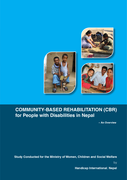
This study examines over 20 years of CBR implementation in Nepal. It includes an overview of CBR interventions, provides analysis of approaches and activities in terms of impact and sustainability and makes recommendations for future developments in CBR. This resource is useful for people interested
...
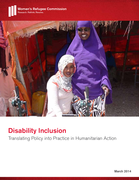
The report provides lessons and recommendations for other organizations and the wider humanitarian community on engaging persons with disabilities at all levels of humanitarian work. It draws on consultations with over 700 displaced persons—including persons with disabilities, their families, and
...

This report has been prepared in response to informal requests by SIDS Member States and territories for WHO assistance in confronting the stark and dire situation which climate change has created in their countries and the impact it is having on their peoples
A Systematic Review, Country Case Studies, and Recommendations for Integration into National Health Systems
Alliance Report
Participation of community health workers (CHWs) in the provision of primary health care has been experienced all over the world for several decades, and there is an amount
...
The purpose of this document is to provide a comprehensive overview of existing institutional arrangement for disaster management in Myanmar at all levels with an aim to make information available to all stakeholders involved in disaster risk management in Myanmar.
World Migration Report 2022
recommended
This World Migration Report 2018 is the ninth in the series. Since 2000, IOM has been producing world migration reports to contribute to increased understanding of migration throughout the world. This new edition presents key data and information on migration as well as thematic chapters on highly t
...
Antibiotic resistance is no longer a concern for the distant future but is a pressing issue, both globally and in Nepal. As part of global effort to preserve the effectiveness of antibiotics, the Global Antibiotic Resistance Partnership (GARP)-Nepal was established to doc
...
After five consecutive below-average rains, the humanitarian crisis in the Horn of Africa is expanding and deepening.
Combined with insecurity and macroeconomic volatility, the impact of the drought on food and nutrition security has been devastating. Across Ethiopia, Kenya and Somalia, an estima
...

The world has been turned on its head by the coronavirus disease 2019 (COVID-19) pandemic. This has provided a stark wakeup call on the severe under-financing of health systems around the world. It has laid bare the inequalities and limitations in the capacities of countries at all levels of develop
...
Injection practices worldwide and especially in low- and middle-income countries (LMICs) include multiple, avoidable unsafe practices that ultimately lead to the large-scale transmission of bloodborne viruses among patients, health care providers and the community at large.
The Joint Response Plan sets out a comprehensive programme shaped around three strategic objectives – deliver protection, provide life-saving assistance and foster social cohesion. The Plan covers all humanitarian sectors and addresses key cross-cutting issues, including protection and gender main
...