
Filter
1087
Text search:
Government
of
Indonesia
Featured
Recommendations
72
New Publications
274
Language
Document type
No document type
631
Studies & Reports
224
Guidelines
103
Manuals
60
Strategic & Response Plan
29
Training Material
14
Fact sheets
11
Situation Updates
8
Infographics
3
Resource Platforms
2
Online Courses
1
Countries / Regions
Global
86
Indonesia
78
Myanmar / Burma
39
South–East Asia Region
35
Asia
35
India
25
Bangladesh
24
Nepal
22
Kenya
22
Philippines
18
Ethiopia
15
Cambodia
15
Thailand
14
Nigeria
13
Syria
12
Vietnam
10
Congo, Democratic Republic of
9
Haiti
9
Pakistan
8
Afghanistan
8
Mozambique
8
Africa
8
Zambia
7
China
7
South Africa
7
Liberia
6
Uganda
6
South Sudan
6
Tanzania
6
Rwanda
6
Malawi
6
Latin America and the Carribbean
6
Laos
6
Guinea
5
Ghana
5
Zimbabwe
5
Malaysia
5
Papua New Guinea
5
East and Southern Africa
5
Middle East and North Africa
5
Sierra Leone
4
Senegal
4
Central African Republic
4
Namibia
4
Brazil
4
Sri Lanka
4
Yemen
4
West and Central Africa
4
Russia
4
Japan
4
Burkina Faso
3
Somalia
3
Lebanon
3
Sudan
3
Western Pacific Region
3
Venezuela
3
Timor Leste/ East Timor
3
Iran
3
Mali
2
Iraq
2
Ukraine
2
Madagascar
2
Lesotho
2
Mexico
2
Chile
2
Western and Central Europe
2
Kyrgyzstan
2
Turkmenistan
2
Portugal
2
Morocco
1
USA
1
Togo
1
Jordan
1
Germany
1
Turkey
1
Singapore
1
Vanuatu
1
Argentina
1
Eswatini/ Swaziland
1
North Macedonia
1
Serbia
1
Hungary
1
Croatia
1
Burundi
1
Colombia
1
Ecuador
1
Greece
1
Angola
1
Eastern Europe and Central Asia
1
Other region
1
Solomon Islands
1
Bhutan
1
Palestine
1
North Korea
1
Mongolia
1
Tajikistan
1
Estonia
1
Georgia
1
Jamaica
1
Norway
1
Spain
1
Azerbaijan
1
Bosnia and Herzegovina
1
Authors & Publishers
Publication Years
Category
Countries
266
Key Resources
107
Women & Child Health
74
Public Health
69
Clinical Guidelines
67
Capacity Building
16
Pharmacy & Technologies
8
Toolboxes
HIV
113
Mental Health
88
TB
79
Disability
70
COVID-19
67
Planetary Health
58
Natural Hazards
41
Global Health Education
38
NTDs
26
Health Financing Toolbox
25
AMR
22
Conflict
19
Pharmacy
18
Rapid Response
16
Refugee
16
NCDs
12
Caregiver
11
2.0 Rapid Response
11
Malaria
10
Polio
9
Cholera
5
Ebola & Marburg
4
Social Ethics
4
Typhoon
2
Zika
2
Specific Hazards
2
This profile is part of a series of Climate Risk Country Profiles developed by the World Bank Group (WBG). The country profile
synthesizes most relevant data and information on climate change, disa
...

he UNFPA “Programmatic guidelines: Cash and Voucher Assistance in Sexual and Reproductive Health programming in Emergencies” explains how CVA can be effectively integrated into humanitarian responses to help women, girls, and other vulnerable groups access lifesaving and comprehensive SRH servic
...
The Quality Criteria for Health National Adaptation Plans (HNAPs) presents examples of good practice in HNAP development to assist countries in developing a comprehensive, feasible and implementable plan. The criteria are also intended to guide coun
...
From policy to practice: how the TB-HIV response is working
“The HIV community must place much more focus on TB co-infection than
it has done to date. TB takes the lives of over 1000 people living with HIV
every day, a number which is absolut
...
This progress report reflects achievements made during the first year of implementation (through December 2016), as countries have taken actions in line with new or existing national strategies. The most recent data on country progress in 2016 are b
...
The ASEAN Mental Health Systems Report
catalogues the situation of mental health in ASEAN
Member States. This report provides comprehensive
information on the progress made so far by AMS in
integrating mental health into national health systems,
...

Water, sanitation and hygiene education in schools – WASH in Schools – provides safe drinking water, improves sanitation facilities and promotes lifelong health. WASH in Schools enhances the well-being of children and their families, and paves t
...
These guidelines are informed by evidence of ‘what works’ and lessons learned in the field. They are designed to accelerate UNICEF regional and country offices’ programming on social service workforce strengthening, and support work to better
...

The key to a lasting world free of all forms of poliovirus lies in rapidly interrupting all remaining endemic transmission of WPV in the endemic ar
...
The global COVID-19 pandemic has led to unprecedented levels of disruption to education, impacting over 90% of the world’s student population: 1.54 billion children, including 743 million girls. S
...
The global tripartite self-assessment survey of country progress in addressing antimicrobial resistance (AMR) is a component of a broader approach for monitoring and evaluation
...

This country cooperation strategy (CCS) outlines how the World Health Organization (WHO) will work with the Lao People’s Democratic Republic over the next five years (2024–2028), supporting the implementation of the five-year health sector devel
...

Pandemic Influenza Risk Management
recommended
A WHO guide to inform & harmonize national & international pandemic preparedness and response
The main updates from the 2013 interim guidance are:
Alignment with other relevant United Nations policies for crisis and emergency management, and
Inclusion
...
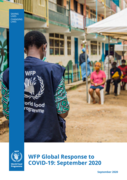
The COVID-19 pandemic is a multiplier of vulnerability, compounding threats to food insecurity, while exposing weaknesses in food and health systems. It is severely undermining the capacity of commu
...
MEDBOX Annual Report 2024
recommended
The MEDBOX Annual Report provides an overview of the most important projects of the past year
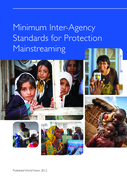
The Minimum Standards for Protection Mainstreaming are a set of international standards designed to provide practical assistance to humanitarian actors to mainstream protection in the assessment, design, implementation, monitoring and evaluation of
...
Based on Human Rights Watch (HRW)'s reporting on the human rights dimensions of the COVID-19 pandemic (see Related Summary, and the video, below), this document presents 40 questions to provoke thinking about a rights-respecting response to the cris
...
- Build community resilience to coastal hazards by improving capacity of inclusive disaster management systems.
- Reduce the mortality rate of persons with disabilities in situations
...
Background: Cervical cancer accounts for 23% of cancer incidence and 22% of cancer mortality among women in Burkina Faso. These proportions are more than 2 and 5 times higher than those
...
