
Filter
1515
Text search:
community-based
rehabilitation
Featured
157
461
Language
Document type
1076
138
110
77
73
15
14
7
2
2
1
Countries
71
48
46
42
40
37
35
29
29
29
29
28
26
24
24
23
23
23
23
21
21
20
19
19
19
15
15
13
13
13
13
13
13
10
9
9
8
8
8
8
7
7
6
6
6
6
6
5
5
5
5
5
5
5
4
4
4
4
4
3
3
3
3
3
3
2
2
2
2
2
2
2
2
2
2
2
2
2
2
2
2
2
2
2
2
1
1
1
1
1
1
1
1
1
1
1
1
1
1
1
1
1
1
1
Authors & Publishers
Publication Years
Category
662
104
91
55
54
24
Toolboxes
271
237
87
60
48
46
41
29
24
20
19
18
17
16
15
12
6
4
4
4
3
3
2
2
1
1
1
A learning resource for facilitators, parents, caregivers, and persons with cerebral palsy | Version 1 - Released March 2008
A learning resource for facilitators, parents, caregivers, and persons with cerebral palsy | Version 1 - Released March 2008
A learning resource for facilitators, parents, caregivers, and persons with cerebral palsy | Version 1 - Released March 2008
A learning resource for facilitators, parents, caregivers, and persons with cerebral palsy | Version 1 - Released March 2008
A learning resource for facilitators, parents, caregivers, and persons with cerebral palsy | Version 1 - Released March 2008
A learning resource for facilitators, parents, caregivers, and persons with cerebral palsy | Version 2 - Released November 2009
A learning resource for facilitators, parents, caregivers, and persons with cerebral palsy | Version 1 - Released March 2008
Guidance | Preparedness - Response and early recovery - Recovery and reconstruction

This document is one of eight PDF documents that comprise the Guidance on Child-focused Victim
Assistance. All are available in PDF at

Global Education Review, 3(3).4-27
Children with disabilities in South Africa: The hidden reality is part of a multiple-country study conducted by ACPF. The study seeks to analyse how cultural, social, physical and other societal barriers prevent children with disabilities from enjoying their constitutional rights to equality, freedo
...
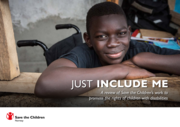
A review of Save the Children’s work to promote the rights of children with disabilities
you can find all 14 Technical Booklets on Inclusive Education, produced by UNICEF, in ENGLISH. Other versions can be found on the website https://www.ded4inclusion.com/inclusive-education-resources-free/unicef-inclusive-education-booklets-and-webinars-english-version. Each Technical Booklet (and com
...

A national overview with a case study from Tanahun district. The overall aims of this study are (1) to assess the extent to which social protection systems in Nepal address the needs of people with disabilities; and (2) to identify and document elements of good practice, as well as challenges, in th
...
The Ministry of Health has developed the first version of the Service Standards and Service Delivery Standards for the health sector in Uganda. The main objective is to provide a common understanding of what is expected by the public, service users and service providers in ensuring provision of cons
...
