
Filter
1039
Text search:
Republic
of
Kenya,
Ministry
of
Health
Featured
Recommendations
89
New Publications
259
Language
Document type
No document type
555
Studies & Reports
237
Guidelines
100
Manuals
57
Strategic & Response Plan
51
Training Material
19
Situation Updates
10
Fact sheets
7
Infographics
3
Countries / Regions
Kenya
153
Uganda
57
Global
52
Africa
37
Ethiopia
30
Nigeria
29
Tanzania
26
Congo, Democratic Republic of
25
South Sudan
21
Rwanda
21
Liberia
17
Zambia
17
Malawi
17
East and Southern Africa
15
Sierra Leone
14
Guinea
12
South Africa
11
Mozambique
10
Namibia
10
Ghana
8
West and Central Africa
7
Cameroon
6
Zimbabwe
6
India
6
Central African Republic
6
Senegal
5
Somalia
5
Indonesia
5
Myanmar / Burma
5
Western and Central Europe
5
Asia
5
Pakistan
4
Afghanistan
4
Benin
4
Ukraine
4
Botswana
4
Lesotho
4
Yemen
4
Latin America and the Carribbean
4
Burkina Faso
3
Côte d’Ivoire / Ivory Coast
3
Philippines
3
Syria
3
Bangladesh
3
Sudan
3
Angola
3
Mali
2
Togo
2
Nepal
2
Iraq
2
Jordan
2
Lebanon
2
Chad
2
Cambodia
2
Gambia
2
China
2
Eswatini/ Swaziland
2
Burundi
2
Colombia
2
Middle East and North Africa
2
South–East Asia Region
2
Southern Africa
2
Russia
2
Iran
2
Guinea-Bissau
1
Morocco
1
Saudi Arabia
1
Niger
1
Germany
1
Thailand
1
Papua New Guinea
1
Vanuatu
1
Peru
1
Brazil
1
North Macedonia
1
Ecuador
1
Greece
1
Madagascar
1
Mexico
1
Sri Lanka
1
Western Pacific Region
1
Eastern Europe and Central Asia
1
Solomon Islands
1
Eastern Europe
1
Palestine
1
North Korea
1
Albania
1
Djibouti
1
Laos
1
Tajikistan
1
Georgia
1
Vietnam
1
Japan
1
Mauritius
1
Tunisia
1
Authors & Publishers
Publication Years
Category
Countries
370
Clinical Guidelines
68
Women & Child Health
66
Public Health
55
Key Resources
55
Capacity Building
23
Pharmacy & Technologies
10
Annual Report MEDBOX
1
Toolboxes
HIV
129
Mental Health
77
TB
63
COVID-19
61
Disability
47
NTDs
41
Planetary Health
40
Caregiver
30
Ebola & Marburg
27
AMR
27
Global Health Education
23
Conflict
21
Rapid Response
17
Refugee
17
Health Financing Toolbox
16
Malaria
15
Pharmacy
12
Cholera
9
Natural Hazards
8
NCDs
8
2.0 Rapid Response
8
Polio
5
Zika
3
Social Ethics
3
South Sudan
1
Specific Hazards
1
This analytical report reviews and discusses the potential role and influence of political commitment in implementing endorsements and conducting policy in the field of tuberculosis (TB) prevention
...
Latent Tuberculosis Infection : Updated and consolidated guidelines for programmatic management
recommended
The consolidated guidelines are expected to provide the basis and rationale for the development of national guidelines for LTBI management, adapted to the national and local epidemiology of TB, the
...
This fourth annual report monitors global progress towards the 2023 target for global elimination of industrially produced trans-fatty acids (TFA), highlighting achievements during the past year (October 2021 – September 2022). Countries are respo
...

This fourth annual report monitors global progress towards the 2023 target for global elimination of industrially produced trans-fatty acids (TFA), highlighting achievements during the past year (October 2021 – September 2022). Countries are respo
...

These guidelines update earlier WHO recommendations to maximize the HIV prevention impact of safe VMMC services and aim to guide the transition to the sustained provision of interventions with a foc
...
In 2017, 3.6 million of the estimated 10 million people with TB worldwide were “missed” by national TB programmes (NTPs). Two thirds of them are thought to access TB treatment
...

This brief report summarizes recent information on HIV drug resistance (HIVDR) in the era of integrase-strand transfer inhibitors (INSTI) for HIV prevention and treatment.

mhGAP is based on evidence-based technical guidelines (4) and provides a set of tools and
training packages to extend service provision. The mhGAP Intervention Guide (mhGAP-IG)
for MNS disorders in non-specialized
...
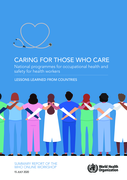
national programmes for occupational health and safety for health workers: lessons learned from countries: summary report of the WHO online worksho
...
This report presents country, regional and global estimates of low birth weight for 2000, together with a detailed description of the methods used in calculating the estimates. Some limited data on
...

This brief update on tuberculosis (TB) in the African region covers the state of TB in the WHO African region, strategic priorities and targets and the impact of COVID-19 on essential services. This
...
This document is a guide defining requirements for quality and safety for malaria rapid diagnostic testing services to safeguard the quality of the results, the safety of the operators and patients
...
Fact Book on WHO Level I and Level II monitoring indicators - To monitor the progress of efforts to improve the global medicines situation, WHO has developed a system of indicators that measure impo
...

World malaria report 2024
recommended
New data from the WHO reveal that an estimated 2.2 billion cases of malaria and 12.7 million deaths have been averted since 2000, but the disease remains a serious global health threat, particularly
...

Global tuberculosis report 2025
recommended
The WHO Global tuberculosis report 2025 provides a comprehensive and up-to-date assessment of the TB epidemic and of progress in prevention, diagnosis and treatment
...

Adolescence, defined as the period between 10 and 19 years of age, is a developmental stage during which many psychosocial and mental health challenges emerge. There is a well-established link betwe
...
There is a substantial and ever-increasing unmet need for rehabilitation worldwide, which is particularly profound in low- and middle
-income countries. The availability of accessible and affordable rehabilitation is necessary for many people with
...
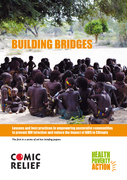
Lessons and best practices in empowering pastoralist communities to prevent HIV infection and reduce the impact of AIDS in Ethiopia. Briefing Paper
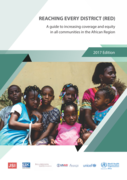
A guide to increasing coverage and equity in all communities in the African Region
Expanded Programs on Immunization (EPI) is responsible for vaccines and vaccination to control, eliminate and eradicate vaccine preventable diseases (VPDs). Having strong immunization systems to deliver vaccines ...
Expanded Programs on Immunization (EPI) is responsible for vaccines and vaccination to control, eliminate and eradicate vaccine preventable diseases (VPDs). Having strong immunization systems to deliver vaccines ...
