
Filter
5610
Text search:
disease
surveillance
Featured
Recommendations
559
New Publications
1425
Language
Document type
No document type
2670
Studies & Reports
1013
Guidelines
928
Strategic & Response Plan
344
Manuals
289
Fact sheets
164
Situation Updates
76
Training Material
67
Resource Platforms
24
Infographics
16
Brochures
8
Online Courses
8
App
3
Countries / Regions
Global
259
India
186
Sierra Leone
142
Kenya
141
Liberia
132
Western and Central Europe
125
Africa
125
Ethiopia
111
Latin America and the Carribbean
109
Nigeria
101
South Africa
96
Congo, Democratic Republic of
95
Uganda
95
Nepal
74
Rwanda
74
Malawi
74
Guinea
71
Bangladesh
66
Tanzania
64
Zambia
63
West and Central Africa
58
Ghana
57
Senegal
53
Syria
52
Ukraine
51
Eastern Europe
47
Myanmar / Burma
46
South–East Asia Region
46
Philippines
45
South Sudan
45
Mozambique
45
East and Southern Africa
42
Brazil
41
Russia
40
Namibia
39
Middle East and North Africa
35
Asia
35
Zimbabwe
32
Yemen
32
Burkina Faso
30
Haiti
29
Germany
29
Cambodia
29
Pakistan
23
Mali
22
Cameroon
22
Madagascar
22
Indonesia
21
Eastern Europe and Central Asia
21
Côte d’Ivoire / Ivory Coast
20
Botswana
20
Lesotho
20
Afghanistan
15
Western Pacific Region
15
Somalia
14
Benin
14
Angola
14
Chad
13
Sudan
13
Eswatini/ Swaziland
13
Central African Republic
12
North America
12
USA
11
Venezuela
11
Niger
10
Togo
10
Thailand
10
Colombia
10
Albania
10
Tajikistan
10
Guinea-Bissau
9
Paraguay
9
Vietnam
9
China
8
Burundi
8
Iraq
7
Papua New Guinea
7
Moldova
7
Georgia
7
Jordan
6
Turkey
6
Argentina
6
Peru
6
Ecuador
6
Sri Lanka
6
Armenia
6
Laos
6
Timor Leste/ East Timor
6
Iran
6
Gambia
5
North Macedonia
5
Bolivia
5
Chile
5
Palestine
5
France
5
Saudi Arabia
4
Lebanon
4
Mexico
4
Southern Africa
4
Spain
4
Egypt
3
Mauritania
3
Ireland
3
Honduras
3
Libya
3
Romania
3
Kyrgyzstan
3
Gabon
3
Turkmenistan
3
Mauritius
3
Portugal
3
Morocco
2
Dominican Republic
2
Greece
2
Guatemala
2
Other region
2
Bhutan
2
North Korea
2
Italy
2
Djibouti
2
Congo-Brazzaville
2
Qatar
2
Bulgaria
2
Estonia
2
Uzbekistan
2
Kazakhstan
2
Belgium
2
Tunisia
2
Belarus
2
Bosnia and Herzegovina
2
Singapore
1
Vanuatu
1
Hungary
1
El Salvador
1
Cape Verde
1
Nicaragua
1
Solomon Islands
1
Poland
1
Canada
1
Slovakia
1
Australia
1
Jamaica
1
Japan
1
Denmark
1
Maldives
1
United Kingdom
1
Azerbaijan
1
Israel
1
Belize
1
Costa Rica
1
Panama
1
Authors & Publishers
Publication Years
Category
Countries
2045
Clinical Guidelines
467
Public Health
310
Key Resources
266
Women & Child Health
151
Pharmacy & Technologies
78
Capacity Building
55
Toolboxes
COVID-19
710
HIV
429
TB
406
Ebola & Marburg
312
AMR
282
NTDs
281
Rapid Response
231
Planetary Health
178
Malaria
138
Mental Health
134
2.0 Rapid Response
120
Conflict
102
NCDs
101
Cholera
93
Zika
93
Caregiver
93
Global Health Education
74
Natural Hazards
69
Refugee
66
Pharmacy
60
Polio
59
Health Financing Toolbox
44
Disability
36
Specific Hazards
25
Typhoon
4
Social Ethics
3

A historic funding crisis is threatening to unravel decades of progress unless countries can make radical shifts to HIV programming and funding. The report highlights the impact that the sudden, large-scale funding cuts from international donors are having on countries most affected by HIV. Yet it a
...
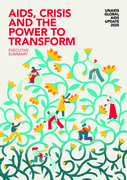
A historic funding crisis is threatening to unravel decades of progress unless countries can make radical shifts to HIV programming and funding. The report highlights the impact that the sudden, large-scale funding cuts from international donors are having on countries most affected by HIV. Yet it a
...

Offering additional pre-exposure prophylaxis (PrEP) choices has the potential to increase uptake and effective use of PrEP, and of HIV prevention overall, as it allows people to choose a method that they prefer.
In this guideline, WHO recommends an offering long-acting injectable lenacapavir (LEN
...

Guidelines on lenacapavir for HIV prevention and testing strategies for long-acting injectable pre-exposure prophylaxis. Web Annex B

These guidelines promote the delivery of people-centred health services for STIs by providing evidence-based recommendations related to decentralization, integration, task sharing and digital health. These recommendations complement existing WHO guidelines for STI testing, treatment and management,
...

This guidance covers different options for banning or phasing out a pesticide and suggests related risk reduction measures to be taken during the phase-out period. A key focus of this guidance is how to take action to manage, prevent, minimize, and communicate about identified risks during the imple
...

This publication provides guidance for planning country-specific programming to achieve the triple elimination of mother-to-child (or vertical) transmission of HIV, syphilis and hepatitis B virus. It is based on the WHO Triple Elimination Framework, which promotes an integrated, person-centred appro
...

This guide aims to provide an overview of successful practice from the field for the disaster risk reduction/management practitioner interested in EWS. It presents guiding principles that will build a strong foundation for the design or strengthening of EWS at any level. It is not an operational, bu
...
The brief on key findings from the 2025 edition of the WHO anaemia estimates provides a snapshot of the current status of anaemia among women aged 15–49 years at the country, regional, and global levels, along with progress toward achieving the global anaemia target by 2030, in alignment with the
...

The 2022 report reviews the global malaria diagnostics market and technological landscape to support Unitaid’s 2023–2027 strategy for quality malaria case management. The report highlights the stalled progress of malaria control efforts, the gaps in access to diagnostics and the public health im
...

WHO guideline on balanced national controlled medicines policies to ensure medical access and safety
Access to medicines is essential for attainment of universal health coverage, which is central to achievement of the health-related Sustainable Development Goals. Controlled medicines include those such as opioids, benzodiazepines, barbiturates, amphetamines and others with identified or emergent cl
...

WHO, as the coordinating authority on international health, supports countries in protecting public health through evidence-based policies and actions. Considering the significant health burden and the multiple potential benefits of interventions, the WHO Air Quality, Energy and Health Unit aims to
...

The health impacts of climate change are no longer a distant threat. They are being felt here and now and becoming more extreme.
To address these threats, the WHO Asia-Pacific Centre for Environment and Health in the Western Pacific Region (ACE) was established in 2019 through a partnership with
...
Adapting HIV testing services in the context of reduced and declining funding. Presentation May 2025

These guidelines update earlier WHO recommendations to maximize the HIV prevention impact of safe VMMC services and aim to guide the transition to the sustained provision of interventions with a focus on the health and well-being of both adolescent boys and men.
ATIC Newsletter, Vol 15, Issue 1,
February 2022.
Le Plan d’action pour l’élimination du paludisme 2021-2025 a été élaboré en consultation avec les pays et les partenaires régionaux comme cadre de référence pour orienter les efforts nationaux et les contributions des donateurs et partenaires dans le but d’éliminer la maladie dans la
...
Long-term polio vaccine security – the timely, sustained, and uninterrupted supply of suitable types of affordable, quality-assured polio vaccines – is essential in the global effort to achieve and maintain a polio free world. However, fragmented approaches and short-term planning pose considera
...

Chapitre 50. Le texte traite du paludisme grave, une forme sévère du paludisme principalement causée par Plasmodium falciparum. Il explique les circonstances dans lesquelles le diagnostic doit être évoqué, notamment en cas de fièvre au retour d'une zone tropicale. Le document décrit les exam
...

La Stratégie nationale de communication pour le paludisme 2017–2020 de la République Démocratique du Congo vise à améliorer les comportements de prévention, de détection et de traitement du paludisme à travers une communication sociale et comportementale (CSC) structurée et contextuelle.
...
