
Filter
599
Text search:
people
with
epilepsy
Featured
83
120
Language
Document type
416
59
50
37
16
11
6
3
1
Countries
34
25
17
16
13
13
12
12
12
12
9
9
8
8
7
6
6
5
5
5
5
5
4
4
4
4
3
3
3
3
3
3
3
2
2
2
2
2
2
2
2
2
2
2
2
2
1
1
1
1
1
1
1
1
1
1
1
1
1
1
1
1
Authors & Publishers
Publication Years
Category
207
39
33
16
11
7
2
Toolboxes
191
120
24
18
13
12
8
8
7
5
5
5
5
5
4
4
3
3
3
2
1
PLoS Med 15(7): e1002615. https://doi.org/10.1371/journal. pmed.1002615
В этой главе мы попытаемся представить современные взгляды на классификацию, эпидемиологию, этиологию, клиническую картину, оценку, прогноз и лечение РАС. Мы надее
...
Introduction
Chapter A.5
Introduction
Chapter A.7
Troubles du Développement
Chapitre C.2
Introduction
Chapter A.13

Accessed Febr. 6, 2020
MAMI refers to the management of small and nutritionally at risk infants under six months of age (infants u6m) and their mothers.

The Adult Standard Treatment Guidelines and Essential Medicines List for Hospital Level provide a platform for transparency to enable equitable access to safe, effective, and affordable treatment options at hospital level taking into consideration the changing clinical needs of our population and th
...

In 2015, 5.9 million children under age five died (1). The major causes of child deaths globally are pneumonia, prematurity, intrapartum-related complications, neonatal sepsis, congenital anomalies, diarrhoea, injuries and malaria (2). Most of these diseases and conditions are at least partially cau
...

The availability, prices and affordability of essential medicines in Malawi: A cross-sectional study
The Malawian government recently introduced cost-covering consultation fees for self-referral patients in tertiary public hospitals. Previously, patients received medicines free of charge in government-owned health facilities, but must pay elsewhere. Before the government implements a payment policy
...
This training module on malaria case management has been developed to support the staff involved in malaria control and elimination programmes in the effective organization of malaria diagnosis and case management services
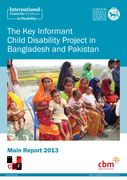


The Global Burden of Disease (GBD) study, a collaborative endeavour of the World
Health Organization (WHO), the World Bank and the Harvard School of Public Health,
drew the attention of the international health community to the burden of neurological
disorders and many other chronic conditions. T
...
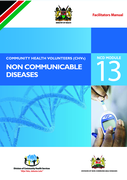
This training module is meant to strengthen the capacity of CHVs to prevent the Non Communicable Diseases at the community level . The Government of Kenya is committed to supporting community health initiatives and accelerating the achievement of the KHSS&IP goals, Millennium Development G
...
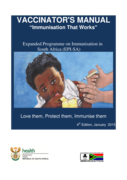
This module introduces the “Vaccinator’s Manual”, a guideline for vaccinators. The aim of the manual is to update EPI guidelines to include all the changes since the third edition of the Vaccinators Manual (2008)
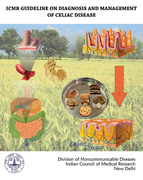
Division of Noncommunicable Diseases | draft guidelines on diagnosis and management of a chronic immune-mediated enteropathy called celiac disease. This disease is caused is mainly caused in genetically susceptible individuals by ingestion of gluten proteins that are present in wheat, barley and oat
...
The new WHO guidelines provide recommended steps for safe phlebotomy and reiterate accepted principles for drawing, collecting blood and transporting blood to laboratories/blood banks.
