
Filter
1976
Text search:
Regional
Office
for
Europe
Featured
Recommendations
183
New Publications
305
Language
Document type
No document type
860
Studies & Reports
498
Guidelines
273
Manuals
134
Strategic & Response Plan
71
Fact sheets
50
Training Material
40
Situation Updates
28
Infographics
9
Brochures
6
Resource Platforms
6
App
1
Countries / Regions
Western and Central Europe
159
Global
122
Ukraine
100
Eastern Europe
76
Russia
53
Eastern Europe and Central Asia
32
Syria
27
Germany
24
India
22
Latin America and the Carribbean
21
Sierra Leone
20
Ethiopia
19
Africa
19
Liberia
18
South Africa
14
Asia
14
Moldova
14
Nepal
13
Kenya
13
Uganda
12
Myanmar / Burma
12
Tajikistan
12
Ghana
11
Tanzania
11
South–East Asia Region
11
Nigeria
10
Zambia
10
Rwanda
10
Middle East and North Africa
9
Venezuela
9
Albania
9
Guinea
8
Congo, Democratic Republic of
8
Pakistan
8
North Macedonia
8
South Sudan
7
Bangladesh
7
East and Southern Africa
7
Kyrgyzstan
7
Georgia
7
Afghanistan
6
Lebanon
6
China
6
Malawi
6
Mozambique
6
West and Central Africa
6
Armenia
6
Romania
6
Philippines
5
Somalia
5
Jordan
5
Turkey
5
Namibia
5
Brazil
5
Yemen
5
Poland
5
Kazakhstan
5
USA
4
Zimbabwe
4
Cambodia
4
Thailand
4
Indonesia
4
Colombia
4
Western Pacific Region
4
Estonia
4
Iran
4
Belarus
4
Burkina Faso
3
Haiti
3
Iraq
3
Peru
3
Serbia
3
Hungary
3
Botswana
3
Greece
3
Sri Lanka
3
Vietnam
3
Guinea-Bissau
2
Cameroon
2
Niger
2
Sudan
2
Central African Republic
2
Eswatini/ Swaziland
2
Croatia
2
Libya
2
Mexico
2
Palestine
2
Laos
2
Bulgaria
2
Slovakia
2
Uzbekistan
2
Turkmenistan
2
United Kingdom
2
Azerbaijan
2
Bosnia and Herzegovina
2
Senegal
1
Morocco
1
Saudi Arabia
1
Chad
1
Papua New Guinea
1
Argentina
1
Burundi
1
Bolivia
1
Angola
1
Lesotho
1
Chile
1
Canada
1
Lithuania
1
Belgium
1
Mauritius
1
Tunisia
1
Portugal
1
Spain
1
Israel
1
Latvia
1
Authors & Publishers
Publication Years
Category
Countries
384
Clinical Guidelines
146
Key Resources
125
Public Health
107
Women & Child Health
105
Capacity Building
25
Pharmacy & Technologies
15
Toolboxes
HIV
237
Mental Health
223
COVID-19
220
TB
160
Planetary Health
134
Conflict
98
Refugee
92
Disability
71
AMR
71
Global Health Education
68
Caregiver
57
Rapid Response
55
Ebola & Marburg
36
Pharmacy
33
NCDs
32
2.0 Rapid Response
32
NTDs
30
Health Financing Toolbox
29
Zika
13
Specific Hazards
13
Natural Hazards
11
Polio
9
Malaria
6
Cholera
5
Social Ethics
4
Typhoon
2
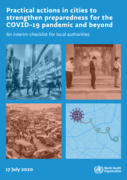
Practical actions in cities to strengthen preparedness for the COVID-19 pandemic and beyond
recommended
This document accompanies the interim guidance on “Strengthening Preparedness for COVID-19 in cities and urban settings”. It provides local authorities, leaders and policy-makers in cities with a checklist tool to ensure that key areas have been
...
This document proposes surveillance objectives and describes global standards for a minimal basic respiratory disease surveillance system for the monitoring of influenza. The agreement on objectives
...
Single TB and HIV Concept Note Albania 2016-2018 27 April 2015

This guide provides strategic direction for host countries, event organizers, health authorities, and key stakeholders to effectively plan and conduct Simulation Exercises (SimEx) and After Action Reviews (AARs)
...

Despite being a preventable and curable infectious disease, tuberculosis (TB) has continued to elude global controll efforts. In 2023, 8.2 milion people with TB were diagnosed and notified to the WHO, the hightest number ever reported since WHO began tracking.
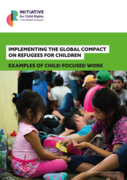
Children in refugee situations face many potential dangers, such as violence, abuse, exploitation, discrimination, separation from their families, trafficking and military recruitment. The impact of these experiences can be devastating and long-lasting. Children have different needs from adults and
...

Lessons learned from recent public health events such as the COVID-19 pandemic, Ebola virus disease, Zika virus disease outbreaks, and other public health threats, including earthquakes and floods, have highlighted the need for countries to continuo
...

The 2022 Financing for Sustainable Development Report identifies a “great finance divide” as a main driver of the divergent recovery. Developed countries were able to borrow record sums at ultra-low interest rates to support their people and eco
...
The world is facing an unprecedented range of emergencies. In reaction to these complex adversities, many people experience considerable distress and impairment, and a minority may even go on to develop mental health conditions. Meanwhile, those with pre-existing mental health conditions may experie
...
The 2021 Financing for Sustainable Development Report responds to the request made by Member States to review the impact of the COVID-19 pandemic on nancing for sustainable development, and to prop
...
CIPH Curriculum for Best Practices. Putting Principles to Work
WHO/HTM/TB/2007.384a
“TB is too often a death sentence for people with AIDS.
It does not have to be this way.”
-Nelson Mandela, International conference on HIV /AIDS, Bangkok, Thailand, July 2004
This paper is an initial compilation of the promising practices on risk communication and community engagement that have developed in Europe during the COVID pandemic, in complementarity to the UNHCR’s Practical Recommendations and Good Practice t
...
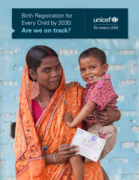
Society first acknowledges a child’s existence and identity
through birth registration. The right to be recognized as
a person before the law is a critical step in ensuring
lifelong protection and is a prerequisite for exercising all
other rig
...

Antimicrobials are medicines, including antibiotics, antivirals, antifungals, and antiparasitics, that are used to prevent and treat infections in humans, animals, and plants. Antimicrobial Resistance (AMR) arises when bacteria, viruses, fungi, and parasites no longer respond to these medicines, ren
...
