
Filter
1014
Filtered Results: 1014
Text search:
World
Health
Organization,
Western
Pacific
Office
Featured
Recommendations
124
New Publications
238
Language
Document type
No document type
443
Studies & Reports
239
Guidelines
178
Manuals
69
Strategic & Response Plan
45
Training Material
12
Situation Updates
9
Fact sheets
8
Resource Platforms
6
Infographics
4
Online Courses
1
Countries / Regions
Global
92
Philippines
40
Western Pacific Region
25
South–East Asia Region
21
Asia
20
Nepal
17
India
17
Cambodia
16
Myanmar / Burma
16
Western and Central Europe
15
Africa
13
Bangladesh
12
Latin America and the Carribbean
10
Kenya
9
China
8
Liberia
8
Sierra Leone
7
Russia
7
Thailand
6
Syria
6
Ethiopia
6
Indonesia
6
Nigeria
5
Afghanistan
5
Eastern Europe and Central Asia
5
Papua New Guinea
5
Pakistan
5
Ukraine
4
Rwanda
4
Middle East and North Africa
4
South Africa
4
Vietnam
4
Eastern Europe
4
Ghana
3
Laos
3
Mozambique
3
Congo, Democratic Republic of
3
Sri Lanka
3
Yemen
3
South Sudan
3
Somalia
3
Madagascar
3
Iran
2
Malawi
2
Zimbabwe
2
Mongolia
2
Guinea
2
USA
2
Venezuela
2
West and Central Africa
2
East and Southern Africa
2
North Korea
1
Timor Leste/ East Timor
1
Mexico
1
Benin
1
Fiji
1
Burkina Faso
1
Peru
1
Vanuatu
1
Haiti
1
Tanzania
1
Jordan
1
Japan
1
Moldova
1
Sudan
1
Palestine
1
Central African Republic
1
Bhutan
1
Zambia
1
Iraq
1
Ecuador
1
Solomon Islands
1
Eswatini/ Swaziland
1
Authors & Publishers
Publication Years
Category
Countries
182
Clinical Guidelines
123
Key Resources
78
Public Health
73
Women & Child Health
62
Pharmacy & Technologies
19
Capacity Building
18
Toolboxes
HIV
104
Mental Health
95
COVID-19
81
Planetary Health
64
TB
54
Rapid Response
40
NTDs
39
Global Health Education
38
Disability
33
AMR
31
Malaria
28
Caregiver
27
Pharmacy
26
NCDs
24
2.0 Rapid Response
22
Zika
20
Natural Hazards
19
Health Financing Toolbox
17
Conflict
17
Refugee
16
Ebola & Marburg
9
Polio
7
Specific Hazards
4
Typhoon
4
Cholera
3
Social Ethics
1
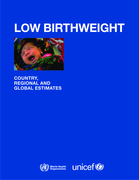
This report presents country, regional and global estimates of low birth weight for 2000, together with a detailed description of the methods used in calculating the estimates. Some limited data on trends are also included. The limitations of low-birth-weight data are described and recommendations a...

The WHO continuously reviews available data on SARS-CoV-2 variants of concern. For this version, the global epidemiological
situation of the COVID-19 pandemic as of 21 January 2022 – at a time when the Omicron VOC had been identified in 171
countries across all six WHO Regions and was rapidly re...

Addressing comorbidities and risk factors for TB is a crucial component of Pillar one of the End TB Strategy, which focuses on integrated patient-centred care and prevention, including action on TB and comorbidities. The Framework for collaborative action on TB and comorbidities aims to support coun...
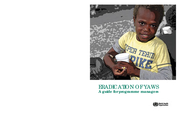
This document provides guidance for countries on how to implement activities to achieve the interruption of yaws transmission. It is intended for use by national yaws eradication programmes, partners involved in the implementation of yaws eradication activities and WHO technical staff who provide te...
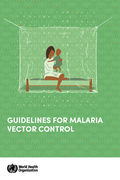
Guidelines for malaria vector control
recommended
Vector control is a vital component of malaria prevention, control and
elimination strategies because it can be highly effective in providing
personal protection and/or reducing disease transmission.
В основе настоящих руководящих принципов лежит структура организации мероприятий в соответствии с тремя задачами:
• создание и укрепление механизмов комплексно...
Pocket book of hospital care for children
recommended
Guidelines for the Management of common childhood Illness. 2nd edition
These guidelines focus on the management of the major causes of childhood mortality in most developing countries, such as newborn problems, pneumonia, diarrhoea, malaria, meningitis, septicaemia, measles and related conditions, ...

2nd edition. The 2018 Roadmap incorporates an additional critical population: adolescents. Despite making up 1 in 6 of the world’s people, adolescents have been largely overlooked as global momentum to address TB has grown. Spanning the ages of 10–19 years, adolescents are both at risk of TB and...
Preliminary overview of refugees and migrants self-reported impact of COVID-19
The study surveyed over 30,000 refugees and migrants living in 170 countries. Many of the respondents had fled war or dire economic conditions in their home country only to be faced with the additional challenges posed b...
Water, sanitation and hygiene (WASH) are critical in the prevention and care for all of the 17 neglected tropical diseases (NTDs) scheduled for intensified control or elimination by 2020.
Provision of safe water, sanitation and hygiene is one of the five key interventions within the global NTD ...
Provision of safe water, sanitation and hygiene is one of the five key interventions within the global NTD ...
Effective malaria prevention is threatened by widespread and increasing vector insecticide resistance. Failure to mitigate this threat will likely result in an increased burden of disease, with significant cost implications. This new framework provides support for the development of a national insec...

The WHO Global Antimicrobial Resistance and Use Surveillance System (GLASS) was launched in 2015 to foster AMR surveillance and inform strategies to contain AMR. The system started with surveillance of AMR in bacteria causing common human infections and has expanded its scope to include surveillance...
Manual for Early Implementation
The purpose of this handbook is to provide guidance to Member States on the practical aspects of maintaining sanitary standards at international borders at ports, airports, and ground crossings (points of entry) as set out in the International Health Regulations (2005). It provides technical advice ...
More than 700 000 people lose their life to suicide every year. The world is not on track to reach the 2030 suicide reduction targets. WHO advocates for countries to take action to prevent suicide, ideally through a comprehensive national suicide prevention strategy. Governments and communities can ...
