
Filter
2010
Text search:
Workforce
capacity
Featured
196
523
Language
Document type
894
442
277
175
136
29
29
14
10
2
2
Countries
133
85
62
62
54
52
48
42
41
37
34
33
31
31
31
29
29
28
26
25
22
20
20
20
19
18
16
15
14
13
12
12
11
11
11
10
10
10
10
9
9
8
7
6
6
6
5
5
5
5
5
5
5
4
4
4
4
4
4
3
3
3
3
3
3
3
2
2
2
2
2
2
2
2
2
2
2
2
2
2
2
2
2
2
1
1
1
1
1
1
1
1
1
1
1
1
1
1
1
1
1
1
1
1
1
1
1
1
Authors & Publishers
Publication Years
Category
831
177
106
103
90
27
14
Toolboxes
233
139
96
85
74
68
67
54
54
53
51
49
45
44
31
28
27
25
20
18
12
5
5
4
3
This guide has been written to provide information and practical advice on developing and delivering local plans an strategies to commission the most effective and efficient older people’s mental health services.Based upon clinical best practice guidance and drawing upon the range of available evi
...
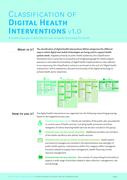
The classification of digital health interventions (DHIs) categorizes the different ways in which digital and mobile technologies are being used to support health system needs. Historically, the diverse communities working in digital health—including government stakeholders, technologists, clinic
...

Maldives has made significant strides in the area of infectious disease prevention and control. This is exemplified by elimination of malaria from Maldives in 2015 and successes in TB control. In addition, Maldives is a front runner in infectious disease prevention through successful water, sanitati
...

Event-based surveillance (EBS) is defined as the organized collection, monitoring, assessment and interpretation of mainly unstructured ad hoc information regarding health events or risks, which may represent an acute risk to health. Both indicator-based and event-based surveillance components serve
...

Antibiotics have been useful in fighting infectious diseases in our country for decades, but because of the overuse and misuse of these agents, an increasing number of organisms are now resistant to them. The Philippines, like other Southeast Asian countries, has already been encountering the many c
...
A new respiratory infectious disease, COVID-19, caused by a new coronavirus called SARS-CoV-2, emerged in early December 2019. Since then, the virus has spread to India and 106 other countries in Asia, Europe, North America, Africa, and Oceania. On March 11, the World Health Organization (WHO) decl
...

Social distancing is the deliberate increasing of physical space between people to stop or slow down the spread of a highly contagious illness. It is a strategy sometimes recommended by public health officials during pandemics. For mental health professionals, the challenges that accompany social di
...
24 April 2020
Policy considerations
for the WHO European Region
This document provides key considerations for Member States to help them to decide on the modulation
of large-scale restrictive public health measures
(i.e. movement restrictions and large-scale physical distancing), while at the
...
Accessed: 27.04.2020
Leaving no one behind in the Covid-19 Pandemic: a call for urgent global action to include migrants & refugees in the Covid-19 response
People on the move, whether they are economic migrants or forcibly displaced persons such asylum seekers, refugees, and internally displa
...
The following is a breakdown of key considerations to guide planning and resource allocation for COVID-19 preparedness and response to support UNHCR regional and country operations in Public Health, WASH, Shelter and Settlements programmes. While some of the activities are more relevant in camps or
...

This document provides guidance for African Union Member States on actions to be taken to ensure they continue to meet all the health
needs of their citizens in accordance with achieving the objectives of the Africa Health Strategy 2016 – 2030.
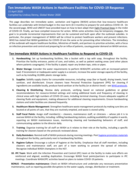
This page describes ten immediate water, sanitation and hygiene (WASH) actions that low-resource healthcare facilities can undertake with limited budget in the near-term (0-3 months) to prepare for and address COVID-19. On the second page, WHO and UNICEF have provided input on how to best adapt thei
...
Early Childhood Matters is a journal about early childhood.
It looks at specific issues regarding the development
of young children, in particular from a psychosocial
perspective.
It is published twice per year by the Bernard
van Leer Foundation. The views expressed in Early Childhood
Matters
...
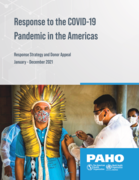
While much progress has been achieved over the past year, the Region of the Americas has stubbornly remained the epicenter of the COVID-19 pandemic. PAHO is launching its 2021 COVID-19 Response Strategy and Donor Appeal to continue supporting Latin American and Caribbean countries and territories i
...

May 2020 International Journal of Infectious Diseases 96 DOI: 10.1016/j.ijid.2020.05.003
The Lancet DOI: 10.1016/S0140-6736(20)31053-9
