Filter
493
Text search:
emergency
settlement
Featured
66
176
Language
Document type
269
97
43
33
31
8
7
5
Countries
30
23
21
18
18
18
17
16
14
13
13
13
13
10
7
7
7
7
7
6
6
6
5
5
5
5
4
4
3
3
3
3
3
3
2
2
2
2
2
2
2
2
2
2
2
2
2
2
1
1
1
1
1
1
1
1
1
1
1
1
1
1
1
1
1
1
1
1
1
1
1
1
1
1
1
1
Authors & Publishers
Publication Years
Category
196
108
16
12
11
6
1
Toolboxes
54
52
50
33
21
21
19
15
11
9
9
8
7
4
4
3
3
3
3
2
1
1
1
1
1

The full-scale invasion of Ukraine has caused a deterioration in the level of access to health-care services and medicines in the country, particularly for people living in regions close to the front line and areas that are not partially or fully controlled by the Government of Ukraine, and for peop
...
Safe drinking-water management must consider drinking-water quality, acceptability and quantity in the context of public health protection. In this manual, the term “safety” encompasses these three elements. Although the principles in this manual can be broadly applied to all types of drinking-w
...

The High-Level Panel on International Financial Accountability, Transparency and Integrity for Achieving the 2030 Agenda (FACTI Panel) was convened by the 74th President of United Nations General Assembly and the 75th President of the Economic and Social Council on 2 March 2020. The objective of the
...
Ending the epidemics of HIV, tuberculosis and malaria by 2030 is within reach, but not yet fully in our grasp.
With only 11 years left, we have no time to waste. We must step up the fight now.

The World Health Organization (WHO) is releasing the second edition of its Global Accelerated Action for the Health of Adolescents (AA-HA!) guidance. The document aims to equip governments to respond to the health and well-being challenges, opportunities and needs of adolescents.
The guidance pro
...

As Uganda builds back from the COVID-19 shock, the Ugandan government is strengthening its commitment to a more gender-inclusive and sustainable economy. This report supports these efforts by describing the gendered impacts of COVID-19 and provides recommendations for Ugandan policy makers and World
...
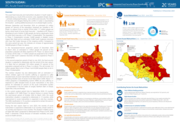
The acute food insecurity and malnutrition situation in South Sudan is deteriorating as a result of the economic crisis, repeated climatic shocks – primarily widespread flooding – and conflict and insecurity. The inflow of returnees and refugees fleeing the conflict in Sudan is exacerbating the
...

WHO, as the coordinating authority on international health, supports countries in protecting public health through evidence-based policies and actions. Considering the significant health burden and the multiple potential benefits of interventions, the WHO Air Quality, Energy and Health Unit aims to
...

Building true health security in a global age. Findings and recommendations of the Global Council. In landmark findings based on two years of research and convenings around the world, the new report shows that high levels of inequality are linked to outbreaks becoming pandemics and that inequality i
...

This report presents the performance results of 21 household water treatment (HWT) products evaluated in Rounds III and IV of the WHO International Scheme to Evaluate Household Water Treatment Technologies (the Scheme). Released alongside a consolidated overview of findings from Rounds I–II, it re
...

The toolkit comprises ready-to-use material designed expressly for World Bank task managers working in the water and sanitation sector. It presents a range of tools for gender analysis and practical “how-to” strategies collected from program and project experience around the world. It is one of
...