
Filter
999
Text search:
World
Health
Organization,
Regional
Office
Africa
Featured
Recommendations
106
New Publications
245
Language
Document type
No document type
490
Studies & Reports
203
Guidelines
133
Strategic & Response Plan
60
Manuals
53
Training Material
19
Situation Updates
19
Fact sheets
15
Resource Platforms
4
App
1
Online Courses
1
Videos
1
Countries / Regions
Global
56
Kenya
38
Ethiopia
30
Sierra Leone
29
Africa
27
Uganda
24
Liberia
22
Tanzania
20
Malawi
19
Zambia
17
India
16
South Africa
15
West and Central Africa
14
Congo, Democratic Republic of
13
South Sudan
13
Western and Central Europe
13
Ghana
12
Guinea
11
Nigeria
11
Syria
11
Senegal
10
Rwanda
10
East and Southern Africa
10
Middle East and North Africa
10
Asia
10
Latin America and the Carribbean
9
Zimbabwe
7
Yemen
7
South–East Asia Region
7
Cameroon
6
Ukraine
6
Somalia
5
Mozambique
5
Namibia
5
Lesotho
5
Mali
4
Nepal
4
Sudan
4
Brazil
4
Myanmar / Burma
4
Russia
4
Togo
3
Philippines
3
Bangladesh
3
Central African Republic
3
Eswatini/ Swaziland
3
Botswana
3
Eastern Europe
3
Côte d’Ivoire / Ivory Coast
2
Haiti
2
Pakistan
2
Afghanistan
2
Lebanon
2
Chad
2
Thailand
2
Benin
2
North Macedonia
2
Colombia
2
Madagascar
2
Sri Lanka
2
Eastern Europe and Central Asia
2
Venezuela
2
Kazakhstan
2
Burkina Faso
1
Guinea-Bissau
1
Morocco
1
Niger
1
Jordan
1
Cambodia
1
China
1
Indonesia
1
Argentina
1
Peru
1
Hungary
1
Burundi
1
Angola
1
Mexico
1
Western Pacific Region
1
Southern Africa
1
Laos
1
Tajikistan
1
Estonia
1
Moldova
1
Iran
1
Kyrgyzstan
1
Georgia
1
Jamaica
1
Mauritius
1
Norway
1
Portugal
1
Authors & Publishers
Publication Years
Category
Countries
302
Clinical Guidelines
87
Key Resources
69
Public Health
65
Women & Child Health
63
Capacity Building
18
Pharmacy & Technologies
14
Toolboxes
HIV
108
COVID-19
86
Planetary Health
60
Mental Health
53
Ebola & Marburg
46
TB
44
AMR
38
Disability
35
Rapid Response
34
Caregiver
28
Conflict
27
NTDs
25
2.0 Rapid Response
25
Refugee
20
Global Health Education
20
Pharmacy
15
NCDs
14
Health Financing Toolbox
13
Natural Hazards
9
Polio
7
Zika
7
Cholera
6
Malaria
5
Typhoon
3
Specific Hazards
2
Social Ethics
2
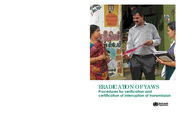
This document sets out the criteria and procedures to be followed by countries in verifying the interruption of yaws transmission. It is intended for use by international verification teams, national yaws eradication programmes and WHO technical staff involved in the eradication of yaws.

This guideline provides evidence-based recommendations on parenting interventions for parents and caregivers of children aged 0–17 years that are designed to reduce child maltreatment and harsh parenting, enhance the parent–child relationship, and prevent poor mental
...
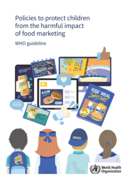
Children continue to be exposed to powerful food marketing, which predominantly promotes foods high in saturated fatty acids, trans-fatty acids, free sugars and/or sodium and uses a wide variety of marketing strategies that are likely to appeal to children. Food marketing has a harmful impact on chi
...
The global COVID-19 outbreak is leading to an acute and drastic shortage of essential supplies, including personal protective equipment, diagnostics and clinical management. At the request of the UN Secretary-General and in support of the UN Crisis Management Team, a Supply Chain Tas
...
Safe drinking-water management must consider drinking-water quality, acceptability and quantity in the context of public health protection. In this manual, the term “safety” encompasses these three elements. Although the principles in this manua
...
It is impossible to address the many complex needs of respiratory virus surveillance with a single surveillance system. Multiple systems, investigations and studies must each be fit-for-purpose to specific priority surveillance objectives, and only together can they provide essential information to
...

The WHO Global Antimicrobial Resistance and Use Surveillance System (GLASS) was launched in 2015 to foster AMR surveillance and inform strategies to contain AMR. The system started with surveillance of AMR in bacteria causing common human infections and has expanded its scope to include surveillance
...
Sepsis contributes significantly to preventable mortality and is the final common pathway to death for severe infectious diseases; it can also arise as a complication of injuries and non-communicable diseases.
The Lancet Regional health Americas, vol.10 (2022) June 1, March 04, 2022DOI:https://doi.org/10.1016/j.lana.2022.100222

The guidance document provides a set of indicators for assessing the status of development, implementation and monitoring of key policy interventions for prevention and control of NCDs and injuries. It promotes city-level evidence based decision-making processes to identify gaps and take appropriate
...
This volume contains monographs prepared at the ninety-first meeting of the Joint FAO/WHO Expert Committee on Food Additives (JECFA), which met virtually online from 1 to 12 February 2021.
The detailed monographs in this volume summarize data on specific contaminants in food. Individual monographs
...
Value in Health Regional Issues 4 C (2014) 37-40
TB in India 2017
recommended
Revised National TB Control Programme. Annual Status Report
Cette publication présente le Programme sur la santé, l’environnement et les changements climatiques pour les Amériques 2021-2030. Le Programme est un appel à l’action au secteur de la santé pour qu’il prenne l’initiative d’agir sur les déterminants environnementaux de la santé dans
...
The total installed capacity so far is 6.5 Mwh and over 20 million women and children now have access to quality health services. Solar for Health focuses on installing solar PV systems in
...
Esta publicação apresenta a Agenda para as Américas sobre Saúde, Meio Ambiente e Mudança Climática 2021–2030 (a Agenda). Esta Agenda é um apelo ao setor da saúde para que se posicione na vanguarda da abordagem aos determinantes ambientais da saúde nas Américas. A Organização Pan-Americ
...
