
Filter
635
Text search:
Ministry
of
Education,
Rwanda
Featured
Recommendations
42
New Publications
119
Language
Document type
No document type
407
Studies & Reports
110
Guidelines
40
Strategic & Response Plan
29
Manuals
22
Training Material
18
Situation Updates
3
Resource Platforms
2
Fact sheets
2
Infographics
1
Online Courses
1
Countries / Regions
Rwanda
144
Uganda
34
Global
29
Africa
28
Ethiopia
24
Kenya
24
Congo, Democratic Republic of
18
Tanzania
12
Malawi
12
East and Southern Africa
11
Liberia
10
Zambia
10
Nigeria
9
Ghana
8
South Africa
7
Sierra Leone
6
West and Central Africa
6
Senegal
5
India
5
Mozambique
5
Namibia
5
Myanmar / Burma
5
Zimbabwe
4
Nepal
4
South Sudan
4
Syria
4
Lesotho
4
Burkina Faso
3
Cambodia
3
Burundi
3
Guinea
2
Cameroon
2
Haiti
2
Somalia
2
Bangladesh
2
Sudan
2
Central African Republic
2
Eswatini/ Swaziland
2
Ukraine
2
Botswana
2
Yemen
2
Middle East and North Africa
2
Asia
2
Southern Africa
2
Mali
1
Togo
1
Afghanistan
1
China
1
Indonesia
1
Benin
1
Libya
1
Mexico
1
South–East Asia Region
1
Latin America and the Carribbean
1
Palestine
1
Armenia
1
Tajikistan
1
Russia
1
Estonia
1
Iran
1
Mauritius
1
Authors & Publishers
Publication Years
Category
Countries
300
Public Health
43
Women & Child Health
36
Clinical Guidelines
35
Key Resources
34
Capacity Building
11
Toolboxes
HIV
73
Mental Health
47
Disability
29
TB
25
COVID-19
24
Caregiver
22
Ebola & Marburg
17
Global Health Education
16
Planetary Health
16
Refugee
13
Conflict
11
Health Financing Toolbox
9
Rapid Response
7
NCDs
7
2.0 Rapid Response
6
Pharmacy
4
NTDs
4
Malaria
4
Specific Hazards
3
Polio
2
AMR
2
Cholera
1
Natural Hazards
1
Social Ethics
1
Mental health is critically important to everyone, everywhere. All over the world, mental health needs are high but responses are insufficient and inadequate. The World mental health report: transforming mental health for all is designed to inspire and inform better mental health for everyone everyw
...

Mental health is critically important to everyone, everywhere. All over the world, mental health needs are high but responses are insufficient and inadequate. The World mental health report: transforming mental health for all is designed to inspire and inform better mental health for everyone everyw
...
The Strategy to respond to antimalarial drug resistance in Africa is a technical and advocacy document, grounded in the best available evidence to date and aimed at minimizing the threat and impact of antimalarial drug resistance
...
This report presents, for the first time, a global assessment of the extent to which health care facilities provide essential water, sanitation and hygiene (WASH) services. Drawing on data from 54 low- and middle-income countries, the report conclud
...
Refugee Health
recommended
An approach to emergency situations. Relief workers face rapidly changing and complex environments, new disease patterns, enormous humanitarian needs and relatively limited resources. The authors of this book use their experience in the area to prod
...
This ten year global plan for measles and rubella outlines the strategy that needs to be fully implemented to achieve the measles and rubella goals endorsed by the World Health Assembly. The plan sets out the: vision, goals and targets for the 2011-2020 period, recommended strategies, guiding princi
...

Annual and medium-term budget preparation processes are the platforms through which specific plans are transformed into actual resource allocation decisions. The aim of this Process Guide is to support key stakeholders involved in these processes (s
...
Five years after a global commitment to Fast-Track the HIV response and end AIDS by 2030, the world is off track. A promise to build on the momentum created in the first decade of the twenty-first century by front-loading investment and accelerating
...

Overcoming barriers in low- and middle-income countries
For the first time, this year’s report includes information on hepatitis C diagnostics. With a focus on selected countries with diverse HCV epidemics, the report provides updates on the various dimensions
...
To complement the Global Strategy progress reporting, this report provides a detailed look at country leadership and action toward the Every Newborn National Milestones by 2020. Countries have taken the initiative to show the way forward and have demonstrated significant progress. As part
...

Background
Noncommunicable diseases are major contributors to morbidity and mortality worldwide. Modifying the risk factors for these conditions, such as physical inactivity, is thus essential. Addressing the context or circumstances in which physical activity occurs may promote physical activity a
...
Disease Control Priorities, 3rdEdition: Volume 4.
Mental, neurological, and substance use disorders are common, highly disabling, and associated with significant premature mortality. The impact of these disorders on the social and economic well-be
...
Climate change (CC) impacts on health outcomes, both direct and indirect, are sufficient to jeopardize achieving the World Bank Group’s visions and agendas in poverty reduction, population resilience, and health, nutrition and population (HNP). In the last 5 years, the number
...
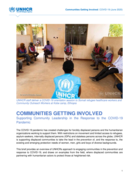
The COVID-19 pandemic has created challenges for forcibly displaced persons and the humanitarian organizations working to support them. With restrictions on movement and limited access to refugees, asylum-seekers, internally displaced persons (IDPs) and stateless persons across the globe, UNHCR is s
...
Climate change is damaging human health now and is projected to have a greater impact in the future. Low- and middle-income countries are seeing the worst effects as they are most vulnerable to climate shifts and least able to adapt given weak health systems and poor infrastructure. Low-carbon appro
...
After introducing Ethiopia's WASH sector challenges and trends, the plan describes IRC Ethiopia's vision and strategy which draws from IRC and Water For People's joint framework - Destination 2030. It then details the organisational changes and business development needed to implement the strategic
...
The document covers: introduction on contact tracing in the Ebola response; general considerations for contact tracing; case definition; planning and preparation; personnel; implementation, and tools for contact tracing.
In light of the decline in new Ebola cases, strategies are now needed to scale down the activities and bed capacities in Ebola care facilities. These facilities include Ebola treatment units, community care centres, Ebola treatment centres and isola
...
The module is currently available in English, French, Nepali, Portuguese, Russian, and Spanish
Data from the 2011 Ethiopia Demographic and Health Survey
