
Filter
492
Text search:
Ebola
must
Go
Featured
Recommendations
46
New Publications
156
Language
Document type
No document type
248
Studies & Reports
96
Guidelines
63
Manuals
41
Strategic & Response Plan
22
Fact sheets
12
Training Material
7
Situation Updates
2
Infographics
1
Countries / Regions
Sierra Leone
72
Liberia
70
Global
37
Guinea
26
Congo, Democratic Republic of
16
Nigeria
15
Uganda
12
Rwanda
10
Ghana
9
Kenya
9
West and Central Africa
9
Western and Central Europe
6
Bangladesh
5
East and Southern Africa
5
Latin America and the Carribbean
5
Ethiopia
4
Nepal
4
Syria
4
South Africa
4
Myanmar / Burma
4
Middle East and North Africa
4
Senegal
3
India
3
South Sudan
3
Tanzania
3
Malawi
3
Ukraine
3
Africa
3
Mali
2
Côte d’Ivoire / Ivory Coast
2
Niger
2
Zimbabwe
2
Haiti
2
Zambia
2
Cambodia
2
Mozambique
2
Central African Republic
2
Angola
2
South–East Asia Region
2
Eastern Europe and Central Asia
2
Vietnam
2
Burkina Faso
1
Saudi Arabia
1
Cameroon
1
Pakistan
1
Jordan
1
Afghanistan
1
Germany
1
Lebanon
1
Chad
1
China
1
Sudan
1
Namibia
1
Colombia
1
Botswana
1
Yemen
1
Western Pacific Region
1
Asia
1
Venezuela
1
Eastern Europe
1
Laos
1
Moldova
1
Authors & Publishers
Publication Years
Category
Countries
108
Key Resources
55
Public Health
21
Clinical Guidelines
20
Women & Child Health
19
Capacity Building
8
Pharmacy & Technologies
6
Annual Report MEDBOX
1
Toolboxes
Ebola & Marburg
143
COVID-19
96
Mental Health
21
Global Health Education
18
Conflict
15
Rapid Response
15
Planetary Health
15
HIV
13
Health Financing Toolbox
13
2.0 Rapid Response
12
Caregiver
10
AMR
9
Refugee
7
Disability
6
Natural Hazards
6
Specific Hazards
5
Pharmacy
4
NTDs
4
TB
3
Malaria
3
Polio
2
Social Ethics
2
Cholera
1
Zika
1
Accessed on 21.05.2020
Considering a hotline? This set of tools will help you assess, set up and manage different types of channels to communicate with communities during humanitarian crises.
This handbook reflects and updates the work that ECLAC has done in recent decades to establish a methodology for estimating the economic consequences of a disaster, and thus determine the financing required to rebuild and return the affected area to normal. The handbook's third edition strengthens p
...

Conflicts and disasters, including pandemics, affect women and men in all their diversity differently, and women and girls often suffer the most. Crisis-related hardships combine and compound pre-existing disadvantages, for example, they often cause women’s working conditions to worsen while incre
...

WHO Technical Series 971
Climate change, increasing population densities, and intensified globalisation in trade, travel and migration are among the most important factors shaping the 21st century. Each impacts upon population health and the risk of infectious disease, particularly those originating at the human-animal-envi
...
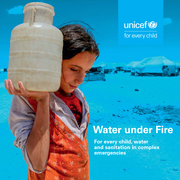
UNICEF trucks water to the camps where people displaced by the conflict have temporarily settled. UNICEF also installed latrines, showers and water storage tanks in the camps and distributed family hygiene kits to protect children against waterborne diseases.

The document provides a comprehensive overview of malaria, covering its global impact, transmission, symptoms, diagnosis, treatment, prevention strategies, and the role of public health interventions—especially in high-risk regions like sub-Saharan Africa—to reduce its incidence and mortality.

In the last three decades, health financialization has surged in
several creative ways, yet this growing phenomenon remains surprisingly
unknown, and neglected, in the global health arena. Financialization in the
health domain could be described as the uncontrolled expansion of finance along vari
...
